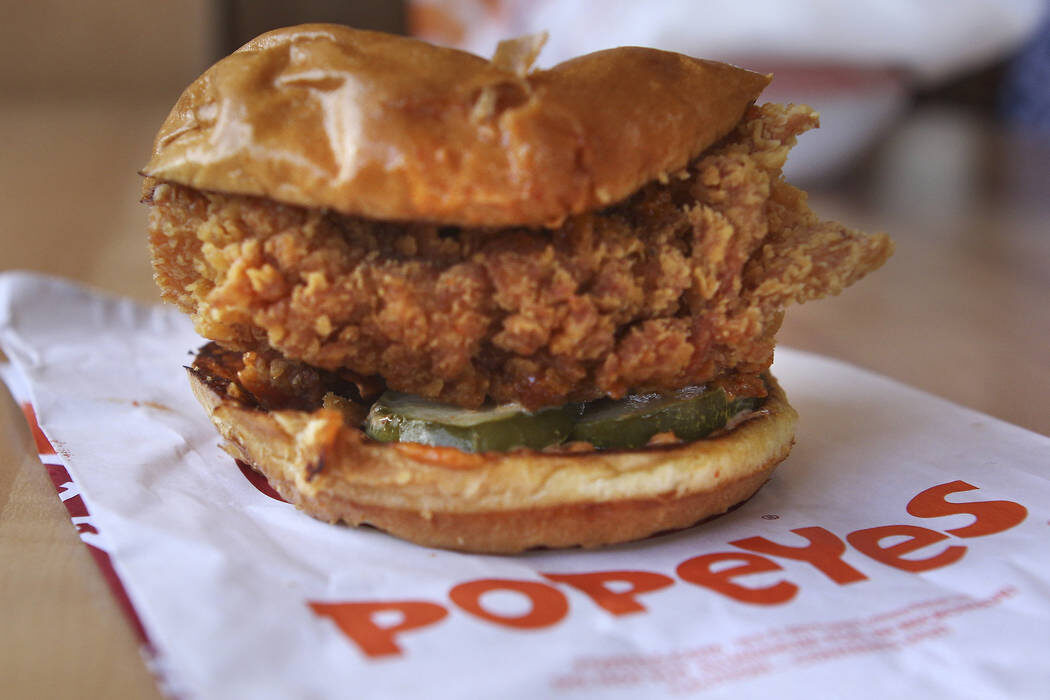
It appears that Americans will long remember—at least until the next hot topic makes the headlines—the war that erupted as the 2019 summer season winded down. It was a war that resulted in exhaustion for some, irritation for others and, as most wars are prone to do, great wealth for big business followed by tragedy. Yes, you guessed it, we are referring to the “Chicken Sandwich War.”
How the Popeyes Chicken Sandwich Sparked a Fast-Food Rivalry
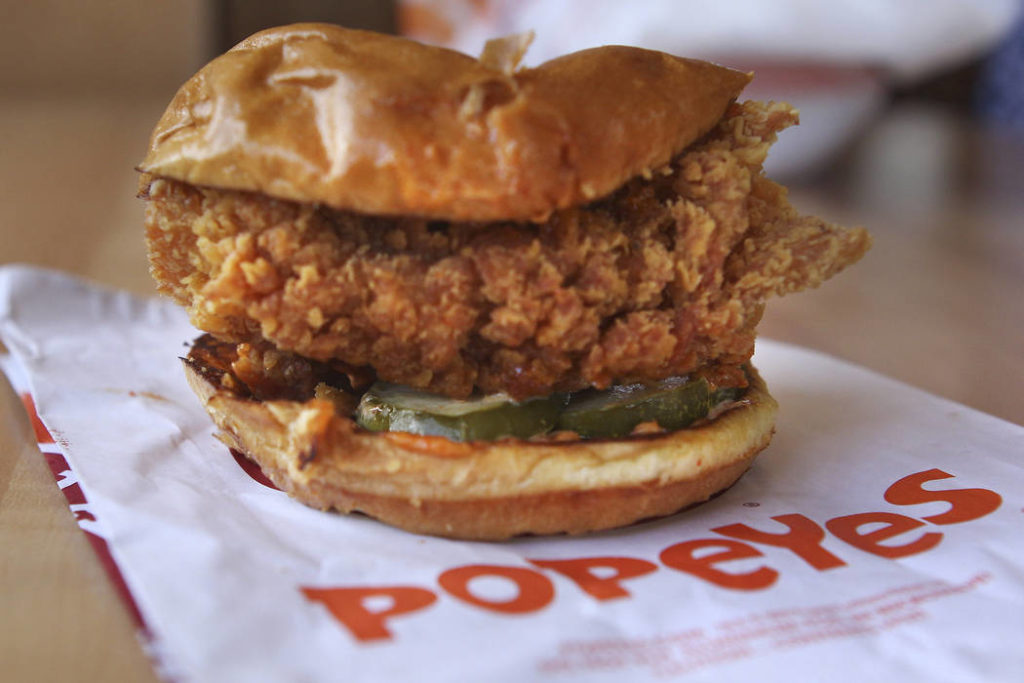
It started with a tweet. On August 12, Popeyes announced via Twitter that their long-awaited buttermilk-battered chicken breast sandwich on a brioche bun was on the menu. Their rivals, namely Chick-fil-A, Wendy’s, and Shake Shack, felt the first rumblings and knew their market share was at risk.
Chick-fil-A responded with a tweet of their own which, of course led to another tweet by Popeyes—and the war had begun. Suddenly, according to Google Trends, Google searches for “Popeyes chicken sandwich” grew almost 1000 percent. Wow.
Millions of Dollars in Free Advertising
According to Forbes and Apex Marketing Group, Popeyes would have had to pay an equivalent of $65 million dollars in marketing for the attention it received. Not bad. Restaurants reported selling over a thousand chicken sandwiches in a day—with long lines and irritated customers creating havoc.
Just two weeks later, on August 27, the fatal announcement was made: Popeyes had run out of chicken for their newly claimed-to-fame chicken sandwich. Really? Just how did this extraordinary demand lead to a supply chain crisis? And is this a sign of the times when social media gone viral can disrupt the best laid plans? Originally, Popeyes believed their chicken inventory would last until the end of September, instead, they went through two months of chicken breasts in just two weeks.
In typical supply-versus-demand economics, someone even tried to sell a Popeyes’ chicken sandwich on eBay for $7,000. Only in America.
Disrupted Supply Chains
Mind you, supply-chain tragedies are a worldwide phenomenon. In February of 2018, the United Kingdom experienced the closure of 600 branches of Kentucky Fried Chicken due to a chicken shortage. According to The Sun, KFC’s new supplier, delivery giant DHL, faced challenges getting fresh chicken out to the 900 restaurants across the country.
Recently, when KFC tested a plant-based version of their fried chicken—Beyond Fried Chicken—at a location in Atlanta, they sold out in just five hours.
So, one wonders, just who was supplying the 2,400 Popeyes’ locations across the country with their chicken? (Currently, Popeyes is not divulging that information). And, why is there a shortage when the U.S. is expected to process a record 43.3 billion pounds of this poultry in 2019?
It comes down to the specifications of a certain product. Restaurant chains, particularly fast-food enterprises, don’t head to the big conglomerates, such as Tyson, and buy up massive chicken breasts. Their products are often made for quick turnaround and include breading, seasonings, or a specific size that requires additional processing.
Unfortunately, as Popeyes works out their supply dilemma and searches for new chicken suppliers, time is slipping away. As any in the marketing industry know, businesses need to ride the wave of viral fame when it comes their way. For now, McDonald’s is scrambling to create a chicken sandwich worthy of getting in the competitive game, while still maintaining quick service times, and Chick-fil-A and Wendy’s are still selling chicken sandwiches.
If nothing else, the war of the season reminds those in the industry the importance of streamlining their supply chain and developing their social media strategy. And then being prepared for the resulting avalanche of success should the nation take notice.
Anyone with even half a finger on the pulse of the restaurant industry is aware of the dramatic rise in carry-out, restaurant delivery, and off-premise dining. Spurred on by cultural shifts (longer work hours, less emphasis on home-cooking, rise in whole food restaurant offerings), generational influence (Millennial and Gen Z individuals who spend an increased portion of their disposable income on food) and technology factors (a market flooded with easy solutions for placing, paying for and tracking restaurant orders), off-premise dining is becoming an increasingly significant percentage of total restaurant sales. According to Technomic, off-premise sales now account for 44% of all restaurant sales, or $228 billion with expected growth of roughly 5.6% annually through 2019, compared to 3-3.5% growth for the restaurant industry overall. Data collected by the Buyers Edge Platform supports this trend.
To-go packaging is quickly becoming one of the most important categories of items in a restaurant’s weekly order. Not only do operators need to focus on the quality of the packaging and ensure that packages preserve the temps and textures of their dishes, but they must also develop processes and kitchen layouts that factor in the increasing quantity of packaged items that they will need to deliver. Furthermore, packaging selection presents an opportunity for an operator to present themselves as an eco-friendly and earth-conscious dining option. Pactiv’s earthchoice line of carryout containers overs the perfect balance of an environmentally-friendly package that still maintains the integrity of dish during restaurant delivery. Pactiv’s MFPP containers, specifically, offer plastic saving materials that are microwaveable, ‘click’ closed to indicate a secure closure and are stable and grease and moisture resistant. These packages come in 7 popular sizes to fit a variety of to-go applications.
Many operators serve takeout and delivery business channels with the goal of converting take-out diners to eventually ‘escalate’ to become more profitable in-house guests. (Conversely, off-premise business is a good way to keep regular patrons engaged, even on nights when they aren’t looking to leave the house.) It is important maintain the same standards of excellence in the off-premise experience as guests expect when dining in-house. This means that ingredients, condiments and even cutlery that in-house guests would not even normally see, suddenly become, for off-premise diners, a metric by which the restaurant can be judged. If a restaurant sends a takeout chicken sandwich order with packets of generic-brand condiments, guests may rightfully assume that the restaurant regularly uses ‘lower quality’ ingredients in their recipes. On the flipside, take-out accoutrements like condiments, cutlery, and soft drinks present yet another opportunity to ‘wow’ new and repeat guests alike. The Buyers Edge Platform’s culinary and operational experts recommend delivering recognizable branded Portion Control condiments such as Hellmann’s Mayonnaise, Smucker’s Jellies and Peanut Butters and Dickinson’s Honey. This branding for quality can easily be extended by offering the corresponding table-top condiments for in-house guests.
As far as utensils and cutlery go, as off-premise dining continues to grow in popularity, carry-out cutlery will become an ever more prevalent restaurant cost. Furthermore, as off-premise dining migrates from the domain of QSRs to include restaurants of all styles and cuisine types, cutlery is becoming an increasingly important element of the dining experience. We’ve all struggled to cut steak tips with an inadequate knife, reached into a soup bowl holding our too-small spoon by our fingertips or broken a tong off of a cheaply-made fork. Manufacturers like Georgia Pacific offer cost-effective products that reduce waste, storage, maintenance and labor costs while enhancing a restaurant’s image and food safety. Smart operators can even save in the long run by investing in higher-quality cutlery dispensers that enable a reduction in waste and increases in sanitary safeguards. For cutlery, nothing beats the Dixie Ultra Smart Stock Wrapped Cutlery system which dispenses one piece of cutlery, with 60% less plastic wrap, at a time through a system that is preferred by 88% of fast food patrons over open bins of wrapped cutlery.
Clients of Consolidated Concepts have the ability to purchase all of the above items at reduce costs by taking advantage of the deviated prices and rebated savings that are available through our contracted manufacturer programs.
Whether your restaurant is a vegetarian’s delight, or you’re known for your oversized onion rings, knowing that you’re going to receive consistent pricing and quality from your produce vendors is key. A proper produce management program will ensure consistency in product, contracted pricing, food safety optimization and more.
Companies like Fresh Concepts elevate their relationships with local growers and shippers to bring you a premier managed produce program. Part of this management process is giving you peace of mind in your produce partner relationships. Fresh Concepts does that with their recordkeeping. They store a record of contact information and certificates of insurance for distributors and shippers, plus third party audit information. By keeping a tab on this information, they can easily manage next steps when food safety concerns arise, ensure traceability, and keep suppliers accountable on implementing best practices and their certificates. They also conduct second-party audits for certain distributors and shippers with high-risk items to make sure all brand standards are maintained.
Another important feature of a produce management program is their process of dealing with food safety risks. Fresh Concepts focuses on a three-prong approach to food safety management: second party audits of facilities to prevent food safety risks, a formalized process when outbreaks or recalls do occur, and a perfected communication alert system and process for getting you replacement product if needed. The foodservice industry is often filled with food safety risks and working with Fresh Concepts is one way to ensure you are properly protected against possible outbreaks and informed against recalls and other issues. They also focus on ensuring restaurant operators are informed of food safety precautions they can take in their operations. During the recent government shutdown, Javier Martinez, Food Safety Manager at Fresh Concepts, reiterated, “The actions taken at the operator level — in the walk-in refrigerator, in the kitchen, at washing stations — make up the critical “last mile” in the food safety chain. Following proper techniques for washing and prepping food at the restaurant level can help to ensure the highest levels of food safety. “ (source)
Romaine Lettuce Recall in 2018 forced many operators to assess their Food Safety alert systems.
A produce management program can also be very beneficial in the irregularity of pricing in the produce market. Programs like Fresh Concepts work with shippers, growers, and suppliers to ensure you get contracted pricing that consists of set highs and lows that often protect you from the volatility of the industry while offering you savings. For example, throughout 2018 there were multiple romaine lettuce recalls that not only caused public panic, but affected the pricing on romaine lettuce and its other leafy counterparts. Fresh Concepts was able to give its customers an alert to price changes, an update on the outbreak within two hours of its notice, and a list of producers who they could order from that could offer the correct item to their specs. Andy Rosenbloom of Buyers Edge Platform says, “The produce market can experience crazy price fluctuations throughout the year for a whole variety of reasons: seasonality, weather, demand, or even politics. Having a produce management partner in place ensures that your prices maintain stability, quality and safety.” Having this level of insight and accountability from your produce management partner is imperative to running your operations efficiently.
Interested in learning more about Produce Management programs we partner with? Visit us here and let’s chat.
At Consolidated Concepts, we pride ourselves on offering our clients much more than just rebates and buying power. We recently had the opportunity to foster a collaborative session between one of our most exciting clients, Pincho, with one of our most innovative and interesting manufacturer partners, Unilever.
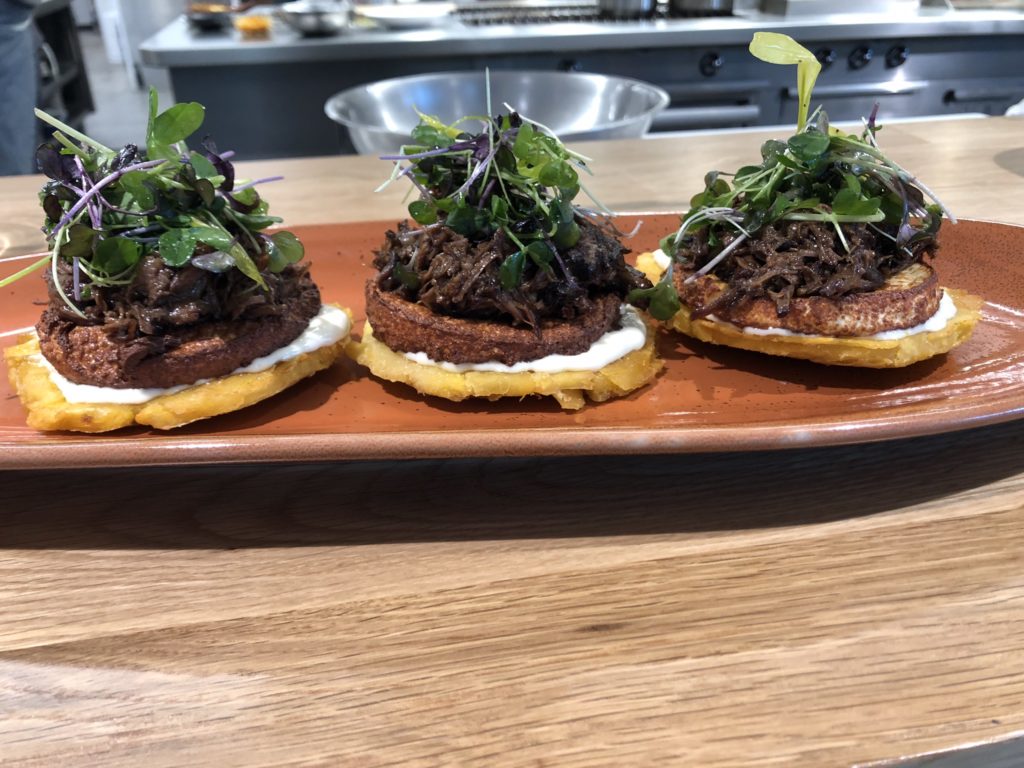
As a concept that relies heavily on bold flavors to wow their guests, Pincho focuses on providing exceptional sauces and marinades to make their dishes stand out. The south Florida concept has grown rapidly to include 10 locations serving Latin-inspired burgers and kebabs such as the standout Toston Burger, served with 2 fried plantains as the ‘buns’ and their marinated chicken pincho, served with chimichurri dipping sauce.
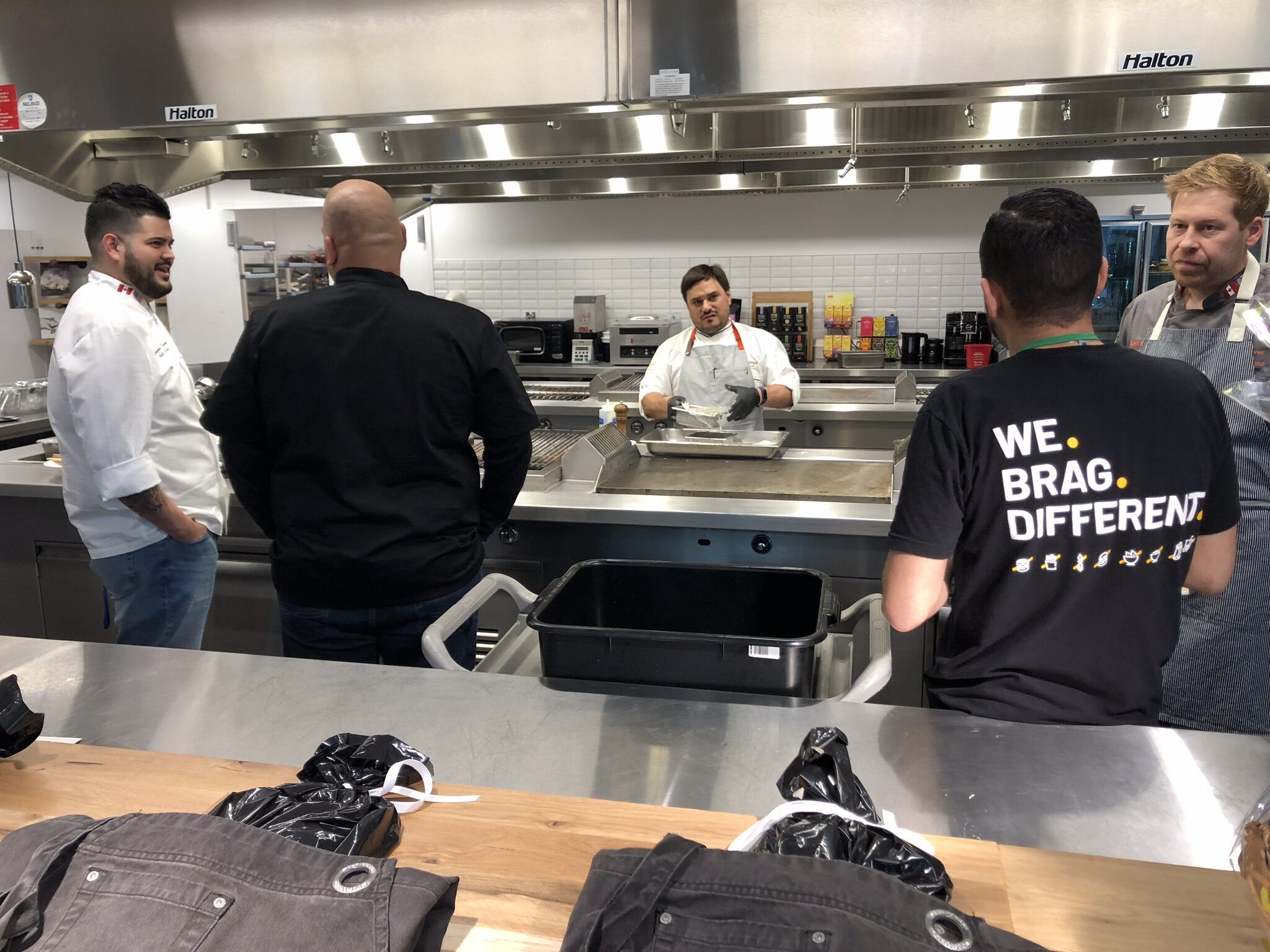
Top Pincho executives, including their CEO, CMO and Culinary Director joined their Consolidated Concepts client managers for a day of culinary innovation and experimentation at Unilever’s US Headquarters in Englewood Cliffs, NJ. As one of Consolidated Concepts’ top direct-contract manufacturers, Unilever, producer of kitchen staples like Hellmann’s/Best Mayonnaise, Knorr Sauces and Bases, Le Gout bases and Lipton and PureLeaf teas, regularly invites clients to work alongside their chefs to develop new ways to delight guests and scale profitability.
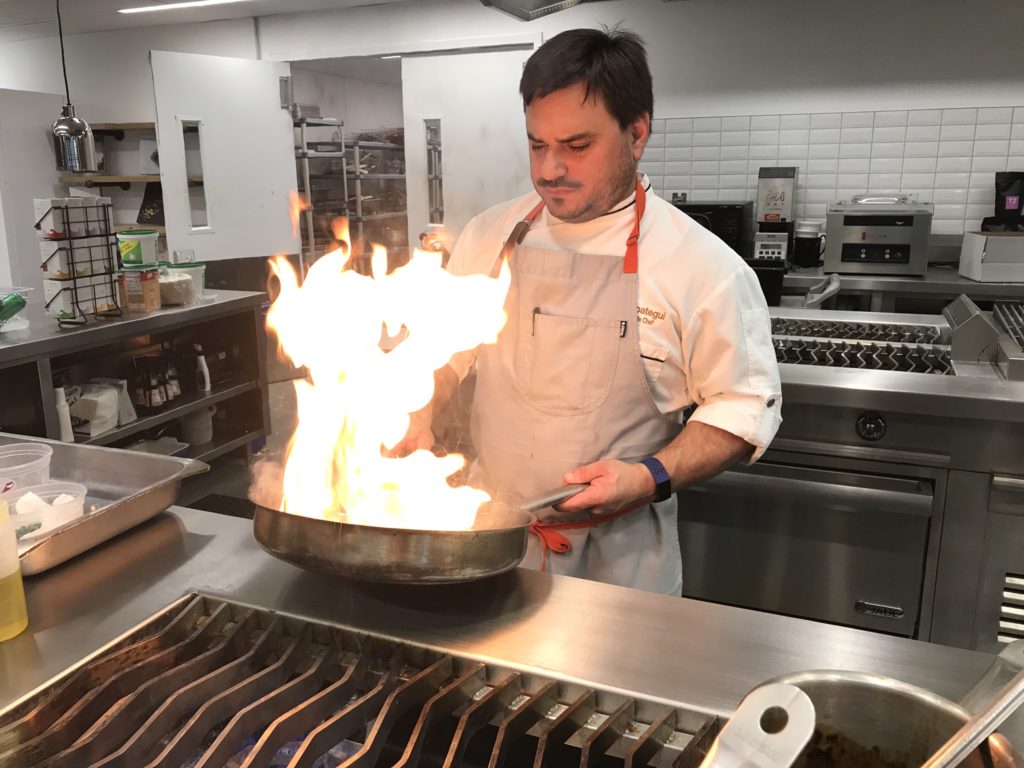
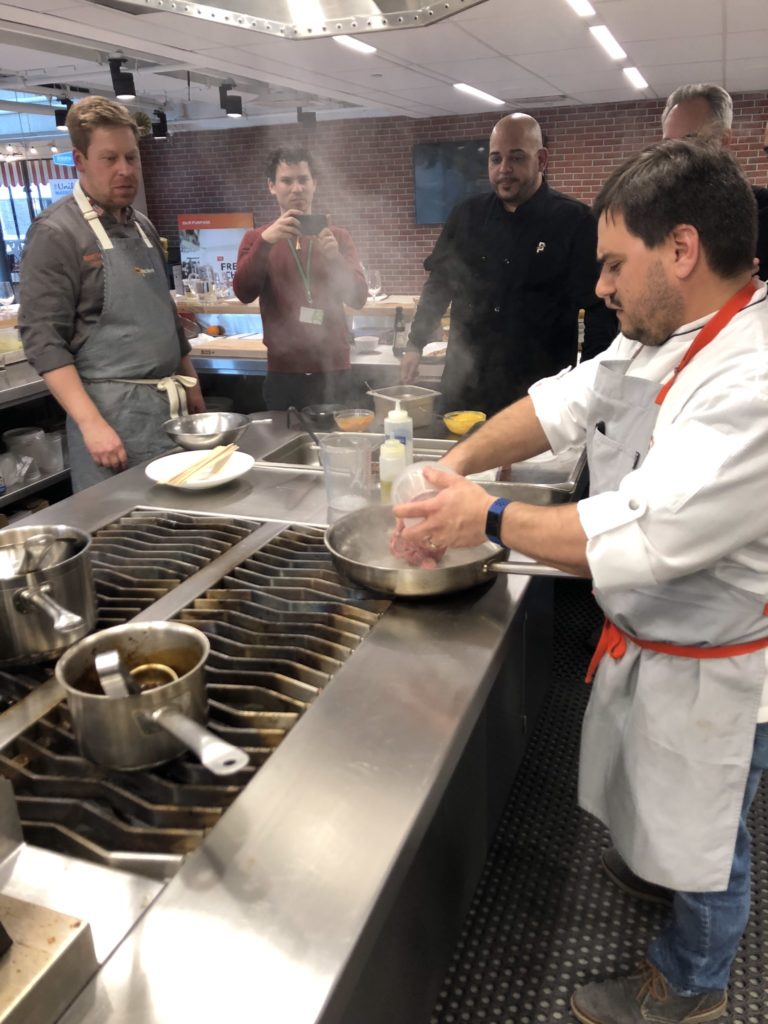
In preparation for Pincho’s visit, Unilever’s corporate chef, Chef JC Lopategui of Miami visited several of Pincho’s south Florida locations to taste their menu, explore their kitchens and work alongside Chef Adrian Sanchez. Chef JC then utilized that knowledge to collaborate closely with Unilever’s Chef Rob Wallauer of New Jersey to demonstrate how Unilever’s high-quality products and ingredients may fall in line with Pincho’s overall culinary offering.
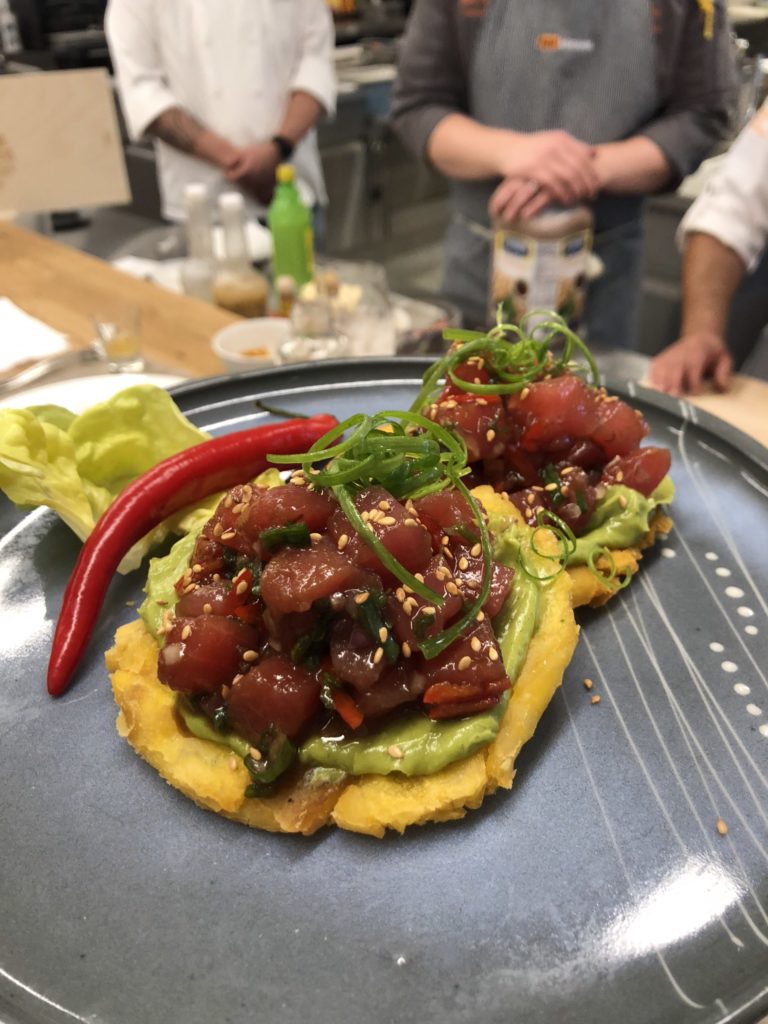
The menu that Unilever developed for Pincho speaks for itself, complete with flavorful staples (Fried Chicken Sandwich with Pincho sauce, Smoked Shrimp Salad with Hatch Chili Dressing) to inventive takes on Latin classics (Lomo Saltado Poutine, Ahi Tuna Tostone, Intense Citrus Flan). The collaborative spirit in the kitchen was palpable, as the three chefs combined their talents to create inspired sauces and dishes that were heavy on flavor, spice and ingenuity.
The ultimate goal of such collaborative events is to help Consolidated Concepts’ clients see how manufacturer-partners’ products can fit into their culinary mix and business strategy. “Most of the time a spec sheet and price just isn’t going to be enough to make an operator understand the real value of a product,” said Mark Cimino, Consolidated Concepts’ VP of Client Relations. “This is the second client that we’ve brought to Unilever,” he said. “They both left with a sense of the amazing potential that Unilever’s products offer in terms of being customizable, scalable, and cost effective.”
If your operation has any plans that involve menu changes, menu expansion, regional expansion, Limited Time Offers (LTOs), allergen considerations, acquisition or other growth – a custom culinary innovation session may be right for you. Get in touch with your client manager or account executive to learn more about what opportunities Consolidated Concepts may be able to arrange.
With over 30% of revenues being spent on food supply, restaurant operators are increasing focus and resources on developing more operational and cost-effective ways of purchasing, procuring and managing supply. This trend is the logical outcome of increased managerial concern to meet specific supply objectives of quality, quantity, delivery, price, service, and competitive improvement.
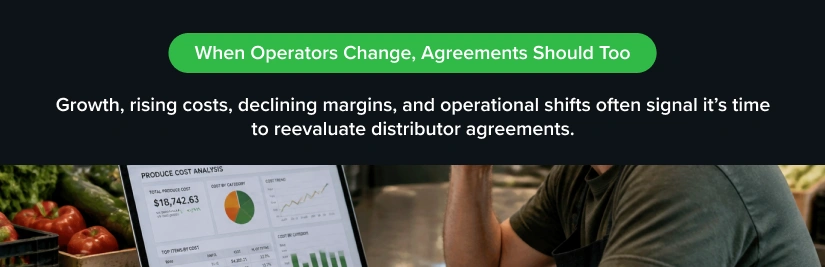
What’s more, negotiations with distributors is receiving increasing emphasis as opposed to competitive bidding, and longer-term contracts or master distribution agreements are replacing short-term buying techniques, placing special emphasis on strategies that ensure short- and long-term value for funds spent.
In an interview with Barry Friends of Technomic, a research and consulting firm servicing the food and foodservice industry, Barry describes the challenges concerning restaurant and foodservice operators, while providing solutions for managing master distribution agreements. Barry spent 24 years in executive leadership roles with three of the top five U.S. foodservice distributors — Sysco, US Foods, and Reinhart — making him uniquely qualified to share his insight on the complex issues associated with distributors and distribution agreements.
What Supply Distribution Challenges Do Restaurant Chains Face?
Regional and national chains are flooded with distribution related problems. The nature of their problems and challenges vary wildly on their scale, maturity and business model. Most chains are growing, and their problems are growth related — resources — operations — capital. In most cases, growing chains don’t have supply chain resources, they don’t have a supply chain person (department), and if they do it’s cobbled together or it’s a shared role between purchasing and operations.
Consequently, there aren’t a lot of distributors to choose from that can do a great job for growing chains across a large geography. Depending on scale and density, most chains are stuck dealing with broadline distributors — a single window approach for sourcing all food and operating supplies.
However, the most critical issues that supply chains manage is disruption. Bottom line, in order to manage risk and avoid stoppage, the operator surrenders quality, quantity, delivery, price, and service to the distributor, subordinate to the broadliner’s capabilities, transparency, and responsiveness to fluctuating markets.
Barry explains that when “RFPing your business, you will get a number of offers, and you can choose the best one, but no matter how much you (the operator) know, the distributors know more; they have all the power, and they (the distributors) are excellent at making their customers feel like they have a great deal when that it not be the best they can have.”
What Factors Influence Distributor Costs?
There are many factors that influence distributor rates, but in most cases operators are not prepared to nor do they have the resources to analyze these influences.
To be clear, distributors do not raise costs, manufactures do. In general terms, costs are driven by the markets. For example, produce costs change daily while meat costs change weekly. Most distributors spreadsheet your supply by category and contract a fixed percent markup on top of their cost.
There are things that can be built into a distribution agreement to help smooth out price volatility, but costs are mainly controlled by the market. Once an operator comes to terms with a distributor, the distributor’s primary focus becomes delivering the service end of the agreement.
When Is the Right Time for a Master Distribution Agreement?
In short, you should do a distributor agreement as soon as possible.Basically, the moment an account is big enough to command the attention of multiple distributors, is the ideal time to start negotiating a master distribution agreement.
The rule of thumb is if a restaurant or food service chain has a regional and/or national presence, it should be behaving like a chain with regional and/or national authority. The chain should be buying at the very least on an honorable cost plus percent markup agreement, and it should be negotiating special pricing on it’s most important value added items, for example french fries, hamburgers and butter.
As a unit of measure, most of large broadliners like Sysco consider a 5 unit chain and above a “chain account.”
How Does an Operator Analyze Whether They Are Getting a Good Deal?
Unfortunately, operators really can’t.
Even after operators get their 2 to 3 proposals, at the end of the day, there’s still a margin, and a backend markup that the chains are not privy to. What is the base price? What are the attached backend service costs, and how do you (the operator) analyze and compare? Aside from asking distributors how they make money, the operator is ill prepared and ill equipped to answer these questions.
The best way to know whether you are getting a good deal or not is to leverage the expertise, technology and buying power of Consolidated Concepts — the leading
purchasing partner in the US for restaurants and food service organizations. They work with hundreds of chains which allows them to benchmark and compare one distribution agreement with another.
What Factors Should You Consider When Ending Agreements?
Even if the broadliner agreement is sound and the service level is excellent, a chain experiencing significant growth should be checking the validity and currency of their agreement with some regularity. MDA’s have something called an “exit clause,” or common language that says with 60 or 90 day notice, for no cause, the operator can terminate the agreement.
For instance, a 25 unit chain on a 5 year MDA has grown to 50 units in the last 2 to 3 years and has doubled their purchase volume or added a third purchasing volume under their broadliner. In this case, there is no clause that forbids the chain from shopping their current MDA; in fact, Consolidated Concepts highly recommends shopping for new pricing with an agreement currently in place.
What Common Triggers Lead to Distribution Agreement Renegotiation?
There are many triggers that start the distribution agreement negotiation process. Usually this is triggered by something that causes the operator to lose trust in their incumbent distributor. It could be a matter of price or it could be how the distributor is administered.
Another factor that compels renegotiation is the chains own external state of affairs. Unfortunately, sometimes the problems associated with growing pains transfer to blame on current purchasing practices.
A great example is a 260 unit chain experiencing the pain associated with declining revenues, despite years of loyalty to their distributors, they were urged to turn to Consolidated Concepts for a more innovative solution to reducing purchase spend.
What is Compliance and Why is it Important?
Compliance is designed to add strength to the agreement by assuring that both distributors and customers are adhering to the agreement. For example, if a customer doesn’t pay on time, or is not purchasing at the frequency or volume described by the key performance indicators in the agreement, the distributor has the right to call that customer to the carpet.
In other cases, a red flag may be raised against a distributor who doesn’t call out a customer who is not in compliance with their key performance indicators. For instance, a distributor accepting 100 cases when 150 cases are in the agreement is an indicator that the distributor figured out how to profitize that business to their satisfaction without the 150 cases. This can be a sign that the operator is paying for something they may not be aware of and did not agree on. This is why compliance is important for both sides.
What Qualifies a Chain to Ask for Additional Incentives?
The number one thing that qualifies a chain to ask for incentives or an improved deal is when a chain starts consistently out performing or overachieving the parameters of their agreement.
An good example of a chain that deserves a better deal is a 10 unit chain (paying cost plus 2 dollars and 40 cents a case with a requirement of 80 cases minimum order and 4 million dollars worth of supply per year) that grows to 15 units (paying 7.5 million dollars a year and 124 cases per order during the term of their agreement. In this case, the operator should reach out to the distributor to negotiate better pricing.
At the end of the day, the distributor will be competitive in situations that make sense. It’s your job as the operator to get the distributor to think of you as a 15-unit chain with 7.5 million dollars in business. They won your business once; make them win it again.