Category: Blog

Chef-Feature-Image

How to Approach Your COVID-19 Menu Strategy

Across the country, restaurants are adapting to a new normal. It’s impossible to say whether this ‘norm’ will be temporary or lead into a longer-term way of things. Regardless, restaurants are making changes to their food procurement and operational processes to keep operations running and profitable.

Food Procurement Approach

For some, this means operating as take-out only. For others, this means constructing new seating arrangements to meet local or state guidelines. Many restaurants are even adjusting their food procurement strategies and working with experts to maximize cost saving opportunities.

Regardless of how your restaurant is adjusting operations to serve customers, one of the biggest areas you should focus on is your menu offerings.

While the decision may be tough, adjusting your restaurant’s menu during COVID-19 can help ensure you make efficient food procurement decisions and generate profit.

Not sure where to start?

Our team of food procurement experts created some tips and strategies you can follow to help adjust your menu.

Keep reading to hear from our food procurement experts and learn about a few ways your restaurant can approach your COVID-19 food procurement and menu strategy.

Revise and Limit Your Offerings

While it may seem like reducing your menu offerings could hurt your operation when reopening, revising and limiting your menu is key.

Diners understand what is going on and are ready to encounter limited menus as places continue reopening. Removing some less popular dishes will not impact their dining experience but could save you big.

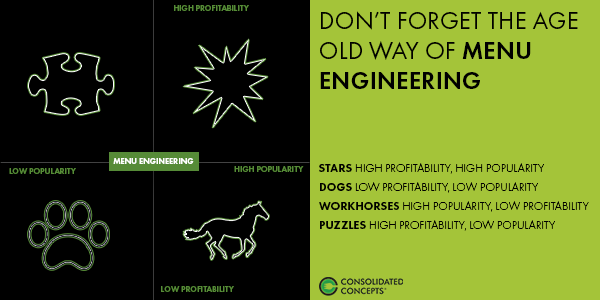
Our food procurement experts recommend looking at your sales report and identify your slow-moving items. Or, use the matrix below to help guide your decision making. This could be a great opportunity to remove those high cost, low profit dishes from your menu.

At the end of the day, if a dish is costing you more to have on the menu than you are making by selling it, consider removing it.

Menu engineering matrix is key part of food procurement process to help  operators identify if their menu item should stay or be removed.

Rationalize Your SKUs

Now more than ever, it’s critical to ensure your ingredients are cross utilized. Not only will this help drive profitability, but it will also help streamline font line operations.

Our food procurement experts recommend spending time looking at your menu item performance and food cost metrics. Your high profitability, high popularity items may justify requiring a few unique ingredients to them. However, dishes that are less popular or profitable may require you to re-think the SKUs required.

If you do have some items that are profitable but less popular, it’s important that you make sure each ingredient used is also being leveraged in one or two other dishes.

By focusing on SKU rationalization, you can help ensure that your restaurant chain is maximizing on profitability while also avoiding potential risk of spoilage.

Balance Scratch vs Prepared Items

In the restaurant industry, labor and cost savings are key. To help achieve that, our food procurement experts recommend you consider balancing some prepared items into your menu.

Many restaurant professionals prefer creating items from scratch. However, current times require that you seriously consider what value scratch items are truly adding to the dish.

The foodservice industry offers a lot of high quality and cost-efficient solutions that you can utilize in your restaurant to help you save on time, labor, and inventory. Things like soup bases, sauce mixes, and dehydrated potatoes are a great option to help you minimize SKUs while maximizing taste and profit.

Ask your distributor reps and brokers to introduce you to value-added products and make sure that they fit your restaurant chain and menu application. Or, connect with us for personalized consultation (it’s free!)

Hear From Our Food Procurement Experts

This article only scratches the surface on ways you can approach menu engineering during COVID-19 to focus on profitability.

To learn more, we sat down with one of our food procurement experts to dive deeper into ways restaurants can approach menu engineering during COVID-19. Click the video below to watch.

https://www.youtube.com/playlist?list=PL0m7_zZvBVXnGttw8IsMRGmQKNoanTEmO

It’s impossible to predict how long we will be feeling the effects from COVID-19. For that reason, it is critical restaurant reassess their food procurement and menu engineering process to maximize profitability.

By following these tips from our food procurement experts, your restaurant can save on costs and ultimately reduce expenses. In this time of uncertainty, that’s crucial. The decisions may be tough to make, but they could be necessary for the success of your operation.

For additional help, the food procurement experts at Consolidated Concepts created tools and resources to help restaurants learn more. These resources provide additional information on menu engineering as you adapt your restaurant to current times. You can download the entire reopening guide, or access an easy-to-follow menu planning checklist.

Contact us!

Do you have additional questions on menu engineering? Or, are you interested in learning about other ways Consolidated Concepts can help your operation find cost saving opportunities? If so, contact us!

At Consolidated Concepts, our team of food procurement experts are dedicated to helping your business thrive. Plus, did we mention it’s free to join?

restaurant paper towels

5 Reasons You Should Switch to Paper Towels from Air Dryers

Now more than ever, proper hand hygiene is no longer an option – it is a responsibility.

Recent world events have magnified the importance of restaurants enforcing proper hand hygiene at their locations. With so many touchpoints throughout an operation, following the correct hygiene procedures can help ensure the health and safety of both your patrons and your staff.

Additionally, hygiene and cleanliness in food service operations can shape patron perceptions 1.

A recent study revealed that customers will continue to be concerned about hygiene following the COVID-19 pandemic, especially in areas like restrooms and back of house 1.

While using the right soaps and hand products are a big part of the hygiene process, it’s equally as important to focus on the steps you follow after washing. The proper hand drying products helps maximize sanitation while helping to reduce the risk of spreading germs.

Air Dryers vs Paper Towels

Two of the most popular hand-drying solutions for restaurants include traditional restroom paper towels and bathroom air dryers. While both products can be effective for drying, paper towels have the upper hand regarding sanitation and efficiency.

Still not convinced?

Here are 5 reasons why you should switch to restroom paper towels from bathroom air dryers.

Paper towel dispenser and air dryer in a restaurant restroom comparing hygiene and hand drying methods

Hygiene

From a hygiene viewpoint, paper towels are superior to electric air dryers and paper towels can dry hands efficiently, remove bacteria effectively and cause less contamination of the washroom environment.

Use of paper towels is especially important in facilities where hygiene is most critical, such as hospitals and health clinics 2. But really, anywhere people need to turn off faucets or dry their hands after washing them, paper towels are preferred 3.

Consumer Preference

This one’s easy! Consumers prefer automated paper towel systems over air dryers 2.5 to 1 3. Can’t beat those stats!

Efficiency

Air dryers may be less practical because of the longer time needed to achieve dry hands, with a possible negative impact on hand hygiene compliance.

Because it takes longer for people to achieve dry hands from an air dryer, many may dry their hands ineffectively when using them. This could lead to a possible negative impact on hand hygiene compliance 4.

Noise

One thing that goes without question – bathroom air dryers are noisy.

Many hand dryers operate at levels far louder than their manufacturers claim and at levels that are clearly dangerous to children’s hearing 5.

Restroom paper towels are a great option to alleviate the excess noise.

Spreading Germs

Air dryers spread germs.

Jet dryers disperse 20 times more virus than warm air dryers and over 190 times more virus than paper towels.

Studies Show Paper Towels Have the Upper Hand on Drying

Infographic on how paper towels have the upper hand on drying

So, when it comes to drying hands, it’s easy to see why restroom paper towels are the “clean” winner.

Manufacturers like GP PRO (Georgia-Pacific) provide several great options of touchless paper towel dispensers. Products like the enMotion® Paper Towel System and the Pacific Blue Ultra™ Paper Towel System offer operators convenience and hygienic benefits for their restaurants. Both are easy to use and easy to maintain while helping to minimize waste.

Best of all? Consolidated Concepts clients can access these and more products from Georgia-Pacific at competitive pricing!

Contact Us!

Interested in learning more? Contact us today to add Georgia-Pacific paper towel dispensers to your operation, or to learn more about ways Consolidated Concepts can help your operation.


References

  1. GP Topline Trends PDF
  2. Huang, C., Ma, W. and Stack, S. (2012) “The hygienic efficacy of different hand-drying methods: A review of the evidence”. Mayo Clinic Proceedings, Vol. 87 No. 8, pp. 791-798
  3. GP PRO Proprietary Research: CPT-18-1829
  4. World Health Organization Guidelines for Hand Hygiene in Healthcare (2009) (Section 11.1.5, pg 31)
  5. Nora Louise Keegan, Children who say hand dryers ‘hurt my ears’ are correct: A real-world study examining the loudness of automated hand dryers in public places, Paediatrics & Child Health, pxz046, https://doi.org/10.1093/pch/pxz046
  6. Kimmitt, p. T. And Redway, K. F., “evaluation of the potential for virus dispersal during hand drying: a comparison of three methods.” National center for biotechnology information (NCBI), U.S. National Library of Medicine. Journal of Applied Microbiology, February 2016, volume 120, issue 2, 478-486
reducing restaurant costs during COVID

Reducing Restaurant Costs During COVID

As restaurants re-open their doors to welcome guests back into their dining rooms, many are struggling with idea of generating profit amid the challenges of low sales volume and an increase in expenses.  Restaurants are suddenly being asked to do more with less as city and state regulations necessitate an increase in spending on cleaning supplies, single-use menus, portion-sized condiments, disposable cutlery and personal protective equipment (PPE).  Additionally, the sudden increase in demand for off-premises meals means rising spending on disposables and carry-out materials as well as decreasing margins as operators pay 3rd party delivery service fees.  So… just how is an operator expected to turn a profit all while reducing restaurant costs during COVID?

One key factor will be how well the operator gets creative about reducing and offsetting their costs.  One of the simplest things that restaurants can do maximize their cost savings potential is join a Group Purchasing Organization or, if they are already a GPO member, optimize their use of GPO savings that are available to them.  GPOs like Consolidated Concepts offer optimization services that can compare a restaurant’s purchases to their GPO contracts to find new products on which to save and earn rebates.  Easily-swappable, non-emotional items such as garbage can liners, gloves, frozen chicken breasts, and pepper can be subbed out and help operators earn additional rebates, which equate to cash back to the restaurant’s bottom line.  Additionally, many manufacturers are currently offering special pricing to GPO members on items that are in high-demand, such as disposables, portion control packs, and grab-and-go items.

reducing restaurant costs during COVID

GPO savings don’t begin and end in the kitchen.  Consolidated Concepts’s “Beyond Broadline” programs offer a wide variety of savings opportunities on non-food expenses such as uniforms from Chefworks, DirecTV packages, Skechers footwear, equipment suppliers, paint retailers and technologies like credit card processing, 3rd party order consolidation, and telephone services.  All of these programs carry exclusive pricing for GPO members that restaurants would not otherwise have access to and are crucial expenses to trim back in order to offset the costs of other materials and services.

Labor utilization is also a key factor in controlling restaurant costs.  Given the nature of Paycheck Protection Program loans, it makes sense for operators to think about their employees and hires as ‘full time staff members’ as opposed to individual positions such as ‘line cook’ or ‘server’.  Restaurant staff should be expected to serve multiple functions: line cooks may also perform expediting duties and help sanitize areas of the restaurant, servers may also help stock the walk-in and take phone orders, and managers may perform duties such as washing dishes and helping to re-paint parts of the restaurant space.  These expectations should be clearly communicated to employees and should even be signed-off on so that staff members understand that for a certain period of time, their duties will extend beyond the confines of ‘normal’ restaurant roles. 

Cross-utilization certainly applies to ingredients as well as team members.  Successful restaurants will take the opportunity to re-tool their menus to focus on the biggest revenue-generating items and remove those that are adding unnecessary costs.  Menu items that utilize a lot of ingredients whose sole use is for that one dish should be carefully considered as food costs should be kept to an absolute minimum and food waste must be essentially eliminated in order to focus on profitability. 

Lastly, if there is one thing that restaurants should be investing in, it is technology.  This is the perfect time for restaurants to spend some of their loan money upfront to improve their processes for ordering food, tracking recipe costs and inventory, integrating with POS systems and managing cashless payments – all of which will result in better cost controls down the line.

There is now doubt that 2020 is going to be a tough year for every restaurant in the industry, but it is also a year for restaurants to focus on being smart, agile and lean. Those operators who keep their focus on their bottom lines – controlling costs and maximizing profits and reducing restaurant costs during COVID – are going to be the ones that not only survive, but capitalize on the available market share from those that ultimately wind up closing down. Questions or concerns? Contact us today.

Sign up for our Weekly Freshly Picked Newsletter by filling out the form below!

Window with sign hanging that says Come In We're Open

Cleaning Post-COVID: Are Your Restaurants Prepared to Re-Open?

In recent weeks, restaurants have spent a lot of time focusing on ways to keep their operations running during the COVID-19 pandemic. Many shifted to third-party delivery platforms, reduced staff, and scaled down menu offerings to help minimize labor and cost. It was the necessary steps needed for operations to survive in a world without dine-in services.

Recently, parts of the country have started transitioning to life post-pandemic and began allowing restaurants to once again open their doors to dine-in guests at a limited capacity. Eventually this will extend to all states across the country and we will see restaurants everywhere welcoming patrons back.

With this new dawn approaching, it’s time for restaurants to shift their focus back to dine-in operations to ensure they are prepared to re-open. A big part of this focus needs to be on health, cleaning, and sanitation. Understandably, patrons may feel skeptical returning to physical operations due to lingering concerns around COVID-19 and other potential illnesses. However, there are some key steps restaurants can follow to help alleviate that concern.

Anticipate Needs and Concerns from Guests

There is a lot of uncertainty around how guests will adapt to dining in at restaurants again. What’s clear is that the public will have a heightened focus on cleanliness and sanitation and will be looking for a sense of safety upon their return1.

One way to directly address this is to be proactive in sanitation efforts. Guests are uncomfortable using menus touched by other patrons? Replace them with single-use paper menus or encourage them to use their phones as the menu. Social distancing is a top concern? Utilize floor markers throughout restaurants to help maintain proper spacing between guests.

As restaurants start to re-open, there will likely be a slower volume of patrons coming in than before the pandemic. Being able to proactively anticipate and address the concerns of patrons will help create a sense of trust and allow guests to know that the restaurant is a safe place to begin reconvening life1.

Follow Proper Cleaning Procedures

When it comes to re-opening locations in current times, cleaning and sanitizing must be top of mind for all operators. Most importantly, operating procedures must include the cleaning and sanitization of all-contact surfaces in both front and back of house2. While it sounds like a simple task, there are several steps that need to be followed to ensure the spread of COVID-19 and other diseases are prevented.

  1. Clean: remove physical dirt, dust, and debris from surfaces. This step does not kill germs and bacteria but impairs environments that harbor them 1
  2. Sanitize: reduces the occurrences and growth of bacteria, viruses, fungi, and pathogens on surfaces 1
  3. Disinfect: kills or destroys microscopic organisms and pathogens on surfaces. While it does not clean dirt or germs off the surface, it does prevent infection or disease transmissions by killing the pathogens

It may seem like a daunting task to ensure all steps are followed properly when cleaning the surfaces throughout a restaurant, but there are several tools available for operators. Organizations like the CDC have provided ample information on hygiene and sanitation for the food service industry. Additionally, Consolidated Concepts and Buyers Edge Platform have created a Sanitation Best Practices guide for operators to follow. Manufacturers like Unilever and Georgia-Pacific have also created checklists that restaurants can reference to ensure they properly clean their establishments to meet OSHA guidelines.

Communication is Key

Nearly as important as properly cleaning restaurants is communicating to patrons that cleaning measures are happening. This is a key step in the re-opening process. Whether beneficial or not, guest perception will quickly become a restaurant’s reality. If a patron questions the quality of an operation’s sanitation, it may impact their likelihood of returning.

Communication efforts should be focused on educating the guests of what proactive measures are being taken to keep a restaurant clean and help keep guests safe1. It’s important to use visual and psychological cues to let guests know you are diligently following safe and effective cleaning and sanitation protocols.  Posting guidelines for social distancing by the entrances1, hanging easy-to-follow hand hygiene guides in restrooms, and clearly identifying separate areas for pick-up or delivery are some ways to help proactively communicate efforts to patrons.

Additionally, it’s important to reinforce proper hand hygiene3 and cleaning procedures for staff throughout restaurants so guests can visually see the sanitation practices taking place. There are a number of products available from manufactures like Essity and Georgia-Pacific to help make this easy.

Prepare Personnel

Reinforcing proper hand hygiene and sanitation is a benefit for staff and patrons. There are additional steps available help ensure personnel is prepared to re-open the restaurant.

A big thing to consider when re-opening a restaurant is staffing. Due to ongoing concerns around COVID-19, restaurants should anticipate a potential lag in staffing in the early stages of re-opening. As a result, it’s important to be prepared to hire and onboard new personnel if needed1.

From there, it is important to ensure the health of staff before they return to work. Adding a temperature kiosk is an easy way to protect the safety of employees and guests by preventing entry from anyone with a temperature. It’s also important to encourage employees to stay home if they are not feeling well.

All staff will need to be trained on new cleaning and sanitation processes and encouraged to practice them regularly. Keep ample cleaning supplies and easy-to-reference protocols readily available to staff throughout the restaurant. Sanitation checklists from Consolidated Concepts, Georgia-Pacific, Tork, and Unilever can be a great tool here.

Window with sign hanging that says Come In We're Open

If restaurants are planning to re-open dine-in services soon, it’s important to think ahead and prepare accordingly for the re-open process. COVID-19 has left a big impact on the industry and heavily influenced the public’s mind as it relates to health and sanitation. Having the right plan in place to tackle sanitation concerns can ultimately help operations succeed in the re-open process and gain back the trust of patrons.

Consolidated Concepts is here to help. If you are interested in learning about sanitation and cleaning products available through our platform or other ways a GPO can help you in the re-opening process, contact us! We’d love to meet you.


References:
Source 1
Source 2
Source 3

Coronavirus: How to Quickly Pivot Your Operation to make it through this time

Table full of fresh, colorful produce.

As operators close dine-in operations, successful operators are quickly pivoting their restaurant to include more take-out, delivery, curbside, and other innovative ways to continue to bring customers to their doors. Below are a few common ways we’re seeing operators make a change to their operation to stay afloat.


Update your menu and business model to incorporate take-out and delivery

Shortening your existing menu down to fewer items will increase your operating efficiency and help ensure more success in delivering great food! Here are some options to keep in mind when thinking through your menu.

  • Make sure to engage your staff; servers and chefs can have great ideas for a take-out menu.
  • Publish your to-go menu on your website and Facebook pages so that diners can view your offering and place orders for carry-out or delivery!
  • When moving to Curb Side or Take-Out look at providing a condensed or temporary Menu. This will enable you to not only execute quicker but will look after your in house inventory & product spending.
  • Cross utilize and condense ingredients
  • House-made soups are a great way to use ingredients up that may have fallen off the menu or you’re overstocked on – create them and sell in quart or larger containers
  • Consider prepared or ‘take and bake’ family meals, ie. pasta or lasagna or pot roast. Look for comfort-food entrees and round out the menu with a salad/vegetable and dessert
  • If shrinking down your menu, set aside or freeze the items that don’t travel well. Or use them to feed your staff.
  • Consider packing some ingredients separately – such as sauces, toppings, croutons and dressing Items that work very well for to-go:
  • Lasagna and other bulk pasta dishes
  • Anything braised such as stew or pot roast • Roasts – consider prepping roasts raw by cutting, seasoning, packaging then provide instructions for the customer to bake at home

To increase profitability, also consider pairing each entree with a beverage to make it simple for customers to order the combination with one click rather than having to click through to the drinks section and order a la carte. Put bundles first in your online menu lineup.

Consider adding grocery items to your operation

At Consolidated Concepts, we’ve seen several clients begin to offer selling fresh produce, shelf-stable items, and some paper products. If you’re looking to add this to your operation, consider connecting with your distributor and begin advertising on your online menus and any third-party delivery apps you are working with.

Man with arms raised in kitchen with fresh produce in bins.
Blue Moon begins to offer fresh produce, canned goods and more.

Stay in the know of state and federal regulations

As we’ve all been witness to, the changes in the industry both on the federal and state level are happening quickly. While it’s a trying time for all, there are a lot of reputable resources sharing consistently updated information.

We are here to help. Let's Connect. (800) 260-0598
chair-cutlery-diner-941861

The Five Biggest Growth Challenges That All Restaurant Operators Face

Whether your organization is growing from 1 to 2 locations, 10 to 20 locations or 50 to 500 locations, you are in transition and there are many factors involved in whether you will be successful with this growth. Many elements of your growth will create an emotional high of which there is nothing like it, but caution, there are many bumps in the road with growth of which some you will see, recognize and react to quickly and some that you will miss or not be prepared for.

The future of your organization depends on the pillars you have set up. The pillars may grow taller as you grow, but keeping them strong without crumbling is the challenge. Below are the five biggest growth challenges that you may face.

Capital and Financial Stability

In order to grow your brand, you have come up with one or many ways of raising the money you will need. This may include self-funding, independent investors, banks, private equity or a combination. You have big plans for your growth. Is this plan realistic and have you raised enough money to support it? In a perfect world, you would be dealing with a cookie cutter budget to work with. This would mean having AAA real estate with the exact same square footage costing you the same dollar per square foot with construction and other new store opening costs being the same for each location and all projections running on time. You would have no trouble hiring or training, your guests would line up from day one and your sales projections would be right where you had expected from the beginning and stayed that way forever. Unfortunately, projecting growth does not work like that and you have to plan for those twists and turns along the way. What you can’t be is under-capitalized as this will create pressures that affect the whole organization.

Financial stability of the company can’t be compromised by being under-capitalized with your growth. The restaurant locations that you have open must be able to be managed properly with no cutting of corners including vendors being paid on time. Your restaurants must continue to look sharp. One of the biggest growth issues is declining sales from existing locations simply because they are not being maintained properly and in general, because eyes are so much on the future that the present is not being focused on properly.

Real Estate/Site Selection

This appears obvious, but are you under pressure to grow at a pace that may not be realistic? This may cause you to choose locations that do not fit your standard for demographics, size prototype, dollar per square foot, landlord buildout support, construction costs (union vs non union), labor availability and cost of labor and so much more. You also have to factor in the added cost to your operations when you spread out to multiple markets.

One bad location will need four good ones to make up the needed bottom line.  It is critical to have a real estate specialist on staff or work with an external restaurant real estate company. In either case, they need to know the markets extremely well and be under the microscope to find you the standard that you have come up with. They need to have the connections with the landlords and development companies and understand all the parameters of what will provide you with successful restaurants. Every location will not be perfect. You will have some that exceed expectations and some that will fall a bit short, but the key is to avoid choosing the wrong markets and the wrong sites. Make sure you have a qualified real estate professional working on your behalf.

Infrastructure/Internal vs External Support

Growth requires the right people pushing the buttons. Along the way, no matter what the size of your company, there will be people wearing multiple hats. You need hybrids in every organization, but as you grow, you need specialists who have areas of expertise that will be critical to your success. As you grow, things become more complicated. You may have been a distributors dream in the original market that you started in and your buying power as a small regional chain may have been good. You may have been negotiating your own deals and developing the menu items that made you a success.

You may have picked your own real estate and was actively involved in each new store opening. Now you have to make some big decisions. Do you hire internally or do you bring in short term or long term specialists to make sure that you have the knowledge and expertise to make sure stay on the path to success. Typically it is best to do a combination of both. The crucial part of this is to be prepared. You need to continue to have a plan on the stages of when you need to add this support.

Systems and Consistency

Preparing for growth usually starts with the three areas above. You may have the money, locations and even the people to make it happen, but are you ready? Yes, you love your brand and you believe it is better than everyone else. You can’t wait to get it into different markets and confirm this, but are the systems in place to protect your brand? Without over the top detail, your brand will begin to look different from place to place. You have put your stamp on the design and layout of the locations. Now you have to do it from the restaurant set-up, training and operations. The team involved in the hiring and training of your restaurants staff will create the culture of your new restaurants. Yes, there needs to be clear training materials that are very visual in what the specifications of products are, how they should be prepped, how they should be served, how to store products and clean the restaurant, but you can’t put passion on a piece of paper. There are a lot of options for labor in today’s market.  Without good people who believe in your brand and who will execute your message, without you there, inconsistency will begin and your brand will slowly erode.

You need to put in checks and balances with continual corporate training and systems, but avoid cookie cutter openings when it comes to culture. You also must make it clear as to where there is no flexibility and where there is flexibility and what that means. Some things such as your proprietary products must be at every restaurant and your distributors must have them available even for your first location in a market, but it is not realistic to expect every ingredient to be the exact at every location. For instance, you may have a spec of a 14-18 ct Applewood smoked bacon from Smithfield for your locations, but in a new city where you are opening your first location, the distributor does not stock Smithfield for this item, but has two others with same spec. You should be cutting multiple products in advance and approving alternates. Once you build up volume, you can move to the original manufacturer.  Every location you open must feel like it is the only one. The focus needs to be on your standards so your guests can be wowed. By creating the systems and standards early, this can be accomplished.

Balancing Emotion in your decision making

From a company’s first location to their 500th, restaurant brands all feel that their food, beverages, design, layout, menu and concept in general are the best and needs tweaking, but no real change. Restauranteurs have passion and are artists in their own way. Early success tells them that their critics (their customers) love them and will always love them. At the beginning, the founder and creator was in the restaurants a lot and spent time with their guests. They watched the quality of the food, they made sure the restaurants were clean and they could count on many relationships they created with vendors and their staff. As you grow, you begin to count on others to follow your lead and execute much of what you used to do. The food, service and cleanliness are assumed to be as great as ever and you assume that your customers will come to you forever. Is it possible that they love your burgers and come for that, but never liked your fries? Do you have fish n chips that are a big seller and you are using cod because you like cod, but your guest does not even know? You also will assume that your vendors and other outside relationships are the best and that your pricing on items is better than anyone else.

The first thing that should be clear is that your vendors and anyone else that you count on your business will always look out for themselves first and then you. There are things that you do not know that may not be as transparent as you think. If you feel a deal is too good to be true and so much better than others much larger than your organization, it is most likely not. As you grow, there are very important decisions that need to be made that allow you to keep your organization consistent, but growth may not allow you to do some of the things that you have always done in one region. Key initiatives such as local, organic, scratch, cut fresh must be maintained but not on everything. You need to be concerned about availability, labor, food safety, guest credit and so much more. Do you really need to make fresh guacamole in a restaurant that is primarily Italian? Do you really need beautiful hot house tomatoes for chopping and placing in your salsa? Does your guest really need for your burgers to be ground in each location and do they notice the difference? There are so many questions like this to be pondered as you grow. Ask lots of questions and stand by certain things and create alternate plans where you can. Make the decisions at your convenience as opposed to when you are forced to…..

There is nothing better than taking a brand and growing it. Understanding the challenges early in the process and doing the heavy lifting at the right time will make the chances of your success far greater.

electricity-light-bulb

How You Can Cut Costs on Your Restaurant’s Utility Bill

Restaurants are known for their razor-thin profit margins. That notion holds particularly true among affordable fast-casual and quick-service concepts. Add on pressures like rising real estate costs, unpredictable food prices, and minimum-wage hikes across the country, and operators are left with even less of a financial safety net.

In this climate, every penny counts. One often overlooked factor into your monthly costs comes from your utility bill. While something like a utility bill may seem like a fixed, somewhat inelastic cost, there are changes and improvements to your restaurant that can save you money and increase your bottom line. To help, we’ve asked an expert at SIB Fixed Cost Reduction to identify ways restaurants can lower their utility bill and save themselves money in the long run.

Cut Costs on Your Utility Bill

Make Sure You’re Using the Right Light Bulbs

LED lighting upgrade savings for restaurants showing reduced electricity costs and improved guest experience

If you are still using incandescent bulbs in one or more of your restaurants, it’s time to make the switch to LED. This is the fastest way to lower the electricity bill. Switching to LED bulbs can lower your costs by 50-75% per fixture.

The transition will require some upfront costs that take time to show results, but in the long run the ROI for a switch to LED will pay off.

For example, let’s say you have lights in your parking lot, and you replace one of the heads on those lights from incandescent to LED.

The initial cost may be around $300, but you save 10% per head per month, so in 3 years the project will pay for itself.

In addition, a cleaner and more well-lit parking lot attracts more customers to your business, which will help to accelarate the the break-even cost of switching the heads in the first place.

Upgrade Your Old HVAC System

Upgrading HVAC systems in restaurants to improve energy efficiency and reduce maintenance costs

This can be a drastic change, and a fairly large financial undertaking in the short term, but upgrading old and inefficient HVAC systems can do wonders towards energy efficiency, and ultimately, your savings on monthly utility costs.

These are savings you will begin to notice immediately following the upgrade. To ensure that your HVAC system is running at it’s most optimal, consult with a trusted contractor about what’s the best fit for your location.

Protect your investment by establishing a sound maintenance program.

This includes regular cleaning and inspection of your HVAC equipment by a qualified professional.

Add Tints to Exterior Windows

Exterior window tinting benefits for restaurants including reduced cooling costs and improved temperature control

Adding tints to exterior windows is an effective way to save on heating and cooling your business, especially in the summer season.

The window tint acts as a barrier between the sun and your business, blocking out ultraviolet light and keeping the interior of your business cooler.

This will allow you to save on running the air conditioning, cutting down on the electric bill.

In the winter month’s the window tint can help to keep heat in. In addition to lowering your energy costs, this addition will also save wear and tear on your HVAC system, keeping your business at a more steady temperature.

Know Your Electricity Market

Comparison of regulated and deregulated electricity markets for restaurants to optimize energy costs

In the U.S, there are 2 types of electricity markets: regulated and deregulated.

In a regulated market, the utility company owns all of the infrastructure around electricity. These companies then sell directly to the consumers at fixed rates. The rates are set by a state’s public utility commissions. In regulated market there are different tiers, so it is important to ensure that your restaurant is being charged the correct rate. There are different industries rate structures.

For example, a restaurant’s rate structure may be different than that of a hotel or shopfront.

On the bill there is a code that says whatever rate structure you’re on.

You will have to call the regulated utility provider and tell them you’re doing an audit or confirm online that you are on the correct rate. 68% (34 states) are in a regulated electricity market.

In a deregulated market, private competitors buy and sell electricity by investing in power plants and transmission lines. Generators sell the wholesale electricity to retail suppliers, who then sell to consumers. In a deregulated market, the retail suppliers set the prices for consumers.

Areas with deregulated markets are: California, Connecticut, the District of Columbia, Delaware, Illinois, Massachusetts, Maryland, Maine, Michigan, Montana, New Hampshire, New Jersey, New York, Ohio, Pennsylvania, Rhode Island, and Texas.

If you operate in one of these areas, comparing bids from multiple brokers to ensure that you are getting the best price is an effective strategy to cut down your utility bill and save your business money.


Interested In Learning more? Enter your email address below to sign up for our Newsletter.


atmosphere-bad-weather-cloudiness-2397870

Hurricane Season: Will your supply chain be impacted?

With the world watching Hurricane Dorian’s path along the Southeastern seaboard, restaurant operators are bracing for a storm of their own. In the world of food costs, Mother Nature is often the one x-factor that no one can control.

While commodity experts have projections on what they think will happen with crops each year, nothing can put a wrench in those plans quite like drought, floods, hurricane’s, freezes, or any other natural disaster.

So, when it comes to risk management, having a contingency plan for weather-related challenges should be top of mind, especially now. Citrus crops, avocados and anything else that grows in moderate temperate climates, specifically in Florida, are at risk. However, operators can pass through these unavoidable implications if they take the necessary steps to protect themselves and their supplies.

Ways to Prepare and Minimize the Impact

Here are some ways to prepare and minimize the impact:

citrus
  1. Create an acceptable list of substitutions for key / high volume ingredients that are critical to your menu. Examples of this include using blueberries in place of strawberries, plum tomatoes in place of layered tomatoes, and citrus grown in other markets.
  2. Identify an alternative / limited menu in anticipation of certain products being unavailable. These can be used as limited-time offers until your original ingredients become available.
  3. Pre-determine alternative sourcing for your top five to 10 critical items.
  4. Adjust par levels and confirm the right pack size being used to minimize waste.
  5. Utilize every and all local produce programs at your disposal.  The window of opportunity may be limited so work with your produce supplier to determine best opportunities.
  6. If you can, use a frozen product in recipes that can easily accept them.
  7. If you have room, plant a small garden inside your restaurant and capture the “grown here” flavor. While it may take some time for these plants to grow, you can always buy something that has a crop readily available.
  8. Look to use greenhouse type products in your menu. This can definitely be done where herbs or other hybrid varieties of produce can be found.
  9. Maintain flexibility whenever possible on menus. Avoid specifying particular vegetables or fruits whenever possible.
  10. Look at alternate pack sizes that may be more cost friendly.

Plan Ahead to Reduce Supply Chain Disruptions

Nobody can truly predict what Mother Nature has up her sleeve. But by having a plan before the next natural disaster occurs you can better protect your ingredients, menu items and customer expectations. In regard to Hurricane Dorian now, have an alternative plan of action so your menu items and customer base have little cause for concern.

popeyes chicken sandwich soldout

Supply Versus Demand: Popeyes’ Chicken Dilemma & What Should Restaurant Owners Take Away

It appears that Americans will long remember—at least until the next hot topic makes the headlines—the war that erupted as the 2019 summer season winded down. It was a war that resulted in exhaustion for some, irritation for others and, as most wars are prone to do, great wealth for big business followed by tragedy. Yes, you guessed it, we are referring to the “Chicken Sandwich War.”

How the Popeyes Chicken Sandwich Sparked a Fast-Food Rivalry

It started with a tweet. On August 12, Popeyes announced via Twitter that their long-awaited buttermilk-battered chicken breast sandwich on a brioche bun was on the menu. Their rivals, namely Chick-fil-A, Wendy’s, and Shake Shack, felt the first rumblings and knew their market share was at risk.  

Chick-fil-A responded with a tweet of their own which, of course led to another tweet by Popeyes—and the war had begun. Suddenly, according to Google Trends, Google searches for “Popeyes chicken sandwich” grew almost 1000 percent. Wow.

Millions of Dollars in Free Advertising

According to Forbes and Apex Marketing Group, Popeyes would have had to pay an equivalent of $65 million dollars in marketing for the attention it received. Not bad. Restaurants reported selling over a thousand chicken sandwiches in a day—with long lines and irritated customers creating havoc.

Just two weeks later, on August 27, the fatal announcement was made: Popeyes had run out of chicken for their newly claimed-to-fame chicken sandwich. Really? Just how did this extraordinary demand lead to a supply chain crisis? And is this a sign of the times when social media gone viral can disrupt the best laid plans? Originally, Popeyes believed their chicken inventory would last until the end of September, instead, they went through two months of chicken breasts in just two weeks.

In typical supply-versus-demand economics, someone even tried to sell a Popeyes’ chicken sandwich on eBay for $7,000. Only in America.

Disrupted Supply Chains

Mind you, supply-chain tragedies are a worldwide phenomenon. In February of 2018, the United Kingdom experienced the closure of 600 branches of Kentucky Fried Chicken due to a chicken shortage. According to The Sun, KFC’s new supplier, delivery giant DHL, faced challenges getting fresh chicken out to the 900 restaurants across the country.

Recently, when KFC tested a plant-based version of their fried chicken—Beyond Fried Chicken—at a location in Atlanta, they sold out in just five hours.

So, one wonders, just who was supplying the 2,400 Popeyes’ locations across the country with their chicken? (Currently, Popeyes is not divulging that information). And, why is there a shortage when the U.S. is expected to process a record 43.3 billion pounds of this poultry in 2019?

It comes down to the specifications of a certain product. Restaurant chains, particularly fast-food enterprises, don’t head to the big conglomerates, such as Tyson, and buy up massive chicken breasts. Their products are often made for quick turnaround and include breading, seasonings, or a specific size that requires additional processing.

Unfortunately, as Popeyes works out their supply dilemma and searches for new chicken suppliers, time is slipping away. As any in the marketing industry know, businesses need to ride the wave of viral fame when it comes their way. For now, McDonald’s is scrambling to create a chicken sandwich worthy of getting in the competitive game, while still maintaining quick service times, and Chick-fil-A and Wendy’s are still selling chicken sandwiches.

If nothing else, the war of the season reminds those in the industry the importance of streamlining their supply chain and developing their social media strategy. And then being prepared for the resulting avalanche of success should the nation take notice.

Consolidated Concepts helps multi-unit restaurants manage their supply chain and distribution agreements, including negotiating custom contracts for LTOs and specialty menu items. Discover how Consolidated Concepts can reduce costs while increasing operational efficiency and improving revenue.


meni-innovation

Menu Innovation: How Technology Plays a Part

While there are some restaurants that have built a solid reputation and extreme success by staying faithful to their tried-and-true menu such as Sweetgreen, a farm-to-table salad concept that has grown to 91 locations in 12 years and is valued at more than $1 billion, many require relatively frequent updates. It seems to be a byproduct of the current changing trends and foodie reviews that have potential clientele checking out what restaurant is serving the latest edible algae ten minutes after spotting it on a post or tweet.

Graphic showing how restaurant technology turns disconnected data, multiple suppliers, inconsistent processes, and rising costs into unified visibility, streamlined procurement, and measurable savings

So, just how are restaurants redefining and modeling their menus under this state of constant flux, with many making daily changes? Enter the world of technology.

Digital Restaurant Menus

This interactive experience allows guests to order straight from tablets delivered to their table. Many of these tablets also offer payment methods including credit card readers and even the ability to pay using mobile apps such as Google Wallet and Apple Pay.

This digital technology also allows for daily menu changes that include mouth-watering photos. When Iowa State University researchers placed a rotating digital image of a salad on a menu for campers at a YMCA, there was as much as a 90 percent increase in salad consumption among the kids. They also found that the more vivid and realistic the moving photo was, the greater the response. A digital menu is the best and easiest way to implement this technology and even steer your guests toward dishes with the highest profit margin.  

Restaurant Kiosks

Today’s technology has created personalized service without the people. Artificial Intelligence (AI)-powered platforms allow kiosks to react like humans and some can accomplish this through facial recognition. Once recognized, the kiosk then searches its database, finding past orders and making suggestions based on this knowledge. I know, a little creepy and cool all at the same time.

While facial recognition is not yet the norm, it is definitely on the rise. BurgerFi, a South Florida-based chain, is using these types of kiosks at 22 of their 108 locations. Wow Bao in Chicago is also one of the trend setters.

Self-order restaurant kiosks have been on the rise for some time with McDonald’s leading the way in 2004. Restaurants such as Panera Bread have had this technology for years while some new kids on the block include Subway, Taco Bell and Wendy’s.

A nice side effect is this: It appears that people may feel a tad uncomfortable ordering more food than society deems appropriate. A study reported in Modern Restaurant Management found that, in addition to increasing sales, those that used self-service kiosks ordered, on average, 21 percent more, resulting in about $5 more per transaction. Not bad.

Not only do these technology wizards increase sales and upsell every guest, they also make it easy to modify and add a new menu item or tweak an old one.

Restaurant Data

Modern restaurant management systems offer insights that restauranteurs of yesteryear could only dream of. This includes dining patterns and seasonal preferences, information that allows restaurants to schedule new menu items based on past success and comparative sales.

Branded Restaurant Mobile Apps

We are a generation on the go…and the restaurant industry is certainly one that has been forever transformed because of our current desire to eat on the run. In fact, since 2014, digital ordering and delivery has grown 300 percent faster than in-house dining.

If you haven’t developed a branded mobile app for your restaurant, now is the time. It allows your loyal clientele to place their to-go orders in a matter of minutes with no interaction required. These apps are also directly integrated with your POS system, and the digital menu platforms allow guests to pay in advance, making their experience seamless. Many include pairing recommendations as well as upselling suggestions while others integrate with your loyalty program. Choose accordingly.

POS Technology

The Point-of-Sale systems that are available today make changing a menu item and establishing an appropriate price for the dish relatively simple. Sales-data analysis provides you with the ability to make timely changes to your menu in order to keep sales moving in the right direction.

Menus are one of the more personable items in restaurants that both chefs and owners as well as employees can become attached to. Embracing change through technology allows for a fluid movement as it becomes clear which items are working, and which ones should go the way of the dodo bird. Change is not always easy, but it is inevitable—and the only way to rise is to take the next step up the ladder.