
If you’re responsible for purchasing across multiple restaurant locations, you already know food sourcing isn’t as simple as finding the lowest price.
One supplier might deliver great produce but struggle with fill rates. Another consistently hits delivery windows but charges more than you’d like. Then there’s the challenge of keeping menu quality consistent while costs, product availability, and customer demand seem to change every week.
Those decisions add up quickly when you’re managing dozens, or even hundreds, of restaurants.
A strong food sourcing strategy helps bring more structure to those decisions. Instead of reacting every time a product goes out of stock or prices spike, restaurant groups can build supplier relationships, sourcing standards, and purchasing processes that support the business over the long term.
In this guide, we’ll break down what food sourcing really means for multi-unit restaurants, the types of suppliers available, and practical ways to build a sourcing strategy that supports consistency, profitability, and long-term growth.
Understanding Food Sourcing in the Restaurant Industry
Ask five restaurant operators what food sourcing means and you’ll probably get five different answers.
Some think of it as finding suppliers. Others think it’s negotiating prices or deciding where ingredients come from. In reality, it’s all of those things working together.
Food sourcing is the process of deciding who supplies your products, how those suppliers are selected, and how those relationships are managed over time. It influences everything from food quality and menu consistency to purchasing costs and operational efficiency.
For multi-unit restaurant groups, those decisions become much more complex.
A supplier that works well for one location may not have the distribution network to support twenty more. Seasonal products may be available in one market but difficult to source in another. Even small differences in product specifications can create inconsistent guest experiences across locations.
That’s why successful restaurant groups don’t treat food sourcing as a one-time project. They revisit supplier performance, evaluate market conditions, and adjust their sourcing strategy as the business grows.
Done well, food sourcing helps operators:
- Deliver a more consistent guest experience across locations
- Improve purchasing visibility
- Build stronger supplier partnerships
- Better manage food costs
- Reduce disruptions when supply challenges arise
- Make purchasing decisions with greater confidence
The goal isn’t simply to buy food. It’s to build a sourcing strategy that supports every restaurant in the system, today and as the business continues to grow.
Types of Food Suppliers Restaurants Can Work With
Very few restaurant groups get everything they need from a single supplier. In most cases, that’s by design.
One supplier may have the best pricing on everyday staples, while another is known for premium seafood or locally grown produce. Some have the distribution network to service every restaurant in your system. Others are better suited for a handful of locations or specialty products.
The goal isn’t to find one supplier that does everything. It’s to build a supplier network that supports your menus, your operations, and your growth plans.
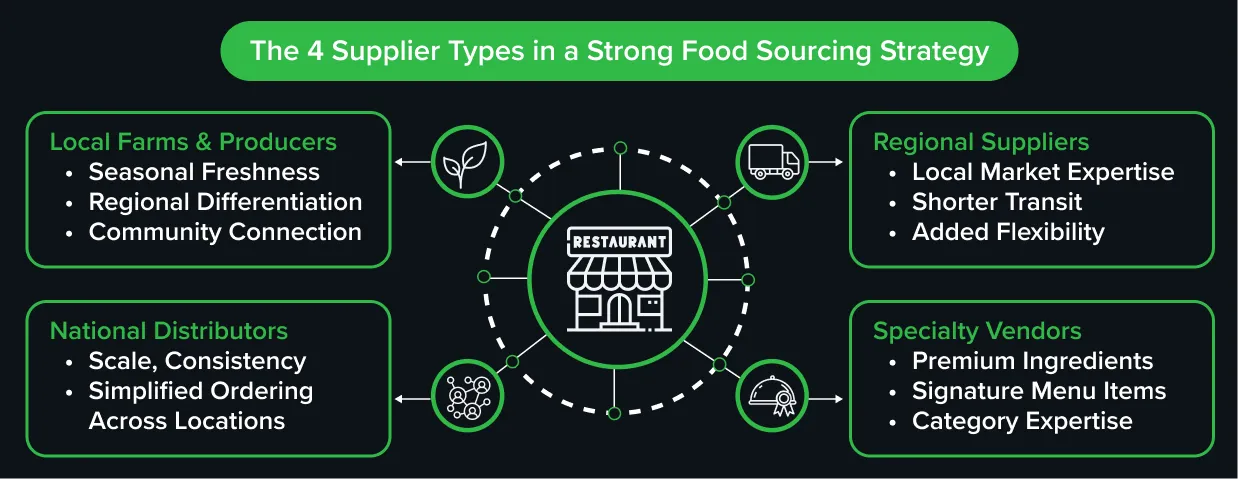
Local Farms and Producers
Buying from local farms and producers can help restaurants bring fresh, seasonal ingredients to the menu while creating a stronger connection to the communities they serve.
Many restaurant groups lean on local partners for produce, cheeses, meats, honey, or other regional specialties that help set their menus apart. Guests often appreciate seeing locally sourced ingredients, especially when those products are highlighted in seasonal promotions or limited-time offerings.
The challenge is scale. A local grower that can easily support three restaurants may struggle to supply thirty. That’s why local food sourcing usually works best as one piece of a larger sourcing strategy instead of the entire plan.
Regional Suppliers
Regional suppliers often fill a gap that national distributors and local producers can’t.
They typically serve a specific part of the country, which means they understand the products, growing seasons, and supply conditions unique to that region. If your restaurant group operates throughout the Southeast, for example, a regional supplier may have stronger relationships with nearby farms and producers than a distributor shipping products from across the country.
That shorter distance can make a difference. Products often spend less time in transit, and suppliers may be able to respond more quickly when restaurants need additional inventory or when market conditions suddenly change.
Regional suppliers can also provide another layer of flexibility. If one grower has a poor harvest or a product becomes difficult to source, a well-connected regional supplier may have other options available without forcing restaurants to completely change their purchasing plans.
For many multi-unit restaurant groups, regional suppliers aren’t a replacement for national distributors. They complement them. National partners help create consistency across the organization, while regional suppliers add flexibility, local expertise, and access to products that may not always be available through a broader distribution network.
National Food Distributors
When restaurants expand into multiple markets, national distributors often become an important part of the food sourcing strategy.
Their biggest advantage is consistency. Whether a restaurant has ten locations or two hundred, operators can often source many of the same products through one distribution network. That simplifies ordering, invoicing, and delivery while making it easier to maintain menu standards across the system.
National distributors don’t eliminate every sourcing challenge, but they can reduce a lot of the complexity that comes with managing purchasing across multiple locations.
Specialty Food Vendors
Not every ingredient belongs on a broadline order.
Signature steaks, fresh seafood, artisan breads, imported cheeses, premium coffee, and specialty desserts often come from vendors that focus on a single category instead of thousands of products.
Working with specialty suppliers allows restaurant groups to protect the quality of menu items that guests specifically come back for. While these vendors may represent a smaller portion of total purchasing, they often play a big role in shaping the guest experience.
For many multi-unit operators, the strongest food sourcing strategy blends all four supplier types. National distributors provide consistency, regional suppliers offer flexibility, local producers add seasonal variety, and specialty vendors help elevate the menu where it matters most.
How to Develop an Effective Food Sourcing Strategy
Food sourcing doesn’t happen by accident. The restaurant groups that consistently control costs, maintain product quality, and avoid supplier headaches usually have a plan behind the scenes.
That doesn’t mean the plan has to be complicated. It simply means taking the time to define what your restaurants need, choosing suppliers that can consistently meet those expectations, and revisiting your strategy as your business grows.
Here are four steps that can help build a stronger food sourcing strategy across multiple restaurant locations.
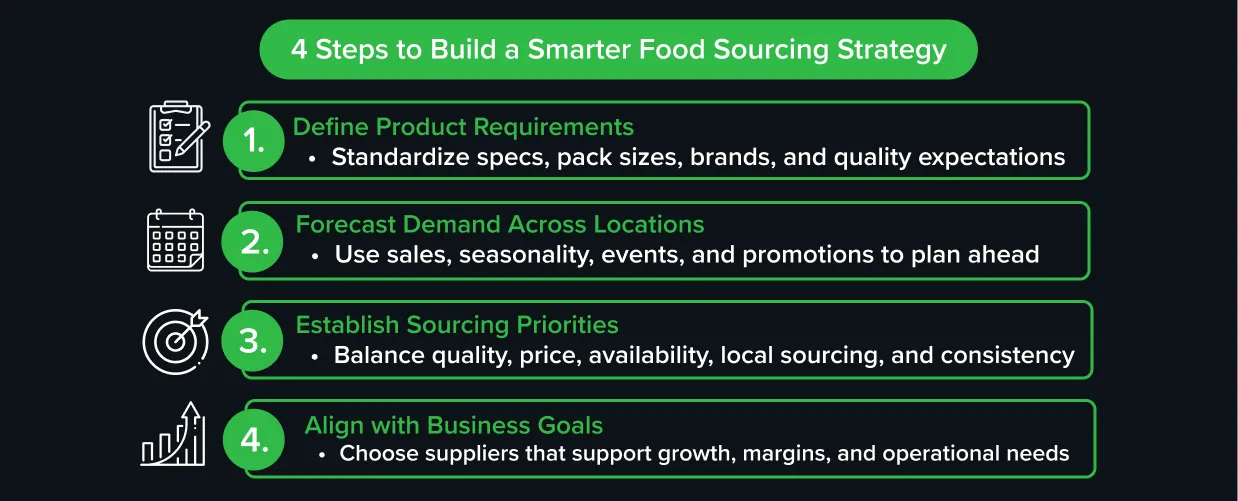
Step 1: Define Product Requirements
Before you start comparing suppliers, take a close look at what your restaurants are actually ordering.
It sounds simple, but small differences in product specs can create big headaches. One supplier’s chicken breast may be larger than another’s. A case of tomatoes might arrive with a different size or pack count than your kitchens are used to. Even something as simple as the type of bun or the cut of steak can throw off consistency from one location to the next.
The more specific you can be, the better. Document the products your restaurants use most often, including preferred brands, sizes, quality standards, packaging, and any other details your suppliers need to know.
That extra work upfront makes ordering easier, gives suppliers a clearer picture of your expectations, and helps every restaurant receive the same products.
Step 2: Forecast Demand Across Locations
The best purchasing decisions usually happen before anyone places an order.
Take time to look at what’s coming over the next few weeks. Are you rolling out a limited-time offer? Heading into patio season? Hosting restaurants near a major sporting event or festival? Those things can all change how much product you’ll need.
Past sales are a great place to start, but they don’t tell the whole story. Local events, weather, holidays, and menu promotions all influence demand, and not every location will experience those changes the same way.
When suppliers have a better idea of what’s ahead, they’re in a stronger position to keep products available and help you avoid those last-minute scramble orders that nobody enjoys.
Step 3: Establish Food Sourcing Priorities
Every product doesn’t need the same sourcing strategy.
For your signature burger blend or house-made pizza dough, consistency may be the top priority because guests notice even small changes. Fresh berries for a seasonal dessert? You may care more about availability and freshness than sticking with one supplier year-round.
Think through what matters most for each category before you start evaluating suppliers. Ask questions like:
- Is quality the biggest priority?
- Do we need stable pricing?
- Is year-round availability essential?
- Would local sourcing add value?
- Are sustainability goals important for this product?
- How important is menu consistency?
When those priorities are already defined, supplier conversations become much easier. Instead of chasing the lowest price every time, you’re choosing partners that fit the needs of your business.
Step 4: Align Sourcing Decisions with Business Goals
Food sourcing shouldn’t happen in a vacuum.
The suppliers you choose today should still make sense as your restaurant group grows. Maybe you’re opening locations in new markets. Maybe you’re simplifying the menu, introducing more seasonal features, or looking for new ways to manage food costs.
Those goals should influence your sourcing decisions.
For example, if expansion is on the horizon, it’s worth asking whether a supplier can support additional locations. If improving margins is a focus, it may be time to review purchasing patterns and supplier performance instead of only negotiating pricing.
When your sourcing strategy grows alongside your business, you’re less likely to outgrow your supplier network a year or two down the road.
How to Evaluate and Select Food Suppliers
Finding a new supplier is one thing. Knowing whether they’re actually the right fit for your restaurant group is something else.
Maybe pricing looks great, but deliveries are inconsistent. Maybe product quality is excellent, but communication falls apart whenever there’s a shortage. Those issues don’t always show up during the sales process, which is why it’s important to look at suppliers from several different angles before making a long-term commitment.
Here are a few areas worth paying attention to.
Step 1: Verify Food Safety and Compliance Standards
No matter what products you’re buying, food safety can’t be an afterthought.
Before bringing on a supplier, ask questions about their food safety program. What certifications do they maintain? How do they handle product recalls? Can they trace products through the supply chain if an issue comes up?
You don’t have to be an expert in food safety regulations, but you should feel confident that the supplier has solid processes in place. If those conversations leave more questions than answers, it’s probably worth digging a little deeper.
Step 2: Conduct Supplier Audits and Assessments
It’s easy for every supplier to look good during a sales meeting.
That’s why many restaurant groups like to see how a supplier actually operates before making a decision. If possible, visit a warehouse or distribution center, ask about fulfillment processes, and learn how customer issues are handled.
The evaluation shouldn’t stop after the contract is signed, either.
Keep checking in throughout the relationship. Are deliveries arriving when they’re supposed to? Has order accuracy changed? Are substitutions becoming more common than they were six months ago?
Those conversations usually tell you far more than a quarterly sales presentation ever will.
Step 3: Evaluate Product Quality
A product might look great the day it arrives, but that’s only part of the picture.
Think about how it performs once it reaches the kitchen. Does produce hold up through prep? Are proteins trimmed consistently? Does the packaging protect the product during delivery? Is shelf life meeting expectations?
Your chefs and kitchen managers are often the first people to notice when quality starts slipping, so make sure their feedback reaches the purchasing team. They’re working with these products every day and can spot small changes long before they show up in a report.
Step 4: Assess Pricing and Service Levels
Price matters. Nobody’s arguing that.
But the cheapest invoice doesn’t always lead to the lowest overall cost.
Late deliveries, inaccurate orders, frequent substitutions, and slow responses can create extra work for restaurant teams. Over time, those issues can cost more than a slightly higher product price.
When comparing suppliers, look at the entire relationship. Fair pricing is important, but so are dependable deliveries, responsive account teams, accurate invoices, and consistent service.
Step 5: Measure Supplier Reliability
Every supplier looks dependable when everything is going according to plan.
The real question is what happens when something doesn’t.
Maybe a storm delays shipments. A manufacturer runs out of inventory. A truck breaks down. Those situations are part of foodservice, and they’re usually outside anyone’s control.
What separates a good supplier from a great one is how they respond. Do they call before you have to ask? Do they suggest alternatives? Do they help solve the problem, or simply tell you there isn’t anything they can do?
Over time, it helps to track a few basic performance measures like on-time deliveries, fill rates, order accuracy, substitutions, and response times. Looking at those numbers over several months makes it easier to spot trends and decide whether a supplier is still meeting your expectations.
How to Optimize Food Sourcing Across Multiple Restaurant Locations
Food sourcing becomes more complex with every new restaurant you open.
What works for five locations doesn’t always work for fifty. Different markets have different suppliers, customer preferences can vary by region, and product availability isn’t always the same from one location to the next. The key is finding ways to create consistency without forcing every restaurant into the exact same approach.
A well-planned food sourcing strategy gives restaurant groups the flexibility to adapt locally while maintaining the standards that matter across the organization.
Create the Right Supplier Mix Across Locations
There’s rarely a single supplier that checks every box.
Many multi-unit restaurant groups build a supplier network that combines national distributors, regional suppliers, local producers, and specialty vendors. Each plays a different role in supporting the business.
For example, national distributors may handle core ingredients that every restaurant uses, while regional suppliers fill local needs and specialty vendors provide products that help signature menu items stand out.
The goal is to create a supplier mix that supports consistency while reducing risk. If one supplier experiences delays or inventory shortages, having qualified alternatives already in place can help keep restaurants operating without major disruptions.
Manage Food Sourcing Costs
Keeping food sourcing costs under control isn’t just about negotiating lower prices.
Restaurant groups should look at the total cost of purchasing, including freight, delivery schedules, minimum order requirements, product substitutions, spoilage, and labor spent managing supplier issues. Small inefficiencies across dozens of locations can quietly add up over the course of a year.
Regularly reviewing supplier performance, consolidating purchases where it makes sense, and strengthening supplier relationships can all contribute to better cost control over time.
The objective isn’t always to find the cheapest supplier. It’s to find the supplier that consistently delivers the best overall value.
Track Sourcing KPIs Across Locations
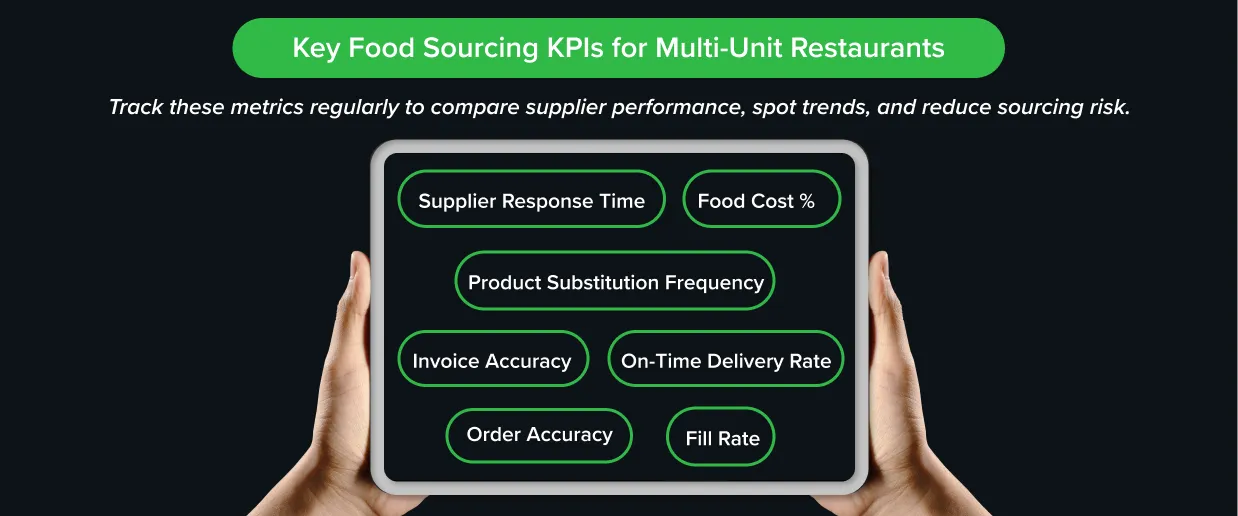
You can’t improve what you aren’t measuring.
Tracking sourcing performance across every restaurant helps operators identify trends, compare locations, and spot potential problems before they become larger operational issues.
Some of the most useful sourcing KPIs include:
- Food cost percentage
- On-time delivery rate
- Fill rate
- Order accuracy
- Product substitution frequency
- Supplier response time
- Invoice accuracy
Reviewing these metrics regularly makes it easier to have productive conversations with suppliers and identify opportunities to improve purchasing performance across the organization.
Use Data to Improve Sourcing Decisions
The best sourcing decisions aren’t based on assumptions. They’re backed by data.
Purchase history, supplier performance, pricing trends, inventory data, and operational reporting all tell part of the story. When that information is easy to access, restaurant groups can make better decisions about supplier selection, contract opportunities, purchasing patterns, and long-term sourcing strategies.
For multi-unit operators, visibility becomes even more valuable because it allows leaders to compare performance across every location instead of relying on individual experiences or anecdotal feedback.
Over time, those insights help restaurant groups strengthen supplier relationships, improve purchasing consistency, and build a food sourcing strategy that supports both day-to-day operations and future growth.
Common Food Sourcing Challenges and How to Overcome Them
Even the strongest food sourcing strategy won’t eliminate every challenge.
Products become unavailable. Weather affects harvests. Transportation delays happen. Suppliers experience labor shortages. The difference is how prepared your restaurant group is when those situations arise.
Building flexibility into your food sourcing strategy can help minimize disruptions and keep operations moving when the unexpected happens.
Supply Chain Disruptions
Supply chain disruptions have become a reality for foodservice operators over the past several years.
Transportation delays, labor shortages, extreme weather, and shifts in consumer demand can all affect product availability. When a restaurant group relies on a single supplier or doesn’t have a backup plan, even a short disruption can create operational headaches.
One way to reduce risk is by developing relationships with multiple qualified suppliers for key product categories. It’s also helpful to communicate regularly with suppliers about potential shortages, upcoming market changes, and inventory concerns so there are fewer surprises when orders are placed.
Planning ahead won’t prevent every disruption, but it can make responding to one much easier.
Seasonal Availability Issues
Not every product is available year-round, and even when it is, pricing and quality can vary throughout the seasons.
Fresh produce is one of the best examples. Growing regions change, weather affects crop yields, and supply levels fluctuate throughout the year. The same seasonal patterns can also affect seafood, dairy products, and specialty ingredients.
Restaurant groups that plan seasonal menu changes in advance often have an easier time navigating these shifts. Working closely with suppliers can also provide early insight into upcoming market conditions, allowing operators to adjust purchasing plans before availability becomes a problem.
Quality Inconsistencies
Nothing frustrates kitchen teams more than receiving products that don’t match expectations.
Whether it’s inconsistent produce sizing, varying meat cuts, damaged packaging, or products with a shorter-than-expected shelf life, quality issues can create waste, slow down kitchen operations, and affect the guest experience.
Clear product specifications are the first step toward reducing those problems. Restaurant groups should also encourage locations to report quality concerns quickly so purchasing teams can identify patterns, work with suppliers to resolve recurring issues, and determine when it’s time to reevaluate a supplier relationship.
Supplier Dependency Risks
Relying too heavily on a single supplier can leave restaurant groups vulnerable.
If that supplier experiences inventory shortages, transportation issues, financial challenges, or operational disruptions, every restaurant that depends on them may feel the impact.
That doesn’t mean operators should spread purchases across dozens of vendors. Strong supplier relationships are still important. Instead, restaurant groups should identify critical product categories and develop contingency plans before they’re needed.
Maintaining relationships with qualified secondary suppliers, reviewing supplier performance regularly, and periodically evaluating the supplier mix can help reduce risk without adding unnecessary complexity to the purchasing process.
Food sourcing works best when it’s flexible enough to adapt as market conditions change. Restaurant groups that regularly review their sourcing strategy are often in a stronger position to respond to challenges while maintaining consistency across every location.
Final Thoughts
Food sourcing plays a much bigger role than simply keeping restaurant shelves stocked. The suppliers you choose and the strategy behind those decisions influence everything from food costs and menu consistency to operational efficiency and the guest experience.
For multi-unit restaurant groups, success comes from taking a long-term approach. That means building relationships with reliable suppliers, setting clear product standards, tracking supplier performance, and using data to make informed sourcing decisions as the business grows.
No sourcing strategy will eliminate every challenge, but a thoughtful approach can help restaurant groups respond more confidently when market conditions change.
Looking to strengthen your food sourcing strategy across multiple restaurant locations? Click here to contact the experts at Consolidated Concepts and learn how smarter supplier management, purchasing visibility, and strategic sourcing can help your organization improve consistency and control.
FAQs
Why Is Food Sourcing Important for Restaurant Chains?
Food sourcing helps restaurant chains maintain consistent product quality, control food costs, improve supplier relationships, and support a more reliable guest experience across every location. A structured sourcing strategy also helps operators respond more effectively to supply chain disruptions and changing market conditions.
How Do Restaurants Evaluate Food Suppliers?
Restaurants typically evaluate suppliers based on several factors, including food safety standards, product quality, pricing, service levels, delivery performance, order accuracy, and overall reliability. Many restaurant groups also conduct regular supplier reviews to ensure vendors continue meeting operational expectations.
What Are the Benefits of Local Food Sourcing?
Local food sourcing can provide fresher seasonal ingredients, shorter delivery distances, and opportunities to feature regional products on the menu. For many restaurant groups, local suppliers complement national distribution by adding flexibility and supporting menu differentiation where it makes sense.
What Is the Difference Between Food Sourcing and Food Procurement?
Food sourcing focuses on selecting suppliers, establishing sourcing strategies, and building long-term supplier relationships. Food procurement is the day-to-day process of purchasing products, placing orders, managing contracts, and ensuring restaurants receive the items they need.
How Can Restaurants Reduce Food Sourcing Risks?
Restaurants can reduce food sourcing risks by working with multiple qualified suppliers, developing contingency plans for key products, monitoring supplier performance, maintaining clear product specifications, and staying informed about changing market conditions that may affect availability.
How Do Multi-Unit Restaurants Maintain Supplier Consistency?
Consistency starts with standardized product specifications and clear purchasing guidelines across every location. Multi-unit restaurant groups also benefit from regularly reviewing supplier performance, monitoring sourcing KPIs, and maintaining visibility into purchasing activity across the organization.
What Factors Should Be Considered When Selecting Food Suppliers?
When selecting food suppliers, restaurant groups should consider food safety compliance, product quality, pricing, delivery performance, service responsiveness, geographic coverage, production capacity, financial stability, and the supplier’s ability to support future growth.
How to Build Strong Supplier Relationships?
Strong supplier relationships are built through regular communication, clear expectations, consistent feedback, and collaboration. Treating suppliers as long-term business partners instead of transactional vendors often leads to better service, stronger communication, and more productive solutions when challenges arise.