Staying ahead in the foodservice industry demands more than just culinary excellence. For multi-unit restaurant operators, achieving operational efficiency involves navigating the intricate web of supply chain management, data utilization, and performance monitoring.
What Does Operational Efficiency Mean?
Operational efficiency refers to the ability of an organization or business to optimize its processes, resources, and activities in order to achieve maximum output with minimal input. It involves streamlining and improving internal operations to enhance productivity, reduce waste, and increase overall effectiveness.
How Do You Measure Operational Efficiency?
Operational efficiency can be measured by factors such as:
- Cost-effectiveness
- Time Management
- Resource Utilization
- The ability to meet or exceed performance goals.
In the context of a multi-unit restaurant, operational efficiency might include optimizing supply chain processes, improving inventory management, ensuring consistent and standardized procedures, and leveraging technology to streamline various aspects of the business.
Ultimately, the goal is to run operations in a way that minimizes inefficiencies, maximizes output, and contributes to the overall success of the organization.
Operational Efficiency in Multiple Locations
The challenge lies not only in understanding these complexities but also in implementing strategies consistently across all locations. Each location comes with its unique set of challenges, from varying customer preferences to distinct supplier networks.
Processes such as coordinating supply chain logistics, managing data analytics processes, and monitoring performance metrics all become exponentially more challenging when multiplied across different outlets.
Multi-unit restaurant operators often grapple with the difficulty of maintaining a cohesive strategy that aligns with the overarching goal of operational efficiency while adapting to the nuanced requirements of individual units.
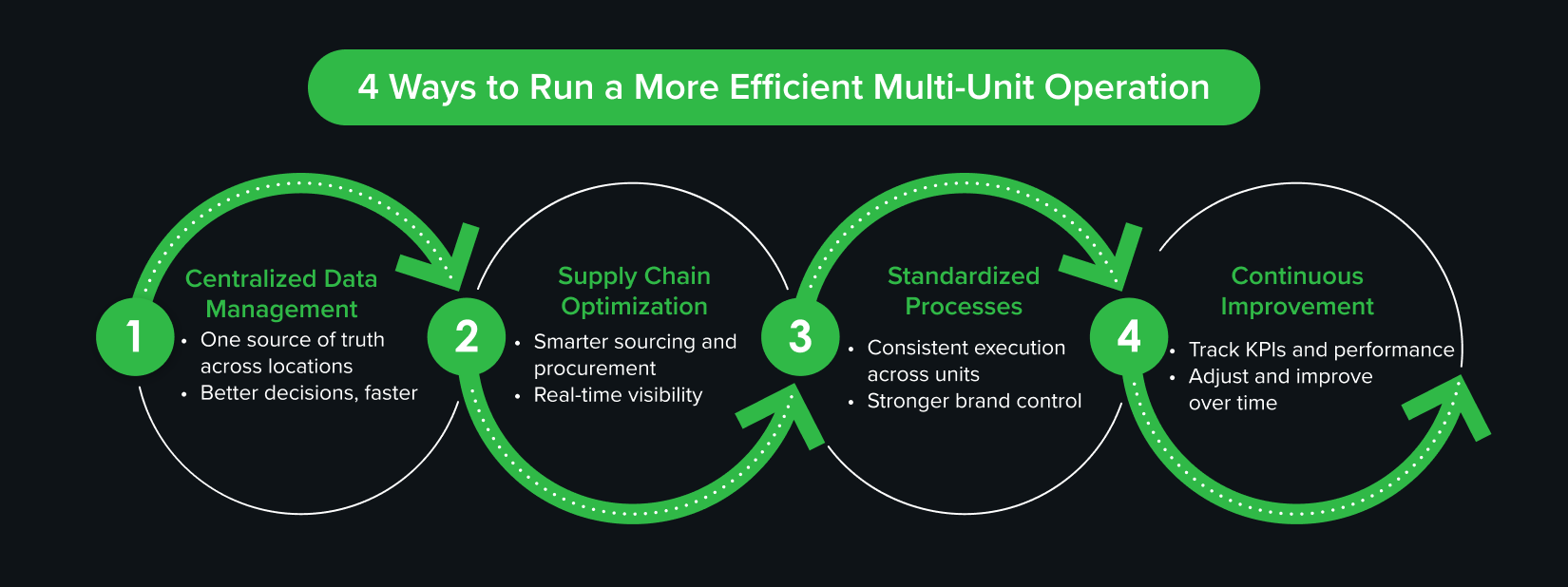
Let’s discover four ways you can overcome these challenges, streamline operations, and foster a sense of unity and efficiency across your diverse portfolio of locations.
Centralized Data Management
Centralized Data Management stands as the bedrock for informed decision-making. Operating with an all-in-one tech stack is pivotal for streamlining data from various locations, offering a comprehensive view into areas such as spend management, back office operations, and inventory levels.
This approach eliminates the pitfalls of managing data from disparate sources, providing a unified platform for efficient analysis and optimization of operations. Navigating through data from multiple places introduces complexities that can impede swift decision-making. An all-in-one tech stack simplifies this process, ensuring seamless consolidation and analysis.
Technology-Enabled Supply Chain Optimization
Modern challenges demand modern solutions. The adoption of technology is pivotal for streamlining supply chain management and procurement processes. Benefits of leveraging supply chain management technology include:
- Streamlined Procurement
- Enhanced Visibility
- Efficient Inventory Management
- Seamless Sourcing
A sophisticated tech infrastructure serves as the linchpin, enhancing visibility and seamlessly connecting every link in the supply chain.
Standardized Processes and Best Practices
Consistency is key in the multi-unit restaurant business. Standardized processes and best practices not only enhance operational efficiency but also contribute to a cohesive brand identity. Crucial elements include:
- Quality Control
- Customer Experience
- Cost Management
- Brand Reputation
- Adherence to Regulatory Compliance
The adoption of standardized processes and best practices in multi-unit restaurant operations goes beyond efficiency; it shapes the very essence of the brand. From maintaining quality control to enhancing the customer experience, these elements are fundamental in creating a consistent and positive brand identity.
Continuous Performance Monitoring and Improvement
The journey towards operational excellence doesn’t end with implementation; it’s an ongoing process. By embracing feedback, analyzing metrics, and adapting strategies, restaurant operators can foster a culture of continuous improvement, ensuring sustained efficiency gains over time.
- Feedback Loops: Actively seek input for improvement.
- KPI Monitoring: Track customer satisfaction and inventory turnover for actionable insights.
- Agile Adaptation: Stay agile to meet evolving demands.
- Training and Skill Development: Invest in ongoing staff training for efficiency.
- Benchmarking Against Industry Standards: Regularly compare performance to industry standards.
Continuous performance monitoring and improvement are integral to multi-unit restaurant success. Fostering adaptability, learning, and refinement ensures establishments exceed customer expectations.
Drive Operational Efficiency with Consolidated Concepts
Running multiple locations isn’t just about keeping things moving, it’s about keeping everything aligned without losing your mind in the process.
At some point, spreadsheets, emails, and gut checks stop cutting it. You need a clearer picture of what’s happening across your business and a better way to act on it.
That’s where Consolidated Concepts comes in. It helps bring everything together so you’re not chasing information or putting out the same fires in different locations.
Turning Data Into Something You Can Actually Use
Most operators already have the data. The problem is it’s scattered everywhere.
When everything is pulled into one place, it’s a lot easier to spot where you’re overspending, where inventory is off, or which locations are performing better than others.
Especially when it comes to hidden costs outside of food, like utilities, services, and fees that tend to fly under the radar until they start stacking up.
Instead of guessing, you can make decisions quickly and move on to the next thing on your plate.
Getting a Better Handle on the Supply Chain
Supply chain issues don’t always show up until they’re already causing problems.
Having better visibility helps you stay ahead of it. You can adjust orders, work around disruptions, and keep things consistent across locations without scrambling at the last minute.
Keeping Things Consistent as You Grow
Growth is great, but it can also get messy.
Every new location adds more variables, more people, and more chances for things to go off track. Having clear processes in place makes it easier to keep food quality, service, and operations consistent without slowing everything down.
Because let’s be honest, managing multiple locations isn’t just “more of the same,” it’s a completely different level of complexity when it comes to suppliers, costs, and day-to-day operations.
Improving Without Starting From Scratch Every Time
There’s always something to fix or improve.
The key is being able to see what’s working, what’s not, and making small adjustments along the way. When you’re tracking performance regularly, you’re not making big reactive changes, you’re making smarter ones over time.
At the end of the day, it’s about having the right tools and support so you can run your business more efficiently without adding more to your plate.
FAQs
What does operational efficiency really mean for a multi-unit operator?
It’s basically about running your locations in a way that cuts down on waste, saves time, and keeps things consistent. That could be anything from tighter inventory control to smoother ordering and better visibility into performance.
What’s the biggest challenge with managing multiple locations?
It’s keeping everything aligned. Different teams, different volumes, different day-to-day issues. Without a clear system, things start to drift and it gets harder to stay consistent.
How does centralized data actually help?
Instead of pulling reports from five different places, you’ve got everything in one view. You can quickly see what’s going on across locations and make decisions without digging for hours.
Where does technology make the biggest impact?
Usually in procurement and inventory. It helps automate the repetitive stuff, gives you better visibility, and reduces the chances of costly mistakes.