
Multi-unit restaurant operators know food costs are rising. It’s the number everyone watches, negotiates, and builds strategies around. Hidden expenses impacting multi-unit restaurants are often the real drivers behind shrinking margins, even when food costs appear under control.
But here’s the problem: food costs are only part of the story.
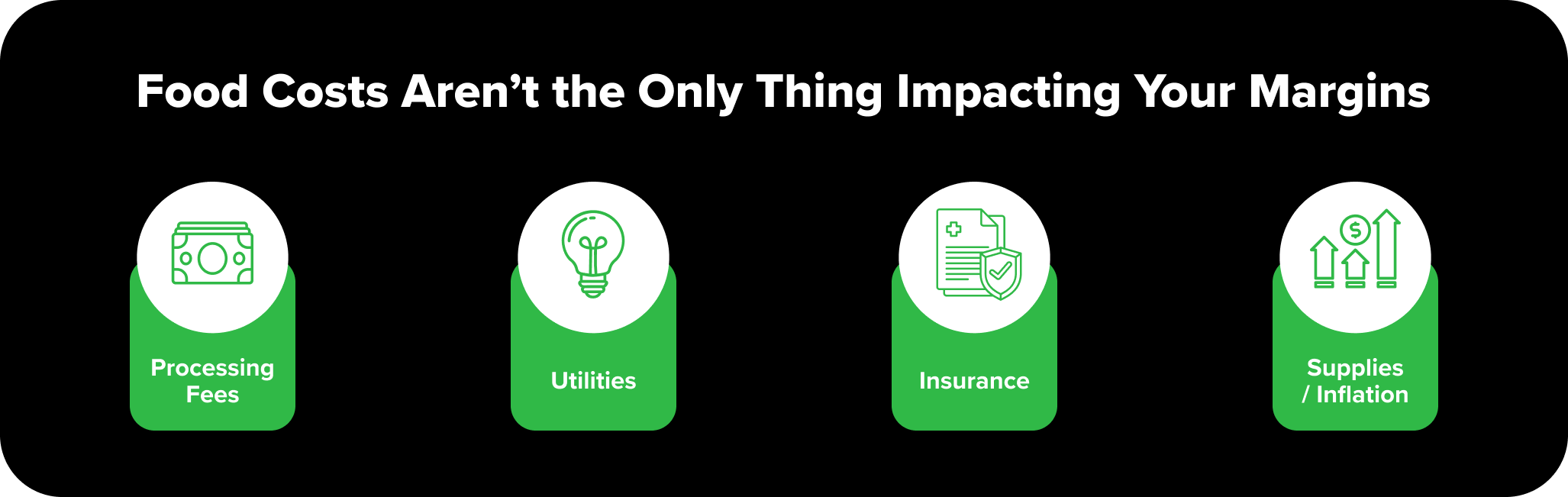
According to the National Restaurant Association’s 2026 State of the Industry report, operators are feeling pressure across nearly every expense category, from labor and insurance to utilities and payment processing fees.
Focusing only on food costs might feel productive, but it leaves a significant portion of your spend untouched, and that’s exactly where margins start to slip.
The Cost Problem Is Bigger Than the Plate
For years, food cost has been the headline issue. And yes, it matters. But today’s operating environment is hitting restaurants from every angle.
More than 9 in 10 operators report that food, labor, inflation, and insurance costs are significant challenges. Even beyond that, over 80% say credit card processing fees and utilities are putting pressure on their business.
At the same time, profitability is taking a hit. With 42% of operators reporting they were not profitable in 2025, it’s clear that rising costs aren’t isolated—they’re compounding.
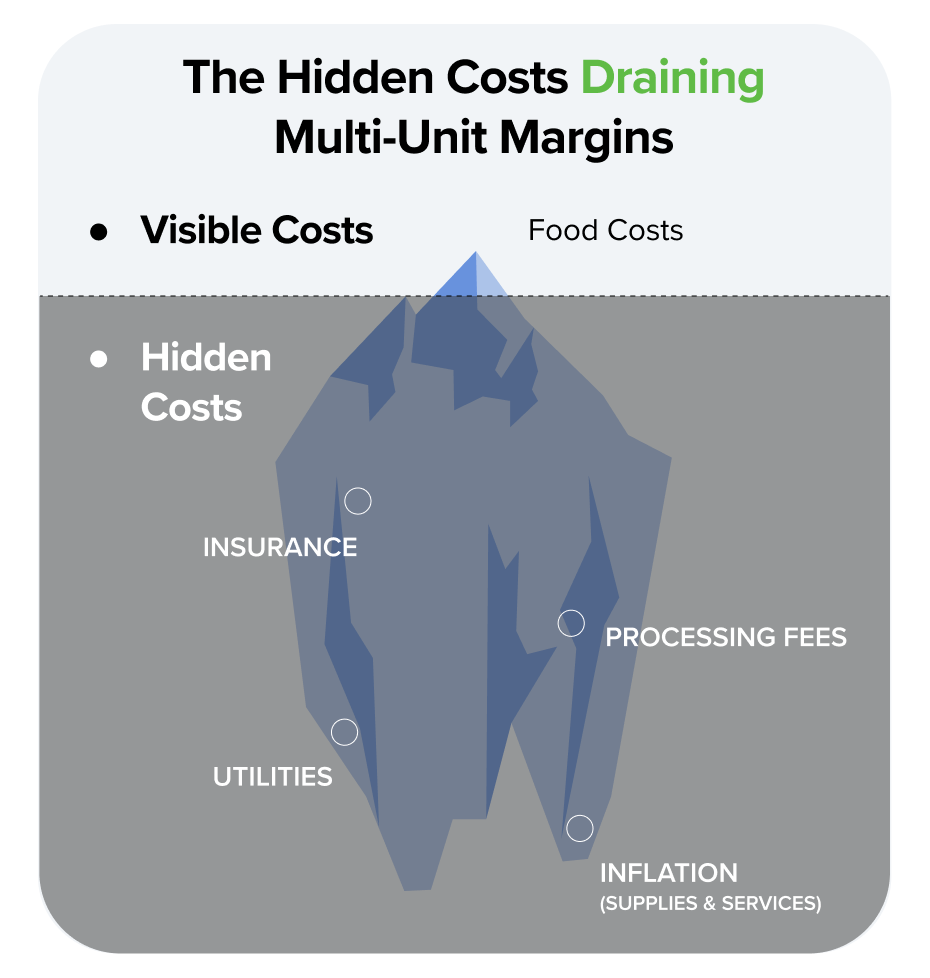
This is where hidden expenses impacting multi-unit restaurants start to stack up, creating pressure that isn’t always visible in traditional cost tracking.
This problem is even harder for people who run more than one unit. Every new location adds more vendors, more contracts, and more chances for things to go wrong. What seems to be a problem with food costs is often a much bigger problem with controlling costs.
The Overlooked Costs Draining Multi-Unit Margins
When operators focus primarily on food, other expenses quietly grow in the background. Over time, these “secondary” costs can have just as much impact on profitability. These hidden expenses impacting multi-unit restaurants don’t show up all at once—but they build over time across locations, vendors, and categories.
Insurance Costs That Scale With Every Location
Insurance is one of the most commonly cited challenges across the industry, yet it’s rarely managed with the same intensity as food purchasing.
As brands expand, insurance costs increase alongside them. Without a centralized strategy, operators often end up with inconsistent coverage, limited negotiating power, and missed opportunities to optimize.
Credit Card and Processing Fees That Quietly Add Up
Processing fees are one of the most consistent drains on margin, especially for high-volume, multi-unit brands.
More than 80% of operators report these fees as a significant challenge.
These costs are not often renegotiated or compared to other costs, unlike food costs. Even though small percentage changes can mean a lot of money across many locations, they just become part of doing business.
Utility and Energy Costs You Can’t Menu-Price Away
Energy and utility costs are another major pressure point, with more than 80% of operators citing them as a concern.
These costs fluctuate based on location, usage, and market conditions, making them difficult to predict and even harder to control without a coordinated approach. And unlike menu pricing, there’s no simple way to pass these costs along to the customer.
Inflation Across Everything Else
Inflation doesn’t just impact food. It affects supplies, services, logistics, and nearly every operational category.
More than 90% of operators say inflation continues to be a significant challenge.
This creates a compounding effect, where dozens of smaller cost increases add up over time. Individually, they may not stand out. Together, they can quietly erode profitability.
Why Multi-Unit Operators Feel This More Than Anyone
Operators with only one location feel the pressure of costs. Multi-unit operators feel it even more.
Each location has its own way of buying things, working with vendors, and running things. This leads to:
- Prices that aren’t the same at all locations
- Vendors who are the same and contracts that are broken up
- Not being able to see all of the spending
- Missed chances to take advantage of scale
Scaling locations without scaling the procurement strategy leads to hidden margin loss. The bigger the brand gets, the harder it is to find those gaps.
The Real Gap: Operators Track Food Costs… But Not Total Spend
Most operators have good ways to keep an eye on food costs. We keep an eye on our inventory, check our prices, and rate our vendors on a regular basis.
But the same level of oversight isn’t always there for things other than food.
Indirect spending categories like insurance, utilities, facilities, and services are often kept in separate groups or not managed at all.
That makes a blind spot.
When costs go up, many businesses raise prices, switch suppliers, or change their menus. Those strategies can help, but they are often reactive.
And that’s exactly how hidden expenses impacting multi-unit restaurants continue to grow unnoticed—because they’re not being tracked with the same level of discipline as food costs.
The bigger chance is to step back and keep track of all your spending with the same care you use for food costs.
You can’t cut back on what you’re not actively managing.
Bringing Total Spend Under Control
Improving profitability today requires a broader view of cost control. It’s not just about negotiating better food pricing. It’s about creating consistency and visibility across every category of spend.
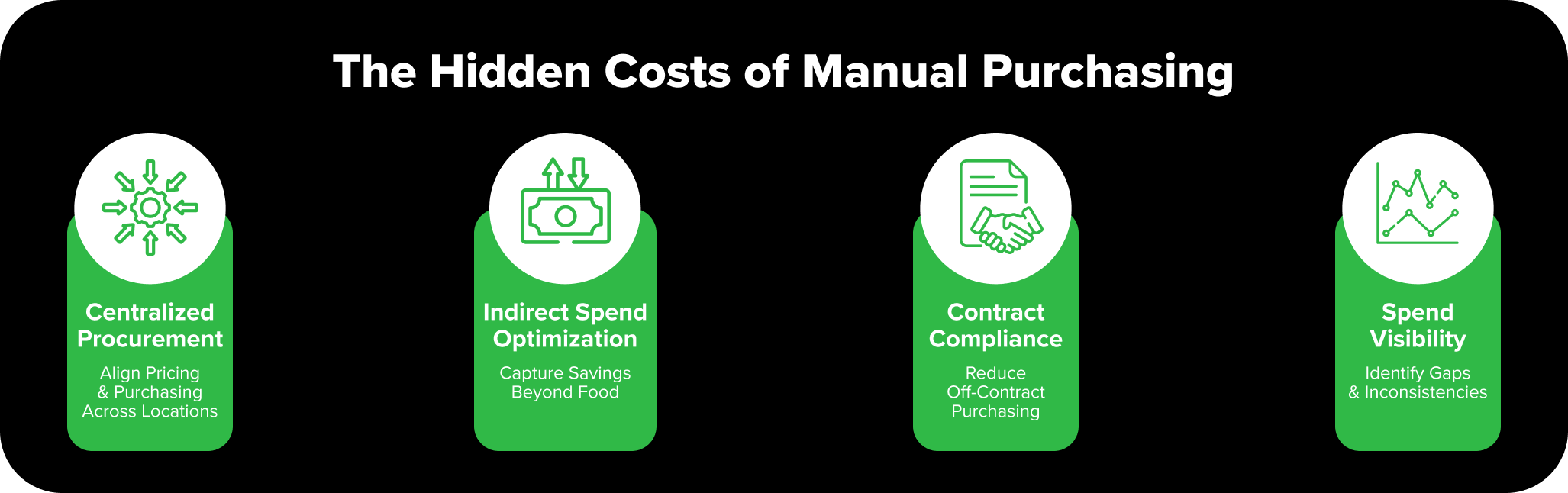
For multi-unit operators, that means:
Centralizing Procurement Across Locations
Aligning pricing and buying strategies across all locations to get rid of differences and give buyers more power.
Capturing Opportunities in Indirect Spend
Finding places where costs often go unmanaged, such as insurance, services, and operational supplies, and looking for ways to make things better.
Strengthening Contract Compliance
Making sure that locations are actually buying what they agreed to buy, which stops off-contract spending and keeps costs from going up unnecessarily.
Gaining Visibility Into Total Spend
Looking at performance across locations to find outliers, find inefficiencies, and make better decisions on a large scale.
The Bottom Line
Food costs aren’t going anywhere. They’ll always be a big part of the conversation.
But they’re not the only thing putting pressure on your margins anymore.
What’s changed is everything around them. Insurance, utilities, processing fees, services… it all adds up, and it doesn’t always show up in the same reports operators are used to watching.
That’s where things start to slip.
The multi-unit operators who are staying ahead right now aren’t just negotiating better food pricing. They’re stepping back and asking a bigger question: Where is all of our money actually going?
Because once you can answer that clearly, you’re not just reacting to rising costs. You’re finally in a position to do something about them.
Click here to connect with Consolidated Concepts and start uncovering the costs hiding in your operation.