
Rebates for multi-unit restaurants often go unnoticed at first, but as brands add locations and purchasing volume grows, they quietly become one of the most reliable ways to protect margins without changing the menu.
For most growing restaurant brands, cost pressure doesn’t show up all at once. It creeps in slowly. One more location opens. Another distributor gets added. A few new SKUs slip into ordering. Before long, food and supply spend feels harder to control, even though sales are up.
That’s usually when operators start asking tougher questions about where their money is going and how to get more value out of what they’re already buying.
This is where restaurant rebates start to matter.
Restaurant rebates don’t change your menu. They don’t require renegotiating every supplier relationship. And they don’t rely on short-term discounts that disappear next quarter. Instead, restaurant rebates reward consistency, scale, and smarter purchasing decisions over time.
For growing restaurant brands, that combination is powerful.
What Restaurant Rebates Actually Are (and What They’re Not)
At a basic level, restaurant rebates return money back to operators based on qualifying purchases. The more you buy of certain products, brands, or categories, the more rebate dollars you earn.
What trips people up is that rebates don’t always show up where operators expect them to.
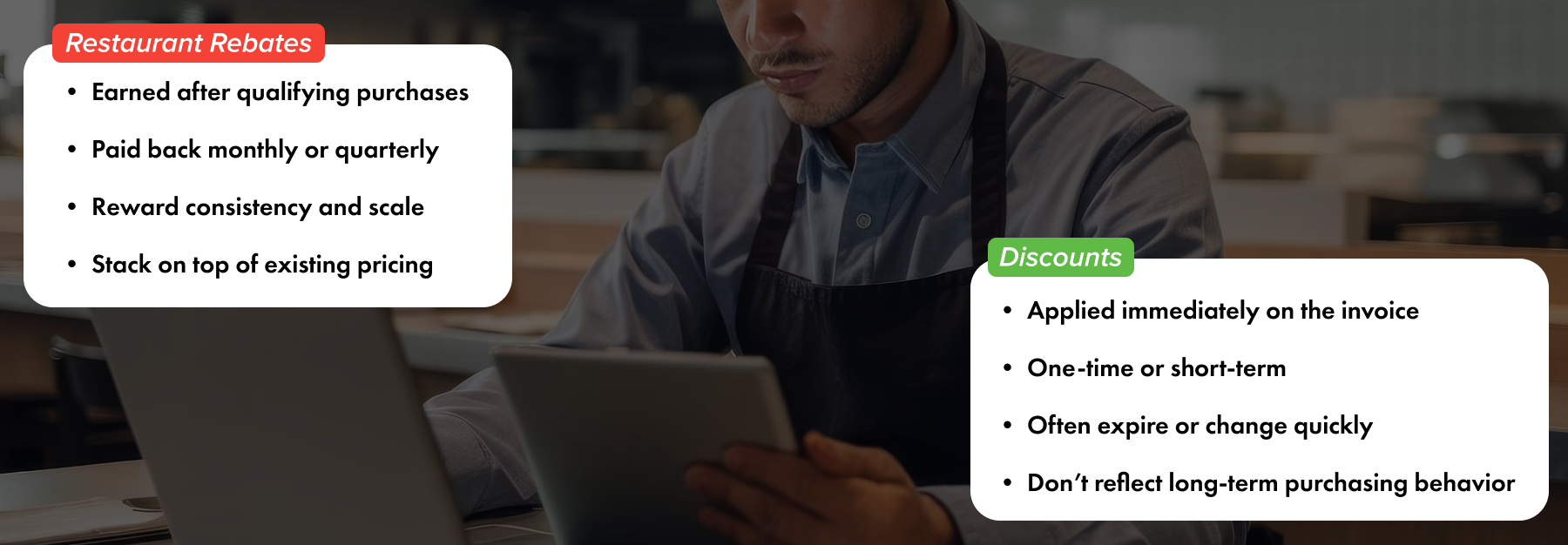
Restaurant rebates are typically paid after purchases are made. They may come quarterly or monthly. They might be issued as checks, credits, or deposits depending on the program. Because of that delay, many operators underestimate their impact or assume they aren’t worth the effort.
They are also very different from invoice discounts.
Discounts reduce the price immediately. Restaurant rebates work in the background. They quietly accumulate value as purchasing happens, which is why they’re so easy to overlook without the right visibility.
Why Restaurant Rebates Become More Valuable as Brands Grow
Restaurant rebates matter at one location. They matter much more at ten, twenty, or fifty.
As brands grow, purchasing volume increases. Locations start ordering the same items week after week. That consistency is exactly what rebate programs are designed to reward.
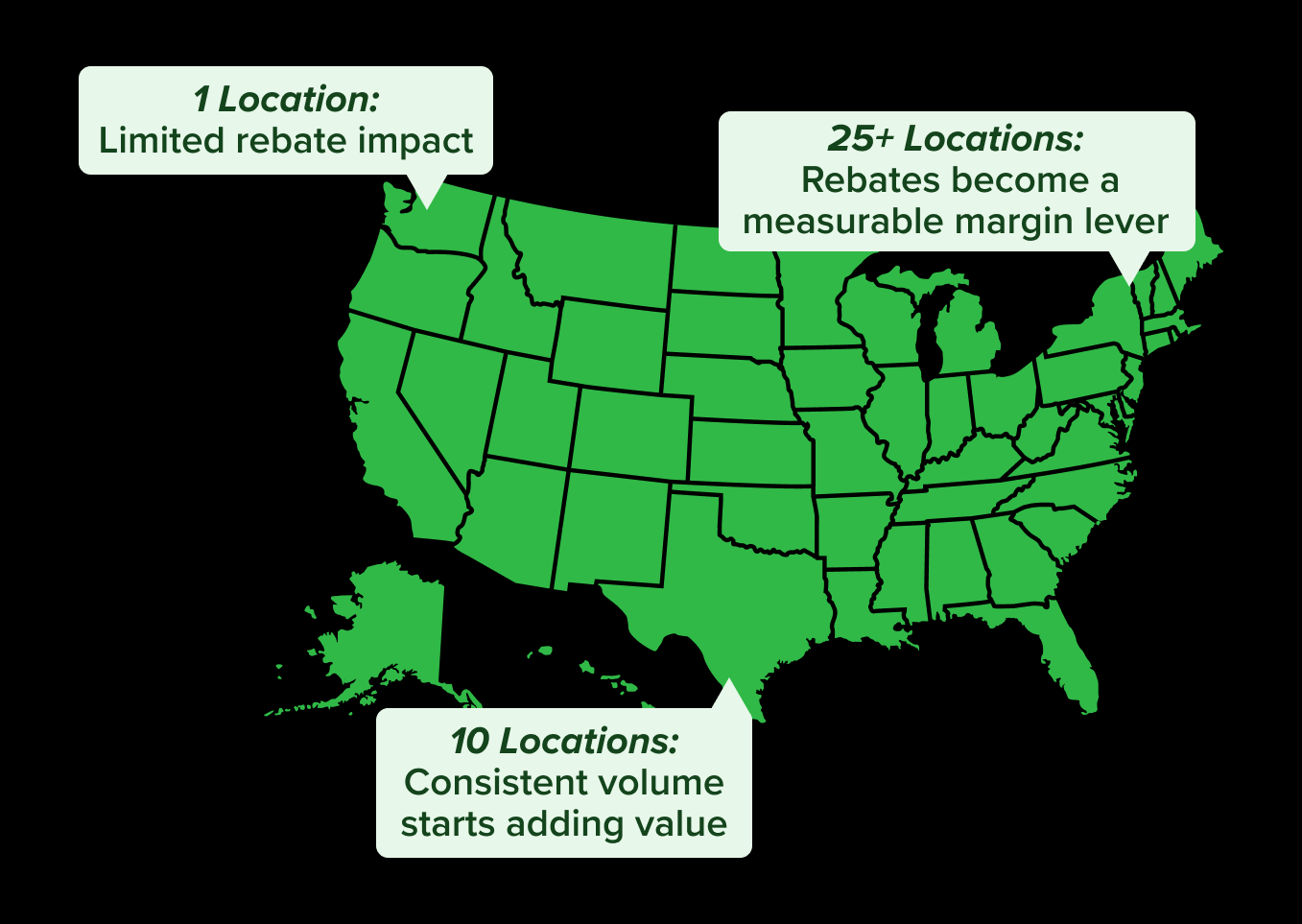
For multi-unit restaurant brands, restaurant rebates help:
- Offset rising food and supply costs without raising menu prices
- Reinforce standardized purchasing across locations
- Turn existing spend into predictable savings
- Support long-term margin protection instead of one-off wins
Rebates scale naturally. When purchasing grows, rebate value grows with it. That’s why they tend to be one of the most sustainable cost-savings tools available to expanding brands.
The Most Common Types of Restaurant Rebates
Not all restaurant discounts work the same way. Knowing the main types helps operators know what to look for and where to find opportunities.
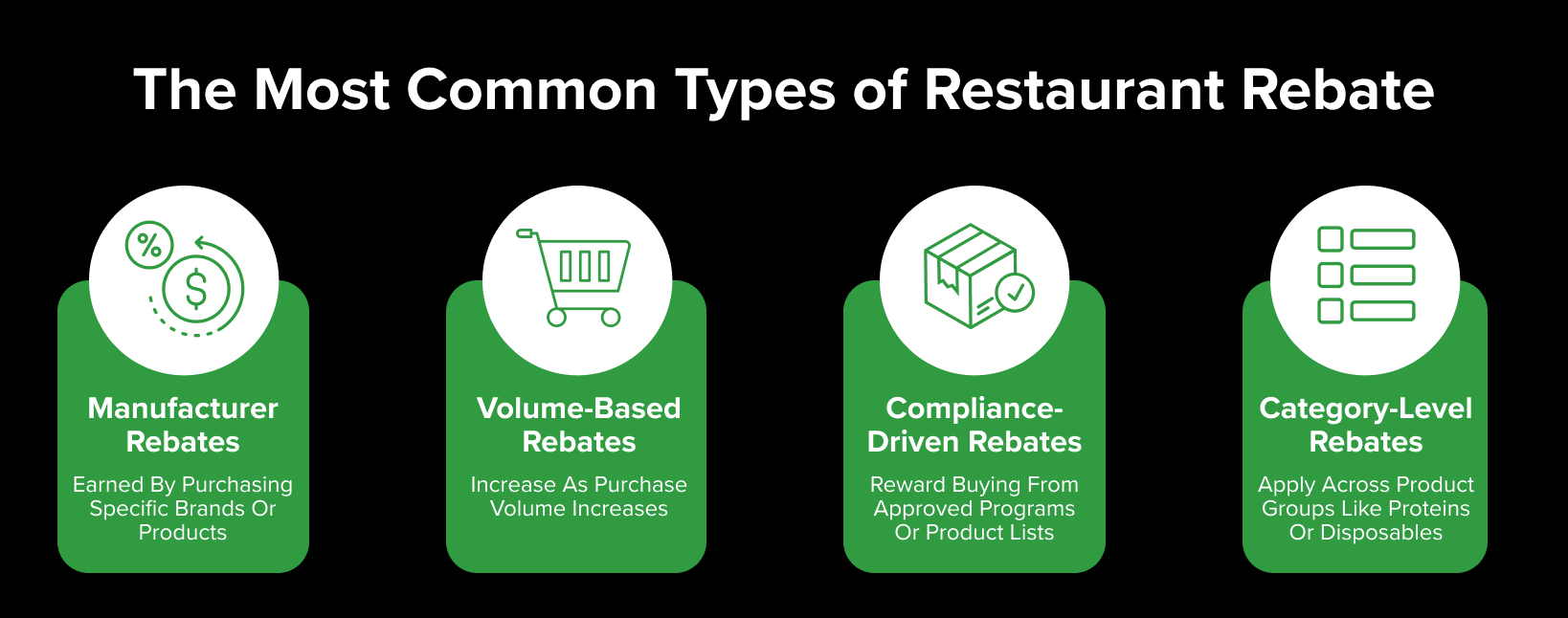
Manufacturer-Based Restaurant Rebates
These rebates come straight from the manufacturers and are only good for certain products or brands. They are often based on how much you buy, how often you buy, or whether you take part in national or regional programs.
Rebates from manufacturers are common in the food, drink, and supply categories and often go to more than one distributor.
Volume-Based Restaurant Rebates
Some restaurant rebates go up as the number of purchases goes up. These structures are better for multi-unit brands that can combine orders and cut down on unnecessary SKU variation.
The more places that buy the same things, the better the chance of getting a rebate.
Compliance-Driven Restaurant Rebates
These rebates give operators a bonus for buying from approved product lists or programs. They help keep things consistent and cut down on off-contract purchases that hurt overall savings.
Compliance rebates are especially helpful for keeping locations in line for brands that are growing.
Category-Level Restaurant Rebates
Instead of just one SKU, category rebates apply to spending in groups like proteins, dairy, disposables, or drinks. This gives people some freedom while still encouraging them to buy strategically.
Why So Many Operators Miss Restaurant Rebates
The issue usually isn’t lack of opportunity. It’s lack of visibility.
Restaurant rebates live in data. Invoices, line items, purchase histories, and supplier programs all play a role. When that information is spread across locations, distributors, and spreadsheets, rebates become hard to track and even harder to trust. This challenge is part of a larger shift happening across the industry, as many multi-unit operators rethink how they manage purchasing to reduce complexity and regain control.
Without a clear system, operators often don’t know:
- Which items qualify for rebates
- Whether locations are purchasing correctly
- How close they are to earning rebates
- If they were paid accurately
At scale, manual tracking simply doesn’t hold up.
How Technology Makes Restaurant Rebates Easier to Find and Use
Technology changes how restaurant rebates function inside a growing organization. Instead of being something operators hope shows up later, rebates become visible and actionable.
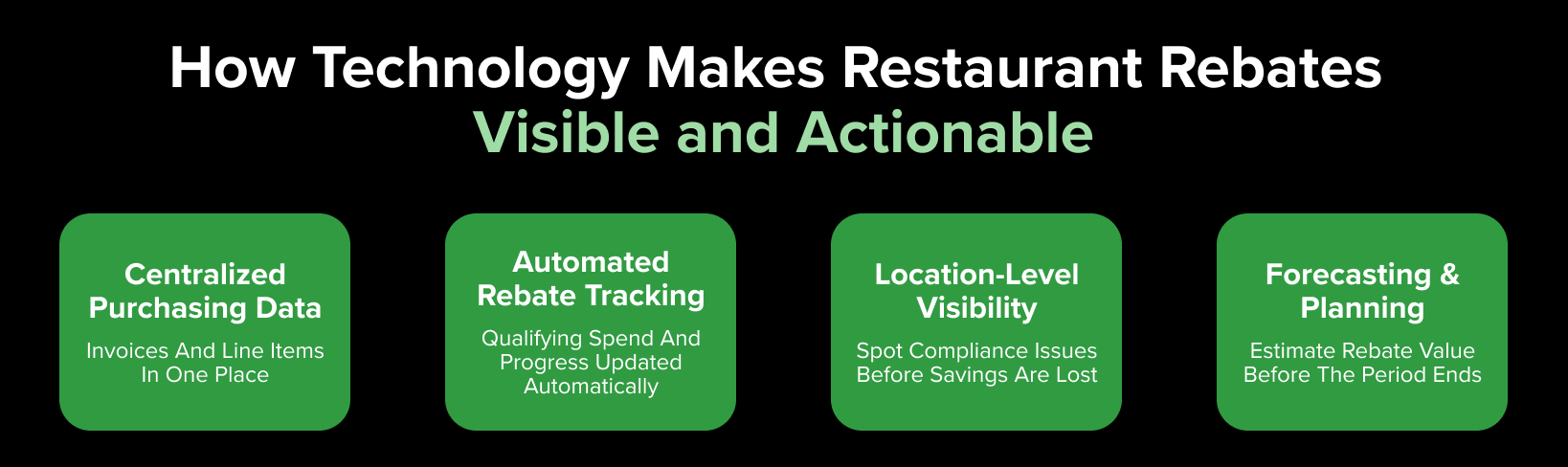
Centralized Purchasing Visibility
Technology brings invoice and line-item data together across all locations. That makes it easier to identify which purchases qualify for restaurant rebates and where gaps exist.
When data is centralized, rebate opportunities stop being hidden.
Automated Tracking Instead of Guesswork
Modern platforms track rebate progress automatically. Operators can see qualifying spend, thresholds, and earned value without manual reconciliation.
This reduces errors and saves time that teams can spend elsewhere.
Location-Level Accountability
Visibility by location matters. If one store is buying off-program items, it can reduce rebate value for the entire brand.
Technology highlights those issues early, before savings are lost.
Planning and Forecasting Savings
When rebate data is visible, it can be forecasted. Operators can estimate future rebate earnings based on current purchasing behavior and use that insight for budgeting and planning.
That’s when restaurant rebates stop feeling like a bonus and start functioning like a strategy.
Restaurant Rebates and Long-Term Cost Control
Restaurant rebates aren’t about getting the best deal. They are about helping people make better buying decisions.
When rebates are linked to approved products and suppliers, they help:
- Rationalization of SKUs
- Prices that are the same
- Better relationships with suppliers
- Managing inventory is easier
Over time, this structure makes businesses more disciplined and saves money that keeps adding up as brands grow.
Making Restaurant Rebates Part of Your Purchasing Strategy
The brands that get the most value from restaurant rebates tend to do a few things well.
They standardize purchasing where possible.
They use technology instead of spreadsheets.
They communicate clearly with operators.
They review rebate performance regularly.
Most importantly, they treat restaurant rebates as part of their overall cost-control strategy, not an afterthought.
Why Restaurant Rebates Matter More Than Ever
Food costs fluctuate. Labor remains tight. Margins stay under pressure. As multi-unit operators look ahead, restaurant rebates are increasingly part of broader margin-protection efforts outlined in Multi-Unit Restaurant Strategies for 2026: Where Operators Should Focus.
Restaurant rebates give growing brands a way to protect profitability without cutting corners. They reward the purchases operators are already making and turn scale into an advantage.
For multi-unit restaurant brands focused on long-term growth, restaurant rebates are not just helpful. They’re essential.
Restaurant Rebates FAQs
What are restaurant rebates?
Restaurant rebates return a portion of purchasing spend back to operators after qualifying purchases are made. They are typically paid after the fact and reward volume, consistency, or participation in approved programs.
How do restaurant rebates help multi-unit restaurant brands?
Restaurant rebates scale with purchasing volume. As brands grow and standardize ordering, rebates increase, helping protect margins without raising menu prices.
Are restaurant rebates the same as discounts?
No. Discounts reduce invoice prices upfront. Restaurant rebates are earned over time and paid back later, often quarterly or monthly.
How can restaurants find available rebate programs?
Restaurant rebates are usually offered through manufacturers, suppliers, and purchasing programs. Technology platforms make it easier to identify eligible products and track progress.
Why is technology important for managing restaurant rebates?
Technology centralizes purchasing data, automates tracking, and provides visibility across locations. Without it, many rebate opportunities are missed or underutilized.