
If you run a restaurant brand with more than a handful of locations, you already know this: the way you manage purchasing has gotten a whole lot messier than it used to be. There was a time when spreadsheets and long-standing supplier relationships carried most of the weight. You’d call your reps, check a few numbers, make a couple of decisions, and move on with your day.
Those days? Gone.
The industry is moving faster than ever. Costs bounce around like ping-pong balls. Distributor networks overlap. Your teams are stretched thin. And keeping track of what your units are paying, what they’re ordering, and whether anything is slipping through the cracks takes more energy than anyone wants to admit.
That’s why so many multi-unit operators are rethinking the way they manage purchasing.
The Trouble With “The Way We’ve Always Done It”
Older procurement habits were built for calmer times. When an operator had three or four stores and the same rep for a decade, you could get by with emails, phone calls, and a few shared spreadsheets.
But the second you start scaling — really scaling — those familiar processes start to work against you.
You see things like:
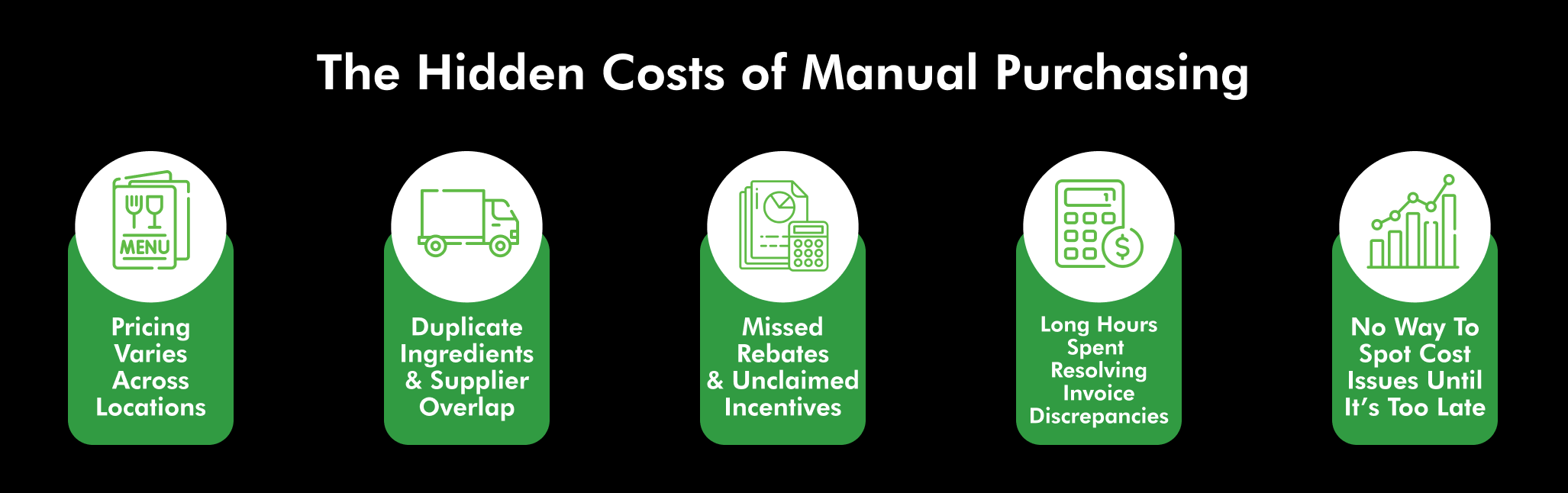
- Pricing that varies wildly between locations
- Units ordering the same ingredient from three different suppliers
- Rebates getting left on the table because no one has time to track them
- Hours spent sorting through invoices just to figure out what went wrong
And the real danger? You don’t catch problems until after the money’s already spent.
What Operators Are Turning to Instead
Here’s the shift happening across the industry: operators want purchasing to be easier, clearer, and way more organized than what manual systems allow.
They want one place to see their spend. One source of truth for pricing. One way to compare stores. One place where contracts, rebates, and product data actually line up.
Not a dozen files. Not three versions of the same sheet. Not “I think this price is right… let me look it up… give me a minute… actually wait.”
That need for clarity is what’s driving the move toward smarter, more structured purchasing support.
What a Modern Purchasing Setup Actually Looks Like
It’s not about replacing your people or turning everything into robots. It’s about giving your team better tools and better guidance so they can actually manage instead of chase paper.
Think about a setup where you can:
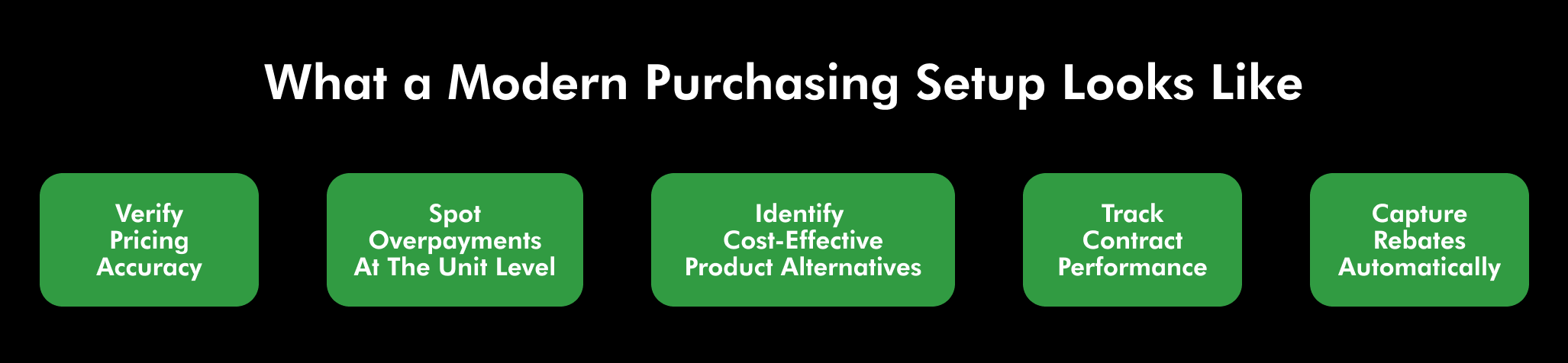
- See if your locations are being charged the right prices
- Spot when one store is overpaying for the same SKU
- Catch when a product has a lower-cost, equal-quality alternative
- Know which contracts are performing (and which aren’t)
- Capture rebates automatically so nothing gets lost
It’s the kind of structure restaurants dreamed about a decade ago but didn’t have the resources to build.
The Cost of Holding Onto Outdated Processes
It’s easy to assume, “We’ve always done it this way; it works.”
But the quiet losses sneak in:
- A few missed rebate dollars here
- A couple of price discrepancies there
- A location ordering outside the contract
- A manager buying high-cost alternatives during shortages
- Extra hours spent chasing invoices or digging through emails
None of this feels catastrophic in the moment. But by the end of the year? Operators see the damage — and it’s not pretty.
Margins are tight enough. There’s no room for outdated systems to eat into them.
The Game-Changer: Visibility
Here’s the truth every multi-unit operator eventually bumps into:
You can’t fix what you can’t see.
The brands that outperform their competition aren’t just “getting better pricing.” They’re paying attention to why their costs move, which products drive spend, and where inconsistencies pop up.
Better visibility helps operators catch things like:
- Stores paying different prices for the same item
- Units ordering too many variations of the same ingredient
- Menu items that create waste because they don’t sell
- Suppliers whose pricing no longer lines up with agreements
Once you have that level of insight, decisions get easier. Negotiations get stronger. Growth gets smoother.
Why Expertise Still Matters
Even with better visibility, operators still need people who understand the behind-the-scenes work — distributor negotiations, category management, cost modeling, contract alignment, rebate programs, and all the moving parts that come with the way multi-unit operators manage purchasing.
That’s where a partner like Consolidated Concepts changes the game.
You get:
- Industry pros who know how to interpret your data
- Category experts who understand your menus and product mix
- Pricing analysts who can spot issues quickly
- People who know how to talk the same language as your distributors
It’s not just tools. It’s not just dashboards. It’s the combination of insights + hands-on expertise that helps operators actually move the needle.
Why Operators Are Making the Switch Now
Because the industry isn’t slowing down.
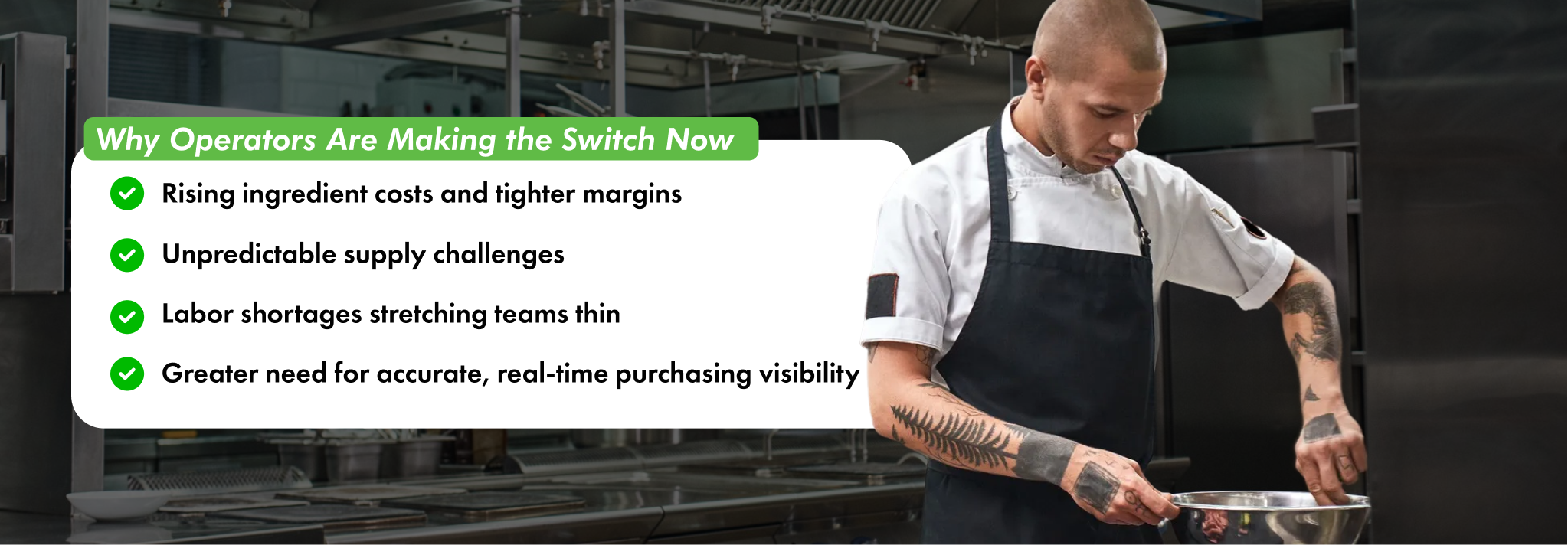
Costs are rising. Labor is tight. Supply chains feel unpredictable. And manual systems can’t keep up with what operators are being asked to manage.
Upgrading the approach to the way you manage purchasing doesn’t mean throwing away what already works. It means adding structure and visibility so what does work can scale.
The operators who lean into this shift aren’t just cutting costs; they’re positioning themselves to grow without losing control.
The Bottom Line
For multi-unit operators, purchasing has become a major factor in whether a brand can scale profitably.
If the system you’re using feels clunky, chaotic, or inconsistent, it’s a sign, not of failure, but of growth.
A more structured purchasing strategy gives you:
- Clarity
- Control
- Predictability
- Stronger supplier performance
- Better food cost management
And honestly? A little peace of mind, too.
Because running multiple locations is hard enough. Your purchasing process shouldn’t be the thing slowing you down.
Ready to tighten up purchasing, cut hidden costs, and give your operators the visibility they’ve been missing? Contact us or fill out the form below to get started.