Cleanliness in restaurants is essential for protecting food safety, creating consistent guest experiences, and maintaining brand standards across every location.
Running one clean restaurant takes discipline. Running dozens of clean restaurants takes systems.
For multi-unit restaurant operators, cleanliness in restaurants isn’t just about making a good first impression. It’s part of food safety, operational consistency, employee accountability, and brand reputation. Guests expect the same experience whether they’re visiting your flagship location or your newest store. Health inspectors do too.
The challenge is that cleanliness in restaurants becomes harder to manage as operations grow. Different managers create different routines, staff turnover changes habits, and busy shifts often push cleaning tasks to the bottom of the priority list.
The good news is that consistency can be built into daily operations. With standardized procedures, clear expectations, and the right purchasing strategy, restaurant groups can maintain high cleanliness standards across every location without creating unnecessary work for their teams.
What Restaurant Cleanliness Covers Day to Day
Restaurant cleanliness goes well beyond wiping down tables after guests leave. Every shift creates dozens of opportunities for contamination, clutter, and equipment buildup that can affect food safety, operational efficiency, and the guest experience.
The most successful restaurant groups treat cleaning as an ongoing operational process rather than something that’s handled only during opening or closing duties. When every team follows the same expectations every day, locations stay inspection-ready while creating a better environment for both employees and guests.
Front-of-House Areas
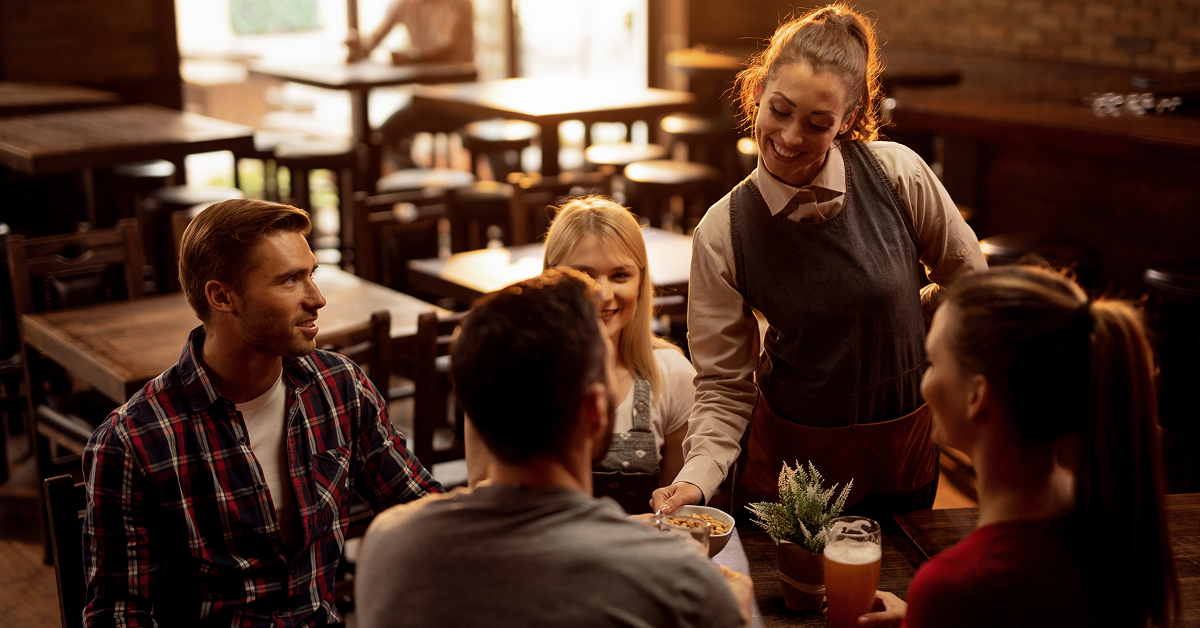
The dining room is often the first thing guests notice, making it one of the most visible indicators of how well a restaurant is managed.
Tables, chairs, menus, host stands, beverage stations, windows, floors, and entryways should be cleaned throughout the day, not just after closing. Fingerprints on glass, overflowing trash cans, sticky condiment bottles, or dirty floors can quickly shape a guest’s perception before their food even arrives.
Maintaining consistent front-of-house cleaning routines helps reinforce confidence in the overall operation and creates a more welcoming dining experience.
Back-of-House and Kitchen
The kitchen requires constant attention because cleanliness in restaurants directly affects food safety.
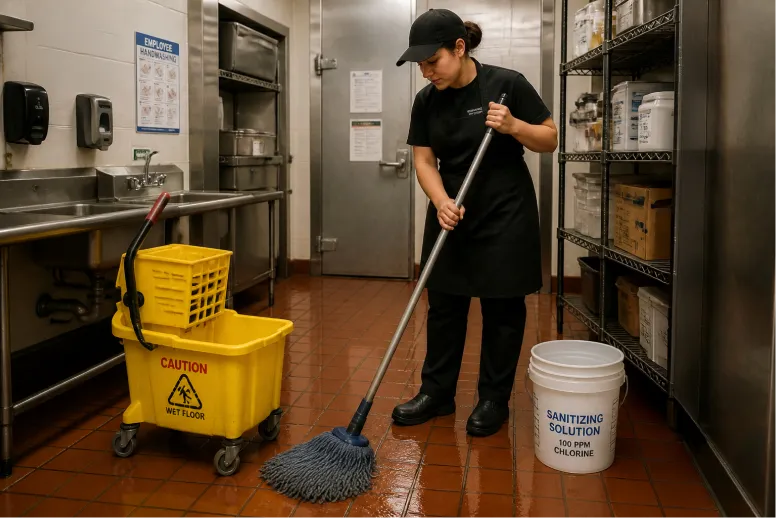
Prep tables, cutting boards, sinks, cooking equipment, floors, drains, and food contact surfaces should be cleaned throughout each shift according to established procedures. Small spills, grease buildup, and food debris can quickly become safety hazards if they’re left unattended.
Consistent kitchen cleaning also helps equipment perform more efficiently, reduces unnecessary maintenance, and creates a safer workspace for employees.
Restrooms and High-Touch Surfaces
Guests often judge an entire restaurant by the condition of its restrooms.
Restrooms should be checked regularly throughout the day to ensure they’re clean, stocked, and functioning properly. The same attention should be given to high-touch surfaces such as door handles, light switches, payment terminals, beverage machine buttons, and handrails.
Frequent cleaning of these areas helps reduce the spread of germs while demonstrating attention to detail throughout the restaurant.
Equipment and Storage
Cleaning responsibilities don’t stop with customer-facing areas.
Walk-in coolers, dry storage rooms, shelving, smallware’s, ice machines, and large kitchen equipment all require regular cleaning to prevent buildup, improve organization, and support food safety.
Keeping storage areas clean also makes inventory easier to manage, reduces product waste, and helps teams quickly identify maintenance issues before they become larger operational problems.
Difference Between Cleaning, Sanitizing, and Disinfecting
These three terms get used interchangeably all the time, but they aren’t the same thing.
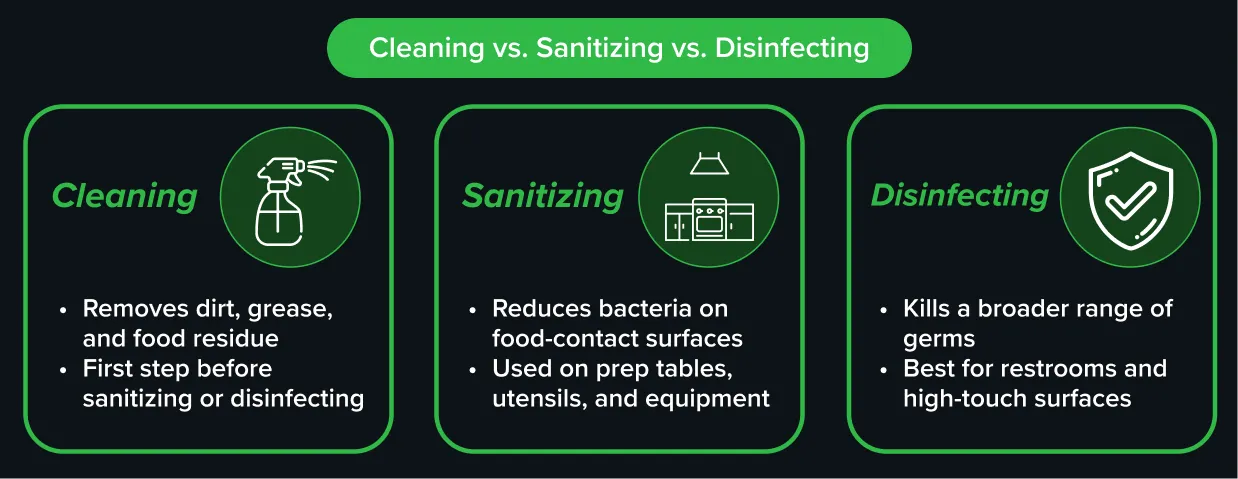
Cleaning removes dirt, grease, food residue, and anything else you can see on a surface.
Sanitizing comes next. It reduces bacteria on food-contact surfaces to levels considered safe by public health standards. Disinfecting goes a step further by killing a broader range of germs, but it’s generally intended for non-food-contact areas rather than prep surfaces.
The order matters. If a prep table still has food residue on it, applying sanitizer won’t be nearly as effective. Surfaces need to be cleaned first before they’re sanitized or disinfected.
| Process | What It Does | Where It’s Used | Examples |
|
Cleaning |
Removes dirt, grease, and food residue | Throughout the restaurants | Prep tables, equipment, floors, shelves |
|
Sanitizing |
Lowers bacteria on food contact surfaces to safe levels | Food prep areas and utensils | Cutting boards, knives, prep counters, food pans |
|
Disinfecting |
Kills broader ranger of bacteria and viruses | Non-food contact surfaces | Restrooms, door handles, payment terminals, light switches |
When every location follows the same process, it’s easier to meet health code requirements and reduce the risk of cross-contamination.
Where Cleanliness Standards Slip Across Locations
One restaurant is fairly easy to keep on the same page. Twenty restaurants? That’s where things get interesting.
Most operators don’t struggle because they lack cleaning procedures. They struggle because those procedures slowly change from one location to the next. A different manger takes over. A shortcut becomes the new routine. Turnover happens. Before long, every restaurant is doing things a little differently.
Those small differences can have a big impact over time.
Inconsistent Routines Between Sites
One kitchen cleans fryers every night. Another does it twice a week. One dining room wipes down highchairs after every use. Another only does it at closing.
Neither team is necessarily trying to ignore standards. They’ve simply developed different habits.
Written procedures remove the guesswork and help every location work from the same playbook.
Gaps in Staff Training
Training often looks different depending on who’s doing the teaching.
One employee learns the right way to clean a slicer. Another watches a coworker who’s been taking shortcuts for years. That’s how inconsistent practices spread.
Cleaning expectations should be part of every new hires onboarding, with regular refreshers so standards don’t slowly drift over time.
Tasks That Get Skipped When It Gets Busy
Every restaurant has those shifts where it feels like the tickets never stop printing.
When that happens, cleaning is usually one of the first things to get pushed back. Maybe the sanitizer buckets don’t get changed on time. Maybe the line isn’t wiped down until after the rush. Individually, those tasks don’t seem like a big deal. Together, they create bigger food safety and operational problems.
Breaking responsibilities into smaller tasks throughout the day makes them much easier to stay on top of.
Limited Oversight Across Units
Managers can’t be everywhere.
As restaurant groups grow, it’s harder to know whether every location is following the same standards. Problems often aren’t discovered until an audit, a guest complaint, or a health inspection brings them to light.
Routine inspections, manager walkthroughs, and standardized checklists help identify issues early. They also make it easier to coach teams before inconsistent habits become part of the culture.
What a Reliable Cleaning System Includes
A clean restaurant doesn’t happen because everyone “knows what to do.” It happens because there are clear expectations, and those expectations stay the same whether it’s Monday morning or Saturday night.
The strongest cleaning programs don’t rely on memory or good intentions. They rely on routines that are documented, communicated, and followed consistently. When every location is working from the same system, managers spend less time correcting problems and more time keeping operations running smoothly.
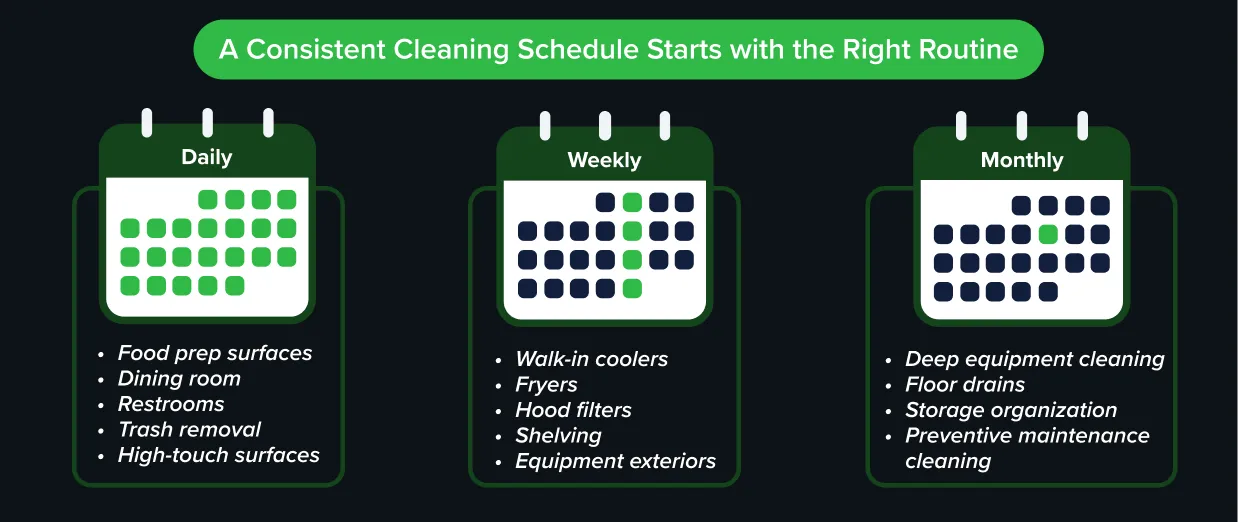
Daily, Weekly, and Monthly Schedules
Not every cleaning task belongs on the same schedule.
Some jobs need attention throughout the day, like wiping prep surfaces, emptying trash, cleaning restrooms, and replacing sanitizer buckets. Others, such as cleaning hood filters, deep-cleaning walk-in coolers, or descaling ice machines, can be planned weekly or monthly.
Breaking responsibilities into daily, weekly, and monthly schedules helps teams stay organized without feeling overwhelmed. It also reduces the chance that important tasks are forgotten simply because they don’t happen every shift.
A Cleaning Checklist That Spells Out the Details
A checklist should answer questions before they’re asked.
Instead of telling employees to “clean the kitchen,” it should explain exactly what needs to be cleaned, when it should be done, what products should be used, and who’s responsible for completing the task.
That level of detail becomes especially valuable when managers are training new employees or covering shifts at different locations. Everyone is working from the same expectations instead of relying on personal habits or verbal instructions.
A good checklist also creates accountability. If something gets missed, it’s much easier to identify where the process broke down and fix it before it becomes a recurring issue.
Clearly Assigned Responsibilities
One of the quickest ways for cleaning tasks to fall through the cracks is when everyone assumes someone else is handling them.
Assigning responsibilities by role or shift removes that uncertainty. Whether it’s the opening team, the closing crew, or a specific kitchen position, every task should have a clear owner.
That doesn’t mean responsibilities never change. Restaurants are busy, and teams often need to adjust throughout the day. But when ownership is established from the start, it’s much easier to keep cleaning standards consistent, even when service gets hectic.
At the end of the day, consistency comes from making cleaning part of the operation rather than treating it as an extra task to squeeze in when there’s time. When expectations are clear, teams are more likely to follow them, and every location is better positioned to deliver the same experience to guests.
How Cleanliness Protects Food Safety and Your Brand
Most guests won’t compliment a spotless prep station or notice that your team changed sanitizer buckets on schedule. They simply expect those things to happen.
What they will notice is when something feels off. A dirty restroom, sticky table, overflowing trash can, or poor health inspection score can change how guests view the entire restaurant. In many cases, it only takes one bad experience for someone to decide not to come back.
Cleanliness in restaurants protects more than food safety. It protects the trust you’ve worked hard to build with every guest who walks through the door.
Passing Health Inspections
Health inspections aren’t something restaurants should prepare for once or twice a year. The strongest operators treat every day like an inspection could happen.
That mindset makes inspections far less stressful because cleaning and food safety are already part of the daily routine. Instead of scrambling to fix issues at the last minute, managers can focus on maintaining the standards their teams already follow.
Consistent routines also make it easier to correct small issues before they turn into repeat violations or affect future inspection scores.
Preventing Cross-Contamination
Cross-contamination isn’t always obvious. It can happen when utensils are shared between raw and ready-to-eat foods, when prep surfaces aren’t cleaned between tasks, or when cleaning cloths are used in multiple areas without being replaced.
The best defense is consistency.
Using the right cleaning products, following proper sanitizing procedures, and reinforcing safe food handling practices throughout every shift helps reduce unnecessary risk. When those habits become part of the culture, they’re much less likely to be skipped during busy service.
Protecting the Guest Experience
Guests may never step into your kitchen, but they notice everything they can see.
Clean dining rooms, spotless restrooms, polished entrances, and well-maintained condiment stations all send the same message: this restaurant pays attention to the details.
That perception matters. A restaurant can serve an outstanding meal, but if the dining room feels neglected or the restroom isn’t clean, the overall experience suffers.
For multi-unit operators, consistency is just as important as cleanliness in restaurants itself. Guests expect the same level of care at every location. Delivering that experience time after time strengthens your brand, builds customer confidence, and gives people another reason to come back.
How to Keep Cleaning Standards Consistent Across Operations
Every restaurant group starts with the same goal: every location should operate the same way. In reality, that gets harder as the business grows.
Managers bring different leadership styles. Teams change. New locations open. Before long, one restaurant is following the playbook while another has created its own version of it.
Consistency doesn’t happen by accident. It comes from building systems that are easy to follow, easy to train, and easy to measure.
Standardize Procedures Across Every Location
Every restaurant should be working from the same set of cleaning procedures.
That doesn’t mean creating a manual so long that nobody reads it. The best procedures are straightforward, practical, and easy to reference during a shift. They spell out what needs to be cleaned, how often it should happen, and the products or tools employees should use.
When every location follows the same process, it’s easier to maintain quality standards and support managers who oversee multiple restaurants.
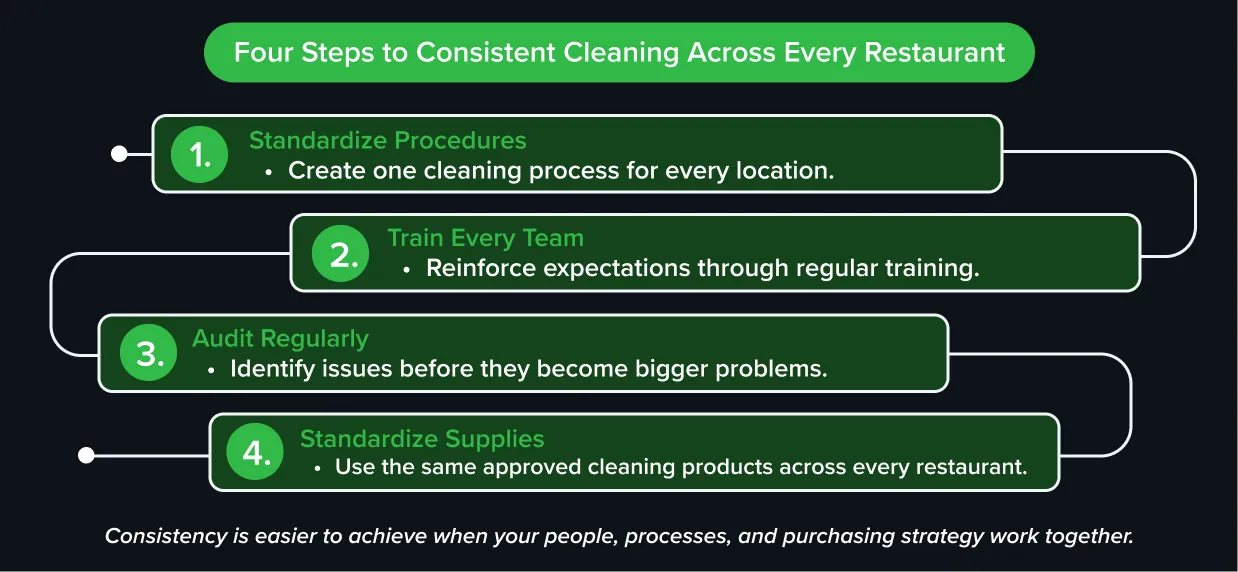
Train and Retrain Every Team
Training shouldn’t end after an employee’s first week.
Even experienced team members can develop habits that drift away from company standards over time. A quick refresher during a pre-shift meeting or periodic hands-on training can help reinforce expectations before small inconsistencies become larger problems.
The goal isn’t to make every employee memorize a checklist. It’s to build routines that become second nature, regardless of who’s working the shift.
Audit Sites on a Regular Schedule
If you only evaluate cleanliness in restaurants after a guest complaint or a health inspection, you’re already playing catch-up.
Routine audits give operators a chance to spot patterns early. Maybe one location consistently misses the same closing tasks. Maybe another needs additional coaching on equipment cleaning. Identifying those trends early makes them much easier to correct.
Audits also create accountability. When every location knows the same standards are being measured, consistency becomes part of the culture instead of an occasional priority.
Standardize Cleaning Supplies Across Every Location
Cleaning products may seem like a small detail, but using different supplies from one restaurant to another can create unnecessary challenges.
When locations purchase different chemicals, paper products, dispensers, or tools, training becomes more complicated, inventory is harder to manage, and purchasing costs can vary from site to site.
Standardizing approved cleaning supplies helps simplify operations while giving employees confidence they’re using the right products for the job. It can also improve purchasing efficiency by reducing unnecessary product variation across the organization.
For multi-unit operators, consistent purchasing standards support consistent operating standards. When every location has access to the same supplies, it’s easier to deliver the same level of cleanliness in restaurants guests expect every time they visit.
How Consistent Supplier Relationships Help Control Cleaning Costs
Keeping restaurants clean isn’t just an operational challenge. It’s a purchasing one, too.
When every location buys cleaning products independently, it’s common to see the same organization using different chemicals, paper products, dispensers, gloves, and janitorial supplies from one restaurant to the next. Over time, that creates inconsistent cleaning practices, makes training more complicated, and can increase purchasing costs.
A more standardized approach helps solve those problems.
Consolidated Concepts helps multi-unit restaurants operators strengthen that consistency through national purchasing programs and supplier relationships designed for restaurant groups. By connecting operators with trusted suppliers across a wide range of categories, organizations can simplify procurement, improve purchasing visibility, and make it easier for every location to maintain the same operational standards.
When purchasing is standardized, maintaining cleanliness in restaurants becomes more consistent, costs become easier to manage, and every restaurant is better equipped to deliver the experience guests expect.
Conclusion
Cleanliness in restaurants isn’t something restaurants can afford to treat as an afterthought. It influences food safety, employee accountability, guest confidence, and the consistency of every location carrying your brand.
The most successful restaurant groups don’t rely on individual managers to figure out their own systems. They create clear procedures, train their teams, audit performance regularly, and support those efforts with purchasing strategies that make consistency easier to achieve.
Whether you’re operating five restaurants or hundreds, the goal stays the same: every guest should walk into a restaurant that feels just as clean, organized, and well-managed as the last one they visited.
Ready to simplify purchasing while creating more consistency across your operations? Click here to contact Consolidated Concepts and learn how multi-unit restaurant groups can strengthen procurement, supplier relationships, and operational performance.
FAQs
How often should a restaurant be deep cleaned?
Deep cleaning schedules vary by operation, but most restaurants should perform deep-cleaning tasks weekly, monthly, or quarterly depending on the equipment and area. High-use equipment and food prep areas typically require more frequent attention.
Who is responsible for cleaning in a restaurant?
Cleaning is a shared responsibility. Managers should establish clear expectations, while employees are responsible for completing assigned cleaning tasks throughout their shifts.
What should be on a daily restaurant cleaning checklist?
A daily checklist should include dining areas, food prep surfaces, equipment, restrooms, floors, trash removal, and other high-touch surfaces. Every task should identify who is responsible and when it should be completed.
How do you handle cleaning during busy service hours?
Break cleaning into smaller tasks throughout the shift instead of waiting until closing. This helps maintain cleanliness in restaurants without disrupting service.
What is the difference between cleaning and sanitizing?
Cleaning removes dirt, grease, and food residue. Sanitizing reduces bacteria on food-contact surfaces after they’ve been cleaned.
How do you keep cleaning standards consistent across multiple locations?
Standardized procedures, ongoing training, routine audits, and consistent purchasing practices help every location follow the same cleaning standards.