Food inflation is putting restaurant operators in a tough spot. Ingredient prices keep changing, supplier costs aren’t always predictable, and raising menu prices isn’t necessarily the answer. For multi-unit restaurant groups, those challenges only grow as more locations enter the picture.
When you’re purchasing food for several restaurants, even a small price increase can add up quickly. Keeping costs under control takes more than watching invoices. It takes a closer look at purchasing habits, supplier relationships, and where money is being spent across the business.
What Is Food Inflation and Why Does It Matter to Restaurants?
Food inflation happens when the cost of food products rises over time. For restaurants, that means paying more for the ingredients needed to prepare the same menu items.
Some price increases are gradual. Others happen almost overnight. A supplier might raise the price of chicken one week, while produce costs climb the next. These changes can make it difficult for operators to maintain consistent food costs, especially when they’re working with tight budgets.
For multi-unit restaurant groups, the impact can be significant. A price increase that seems manageable at one location becomes a much bigger expense when multiplied across 10, 20, or even 100 restaurants.
Food inflation also affects decisions beyond purchasing. Operators may need to rethink menu pricing, adjust portion sizes, review supplier contracts, or find opportunities to reduce waste.
The challenge is finding ways to protect profitability without compromising the quality and consistency customers expect.
What Is Driving Food Inflation for Restaurants?
There’s no single reason food prices increase. Several factors influence what restaurants pay for ingredients, and many of them are outside an operator’s control.
Understanding what’s behind food inflation can help restaurant groups make better purchasing decisions and prepare for potential cost changes.
Rising Food and Commodity Prices
Many restaurant ingredients are tied to commodity markets, where prices fluctuate based on availability and demand.
Products like beef, poultry, dairy, grains, and cooking oils can experience significant price changes. When the cost of these products increases, restaurants often see those increases reflected in their supplier invoices.
For operators purchasing large quantities across multiple locations, commodity price changes can have a noticeable impact on overall food spend.
Higher Labor and Transportation Costs
Getting food from a manufacturer to a restaurant involves several steps, and each one comes with expenses.
Higher wages, fuel prices, warehousing costs, and transportation expenses can all contribute to food inflation. Suppliers and distributors may pass some of those additional costs along to restaurant customers.
Even when the price of an ingredient remains relatively stable, the cost of delivering it can change what an operator ultimately pays.
Supply Chain Disruptions
Restaurants depend on a steady flow of products to keep their kitchens running.
When manufacturing delays, transportation issues, or product shortages interrupt that flow, operators may have fewer purchasing options.
In some cases, restaurants are forced to buy substitute products at higher prices just to maintain menu availability.
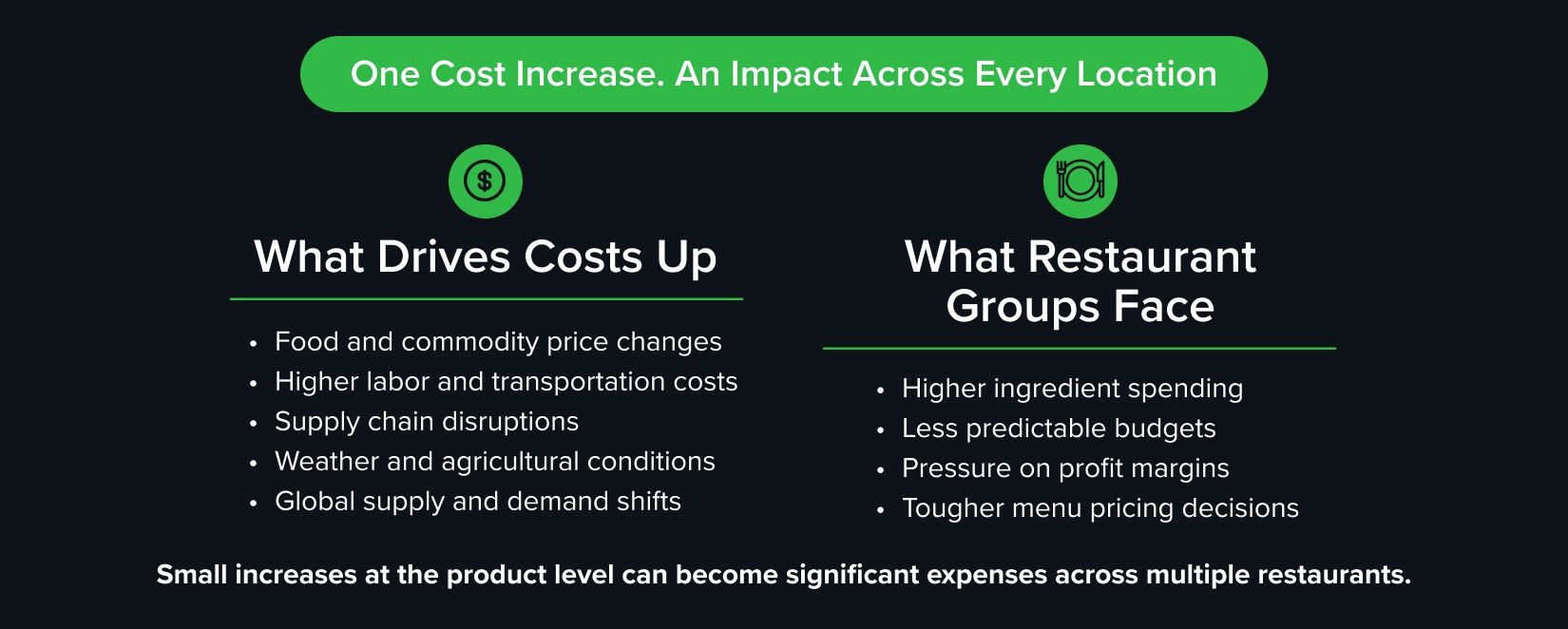
Weather and Agricultural Conditions
Weather plays a major role in food production, particularly when it comes to fresh produce.
Droughts, flooding, extreme temperatures, and severe storms can affect crop yields and product availability.
When growing conditions reduce supply, prices may rise. Restaurants that rely heavily on fresh ingredients can feel these changes quickly.
Changes in Global Food Supply and Demand
Food markets are connected around the world. Changes in international demand, trade policies, production levels, and shipping conditions can influence domestic food prices.
For restaurants, this means food inflation isn’t always driven by what’s happening locally.
A supply issue in another country can eventually affect the cost or availability of ingredients used in kitchens across the United States.
How Does Food Inflation Affect Multi-Unit Restaurant Operations?
Managing food costs at one restaurant is challenging enough. Add multiple locations, different markets, and hundreds of weekly purchases, and the financial impact of food inflation becomes much harder to manage.
Here are some of the biggest challenges multi-unit operators face.
Higher Food and Ingredient Costs
The most immediate impact of food inflation is an increase in purchasing expenses.
When frequently used ingredients become more expensive, operators spend more to produce the same dishes. Across multiple restaurants, those additional costs can quickly add up.
Pressure on Restaurant Profit Margins
Higher ingredient costs don’t automatically mean restaurants can charge more.
Operators still have payroll, rent, utilities, and other operating expenses to cover. When food costs rise faster than revenue, profit margins get squeezed.
Increased Menu Pricing Pressure
Raising menu prices can help offset food inflation, but there’s a limit to what customers are willing to pay.
Operators need to consider local competition, customer expectations, and menu profitability before making changes.
A price adjustment that works in one market may not make sense in another.
Differences in Costs Across Locations
Multi-unit restaurant groups don’t always pay the same prices at every location.
Regional supplier agreements, distribution costs, product availability, and purchasing volumes can create differences in food costs.
Without visibility into those differences, it’s difficult to know whether a location is paying a competitive price.
More Complex Purchasing and Budget Management
Food inflation makes budgeting less predictable.
Restaurant groups may need to update forecasts more frequently, compare supplier pricing, and monitor purchasing patterns across locations.
Without consistent purchasing practices and reliable cost data, unnecessary expenses can easily go unnoticed.
Food Cost Management Strategies for Multi-Unit Restaurants
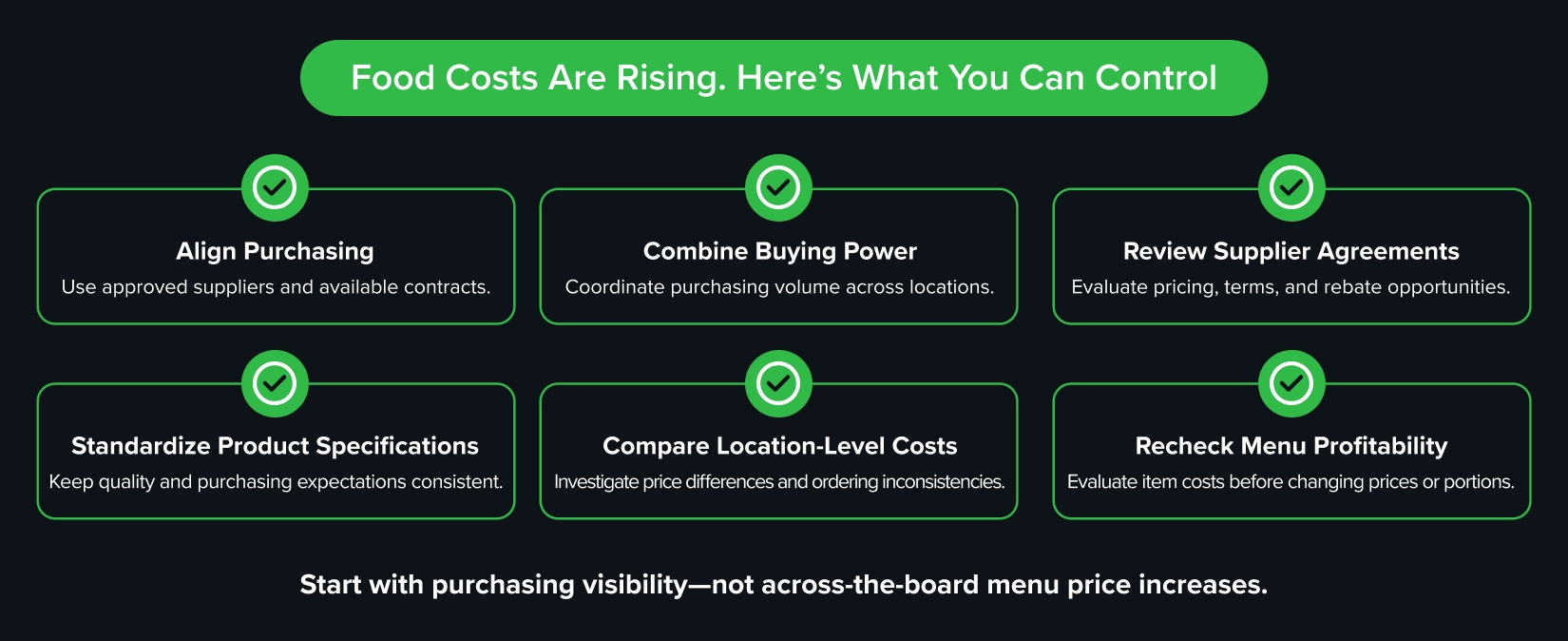
Food inflation may be outside your control, but how your restaurant group responds to it isn’t.
There are several ways multi-unit operators can manage rising costs without making major changes to their menus or day-to-day operations.
Strengthen Purchasing and Procurement Strategies
Start by reviewing how your restaurants purchase food.
Are locations ordering from approved suppliers? Are they taking advantage of available contracts? Are purchasing decisions consistent across the business?
A more structured procurement strategy can help operators identify unnecessary spending and find opportunities to purchase products at better prices.
Leverage Multi-Unit Buying Power
One advantage of operating multiple restaurants is purchasing volume.
When locations combine their purchasing needs, restaurant groups may be able to access pricing and contract opportunities that wouldn’t be available to individual locations.
The key is making sure purchasing volume is being used effectively rather than spread across too many suppliers and agreements.
Negotiate Better Supplier Pricing
Supplier relationships matter, especially during periods of food inflation.
Operators should regularly review contracts, compare pricing, and discuss opportunities for better terms with their suppliers.
Depending on purchasing volume and product categories, there may be opportunities to negotiate pricing agreements, rebates, or other cost-saving arrangements.
Standardize Products and Specifications
When locations purchase different versions of the same product, costs can vary more than necessary.
Establishing consistent product specifications can help restaurant groups maintain quality while improving purchasing efficiency.
That doesn’t mean every restaurant needs an identical menu. It means making sure locations are purchasing approved products that meet the group’s quality and cost expectations.
Monitor Food Costs Across Locations
You can’t manage costs you aren’t tracking.
Multi-unit operators should regularly compare food spending across locations to identify unusual price changes, purchasing inconsistencies, and opportunities for improvement.
Looking at individual locations alongside group-wide purchasing data provides a clearer picture of where food inflation is having the greatest impact.
Review Menu Pricing and Item Profitability
Not every menu item responds to food inflation the same way.
Some dishes may remain profitable despite higher ingredient costs, while others become more expensive to prepare.
Regular menu profitability reviews can help operators determine when pricing adjustments, ingredient substitutions, or portion changes make financial sense.
The goal isn’t necessarily to increase prices across the board. It’s to make informed decisions that protect margins while keeping the menu appealing to customers.
How Consolidated Concepts Helps Multi-Unit Restaurants Manage Food Inflation
Managing food inflation across multiple restaurants takes time, reliable purchasing data, and strong supplier relationships.
That’s where Consolidated Concepts can help.
We work with multi-unit restaurant operators to uncover savings opportunities, improve purchasing practices, and make food costs easier to manage across locations.
Real-Time Cost Visibility and Data-Driven Decisions
When you’re managing multiple restaurants, it’s important to understand what each location is purchasing and how much it’s paying.
Consolidated Concepts helps operators gain better visibility into their food purchasing data so they can identify cost differences, monitor spending, and make more informed decisions.
Having a clearer picture of purchasing activity makes it easier to spot potential savings before unnecessary expenses become ongoing problems.
Collective Purchasing Power Through a $100B+ Supplier Network
Individual restaurant groups don’t always have the purchasing volume needed to negotiate the most competitive supplier pricing.
Through the broader Buyers Edge Platform network, Consolidated Concepts helps operators access purchasing opportunities backed by significant collective buying power.
This gives restaurant groups access to savings programs and supplier relationships they may not be able to secure on their own.
Strategic Produce Management to Reduce Ingredient Costs
Fresh produce pricing can change quickly depending on seasonality, growing conditions, and product availability.
Consolidated Concepts helps restaurant groups take a more strategic approach to produce purchasing by identifying opportunities to improve sourcing and manage costs.
For operators purchasing fresh ingredients across multiple locations, a more coordinated produce strategy can help reduce unnecessary spending while maintaining quality.
Negotiated Distribution Contracts and Rebate Programs
Food inflation makes it especially important to review the agreements restaurants have with their distributors and manufacturers.
Consolidated Concepts helps operators evaluate purchasing arrangements, identify contract opportunities, and access eligible rebate programs.
These opportunities can help restaurant groups capture savings on products they’re already purchasing.
Supply Chain Optimization Across Multiple Locations
Managing suppliers, pricing, and product availability across several restaurants can become complicated.
Consolidated Concepts works with multi-unit operators to identify purchasing inefficiencies and improve coordination across locations.
With a more consistent approach to procurement and supply chain management, restaurant groups can spend less time dealing with purchasing challenges and more time focusing on their operations.
Build Supply Chain Resilience During Inflationary Periods
Food inflation isn’t always predictable. Prices may stabilize in one category while increasing in another.
That’s why managing costs shouldn’t be limited to reacting when supplier invoices go up.
Building a more resilient supply chain can help restaurant groups prepare for changing market conditions and avoid unnecessary disruptions.
Diversify Supplier Relationships
Relying too heavily on one supplier can leave restaurants with limited options when shortages or price increases occur.
Maintaining relationships with qualified alternative suppliers can give operators more flexibility when purchasing conditions change.
Track Food Cost Trends and Market Changes
Keeping an eye on commodity prices, seasonal trends, and supplier updates can help operators anticipate potential changes.
Instead of waiting until costs increase, restaurant groups can use this information to adjust purchasing plans and budgets.
Establish Purchasing Standards Across Locations
Consistent purchasing guidelines help keep food costs from varying unnecessarily between restaurants.
Clear product specifications, approved supplier lists, and ordering procedures can make purchasing more manageable across the entire organization.
Use Data-Driven Insights to Identify Cost-Saving Opportunities
Purchasing data can reveal spending patterns that aren’t always obvious from individual invoices.
Comparing product costs, supplier performance, and location-level spending can help operators identify where they’re overspending and where adjustments could make a difference.
Key Food Cost Metrics Multi-Unit Restaurant Operators Should Track
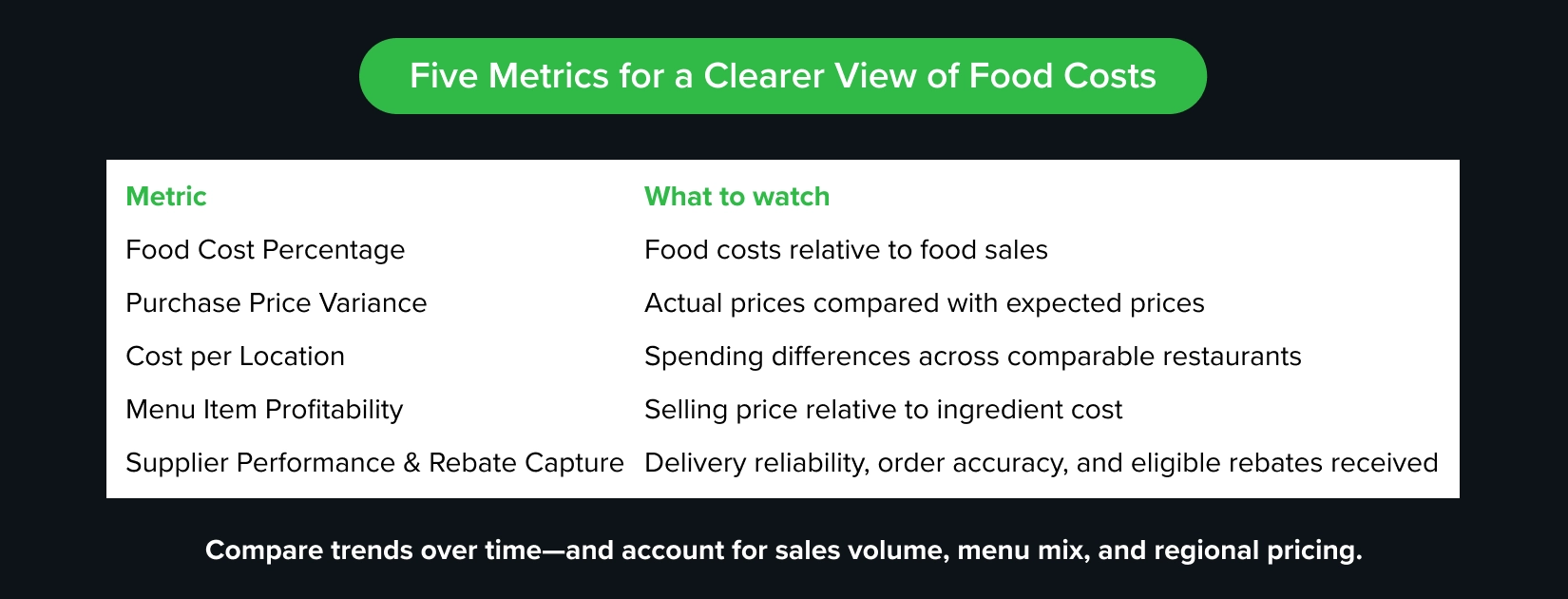
Tracking the right numbers can make food inflation easier to manage.
Rather than focusing only on total food spending, multi-unit operators should monitor several metrics that show how purchasing costs affect restaurant performance.
Food Cost Percentage
Food cost percentage measures how much of a restaurant’s food sales revenue is spent on food.
Tracking this number over time helps operators understand whether ingredient costs are increasing faster than sales.
Purchase Price Variance
Purchase price variance shows the difference between what a restaurant expected to pay for a product and what it actually paid.
This can help identify unexpected supplier price increases or purchasing inconsistencies.
Cost per Location
Comparing food costs across restaurants can reveal differences in pricing, purchasing behavior, and operational efficiency.
Operators should account for differences in sales volume, menu mix, and regional pricing when reviewing location-level costs.
Menu Item Profitability
Understanding how much each menu item costs to prepare helps operators make better pricing and menu decisions.
When ingredient prices change, reviewing item profitability can reveal which dishes need attention.
Supplier Performance and Rebate Capture
Supplier performance goes beyond product pricing.
Operators should also monitor delivery reliability, order accuracy, product availability, and whether they’re receiving the rebates and discounts available through their purchasing agreements.
Final Thoughts
Food inflation creates real challenges for multi-unit restaurant operators, but rising ingredient prices don’t have to dictate every purchasing decision.
With better cost visibility, consistent purchasing practices, and the right supplier relationships, restaurant groups can find ways to protect profitability while maintaining the quality their customers expect.
Consolidated Concepts helps multi-unit restaurant operators take a closer look at their food spending and identify opportunities to save across locations.
Want to see where your restaurant group could be saving? Click here to connect with Consolidated Concepts to learn how our procurement solutions can help you manage food costs.
FAQs
How does food inflation affect restaurant profitability?
Food inflation increases the cost of ingredients, which can reduce restaurant profit margins if menu prices and sales don’t keep pace. Multi-unit operators may feel a larger impact because even small price increases affect purchasing across multiple locations.
What food costs are most affected by inflation?
Commonly affected categories include meat, poultry, dairy, produce, grains, and cooking oils. The impact varies depending on commodity markets, supply conditions, transportation expenses, and seasonal availability.
How can multi-unit restaurants reduce food costs during inflation?
Multi-unit restaurants can manage food inflation by reviewing supplier contracts, combining purchasing volume, standardizing product specifications, reducing food waste, and monitoring purchasing costs across locations. These strategies can help operators identify savings without sacrificing food quality.
Can a GPO help restaurants manage food inflation?
Yes. A group purchasing organization (GPO) can help restaurants access negotiated supplier pricing, manufacturer contracts, and rebate opportunities. By combining purchasing volume across participating businesses, GPOs can provide savings opportunities that individual restaurants may not be able to negotiate independently.
Should restaurants raise menu prices during food inflation?
Menu price increases may be necessary when ingredient costs rise, but they shouldn’t be the only response. Restaurants should review food costs, item profitability, customer expectations, and competitive pricing before making adjustments. Finding purchasing savings first may help limit the need for significant menu price increases.
How does produce sourcing impact food cost management?
Produce prices can fluctuate because of weather, seasonality, growing conditions, and supply availability. Strategic produce sourcing helps restaurant operators evaluate suppliers, plan for seasonal changes, and identify purchasing opportunities that support more consistent food costs.