A multi-unit restaurant can sell more and still feel squeezed if operating costs creep up location by location. Cost savings for restaurants are not about cutting indiscriminately; they come from seeing what you spend, fixing what is avoidable and protecting the guest experience while you do it.
What Are Restaurant Cost Savings?
Cost savings for restaurants are reductions in spending or waste that hold up in actual operating results. A lower quoted price is only an opportunity until it shows up on invoices without creating offsetting costs.
Direct vs. Indirect Restaurant Operating Costs
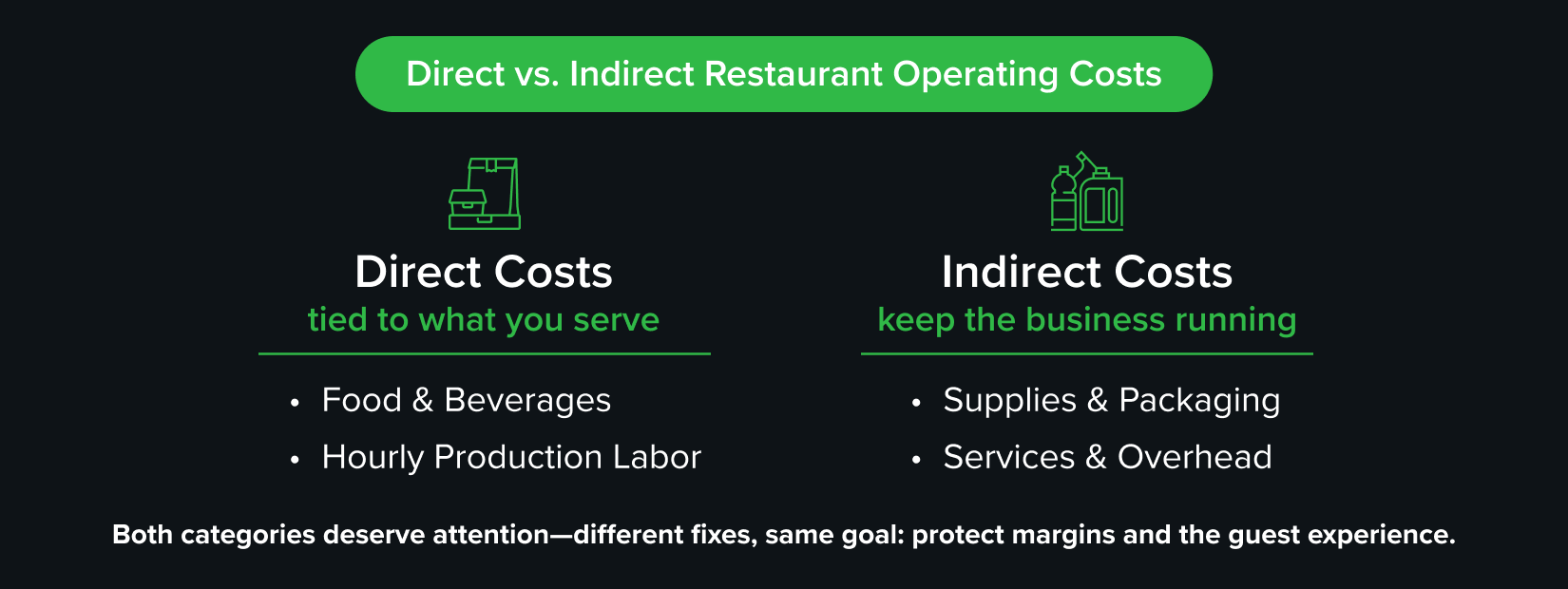
Direct costs are closely tied to what you serve, such as food, beverages and hourly production labor. Indirect costs keep the business running—think supplies, services and other overhead. Both deserve attention, but they call for different fixes.
Where Multi-Unit Restaurants Can Reduce Operating Costs
No single category carries the whole answer. Start with repeat purchases, inconsistent prices and avoidable loss, then check whether a proposed change shifts costs somewhere else.
Food and Beverage Purchasing
Compare the same ingredients across locations, adjusting for pack size and quality. Frequent purchases make even modest discrepancies worth a closer look.
Supplier and Distribution Costs
Review delivery fees, minimum orders, missed credits and substitutions alongside negotiated prices. A low item price can lose its appeal when distribution terms are added.
Labor and Operational Expenses
Labor decisions belong with operations, not just a purchasing spreadsheet. Better schedules, training and workflow can reduce rework without leaving a shift short-handed.
Indirect Spend
Packaging, cleaning supplies and services can grow quietly because fewer people review them. An approved-item list and regular invoice check can bring that spend into focus.
Food Waste and Product Loss
Measure what gets thrown away and why. Over-ordering, poor storage and inconsistent portions often need different fixes, even if they land in the same waste bin.
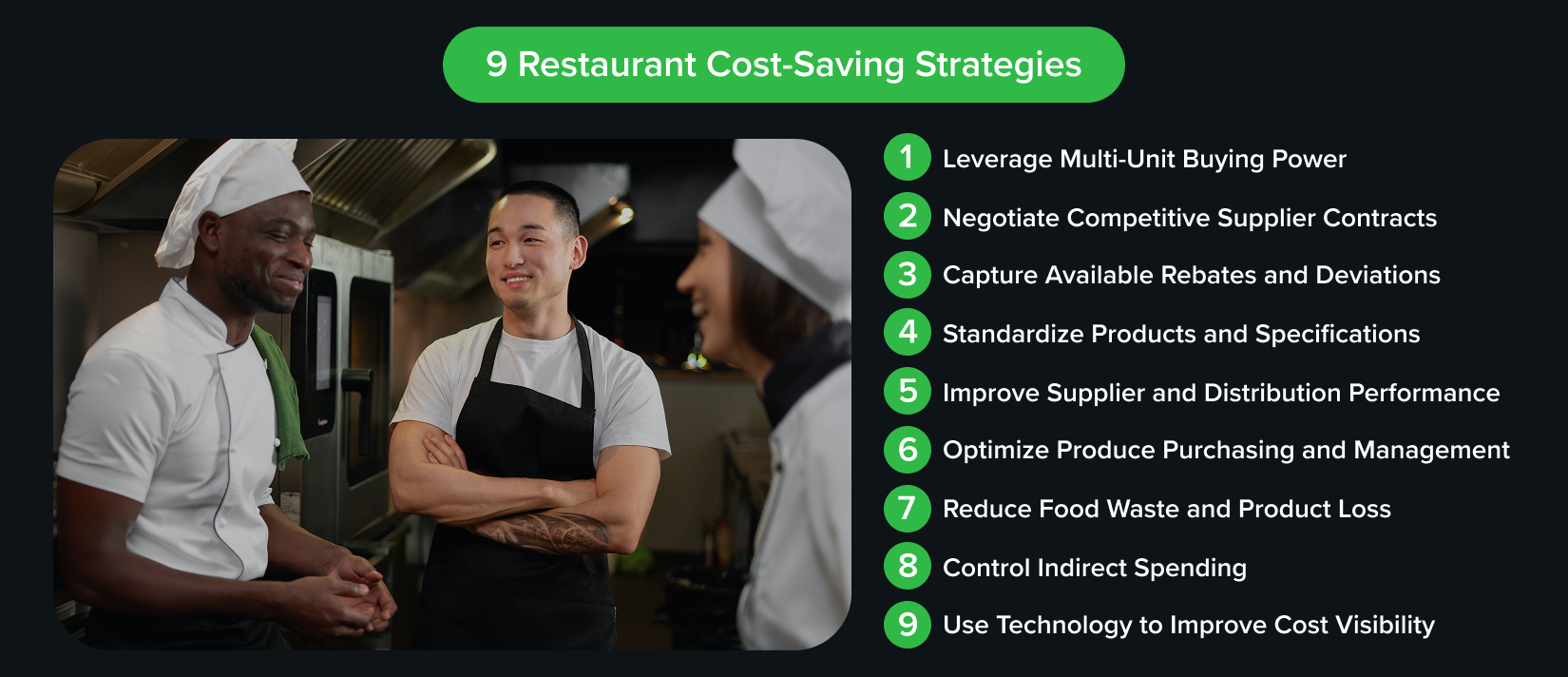
9 Restaurant Cost-Saving Strategies for Multi-Unit Brands
These nine ideas work best when paired with a baseline and a named owner. Pick a few changes your locations can adopt, then check what actually appears in the numbers.
Leverage Multi-Unit Buying Power
Bring credible volume forecasts to supplier conversations. Pooling demand may improve terms, but only if the resulting products and delivery plan work across your locations.
Negotiate Competitive Supplier Contracts
Spell out the full deal: item specs, price changes, freight, credits, minimums and service expectations. An attractive rate is much less useful when the exceptions are vague.
Capture Available Rebates and Deviations
Check which purchases qualify for agreed rebates or distributor deviations, then reconcile expected amounts against statements and invoices. Treat unclaimed credits as a process problem to fix.
Standardize Products and Specifications
Standardize the products that should be consistent, and document approved exceptions for local needs. This makes quotes comparable and reduces surprise substitutions.
Improve Supplier and Distribution Performance
Track on-time, in-full delivery, shortages and credit resolution. Bring recurring issues to supplier reviews with examples instead of relying on a general sense that service slipped.
Optimize Produce Purchasing and Management
For produce, weigh cost against usable yield, shelf life and seasonality. Ordering the right amount at the right frequency may matter more than chasing the lowest posted price.
Reduce Food Waste and Product Loss
Record waste by product and cause, then test a targeted fix: portion guidance, storage training or a smaller order. Cutting an order without understanding demand can create a different kind of loss.
Control Indirect Spending
Review recurring services and supplies, consolidate where it makes sense, and limit unapproved purchases. Give managers an easy way to request an exception rather than forcing workarounds.
Use Technology to Improve Cost Visibility
Bring purchasing, invoice and contract information into a view people can check by location. The value is not the software itself; it is the decision someone makes when a variance appears.
How Purchasing Data Can Identify Restaurant Cost-Saving Opportunities
Purchasing records help answer a simple question: where did the money go? With comparable units and clean item descriptions, the answer gets specific enough to act on.
Analyze Purchasing Spend Across Locations
Compare item and category spend across stores, allowing for sales volume and menu differences. A standout location may signal an issue—or a useful practice to share.
Identify Price Variances and Pricing Opportunities
Match invoiced prices to agreed terms for the same item and pack. Investigate changes in freight, substitutions or market coverage before labeling every difference an error.
Monitor Contract Compliance
Measure approved-item use and check whether qualified purchases receive the contracted price. Repeated exceptions may mean the agreement needs work, not that managers need another reminder.
Evaluate Supplier Performance
Look at fill rates, late deliveries, substitutions and credit turnaround. Service problems often become waste, extra labor or last-minute purchases at a higher price.
Identify Sourcing Opportunities
When several locations buy similar items differently, test whether common specifications or a different sourcing approach would help. Keep food quality and continuity of supply in the calculation.
Measure Savings Against Baseline Costs
Document the original cost, eligible volume and time period before making a change. Compare actual invoices afterward, net of fees and product changes, so projected and realized savings stay separate.
How to Build a Restaurant Cost-Savings Strategy
The best cost-savings plan is specific enough for a general manager to follow. It should say what will change, who owns it and how you will know whether it worked.
Establish a Baseline for Current Operating Costs
Use a consistent period and gather invoices, sales and operating costs by location. Note one-off events so they do not distort the comparison later.
Identify the Largest Savings Opportunities
Rank opportunities by size, ease of implementation and operational risk. The largest theoretical discount is not always the best first project.
Prioritize High-Impact Cost Categories
Focus first on categories with meaningful spend and manageable product requirements. Ask chefs and operators where a change would affect prep, portions or guests.
Set Savings Targets and Performance Metrics
Set a realistic target and define how it will be calculated. Pair financial measures with service and quality checks so one improvement does not disguise another problem.
Implement Cost-Saving Initiatives Across Locations
Pilot the change, document approved products and train the people placing orders. Make it clear how stores report a shortage or request an exception.
Measure Results and Continuously Optimize
Review invoices and operating feedback after rollout. If savings are not materializing, find out whether the issue is compliance, supplier execution or the original assumption.
Restaurant Cost-Savings Metrics to Track
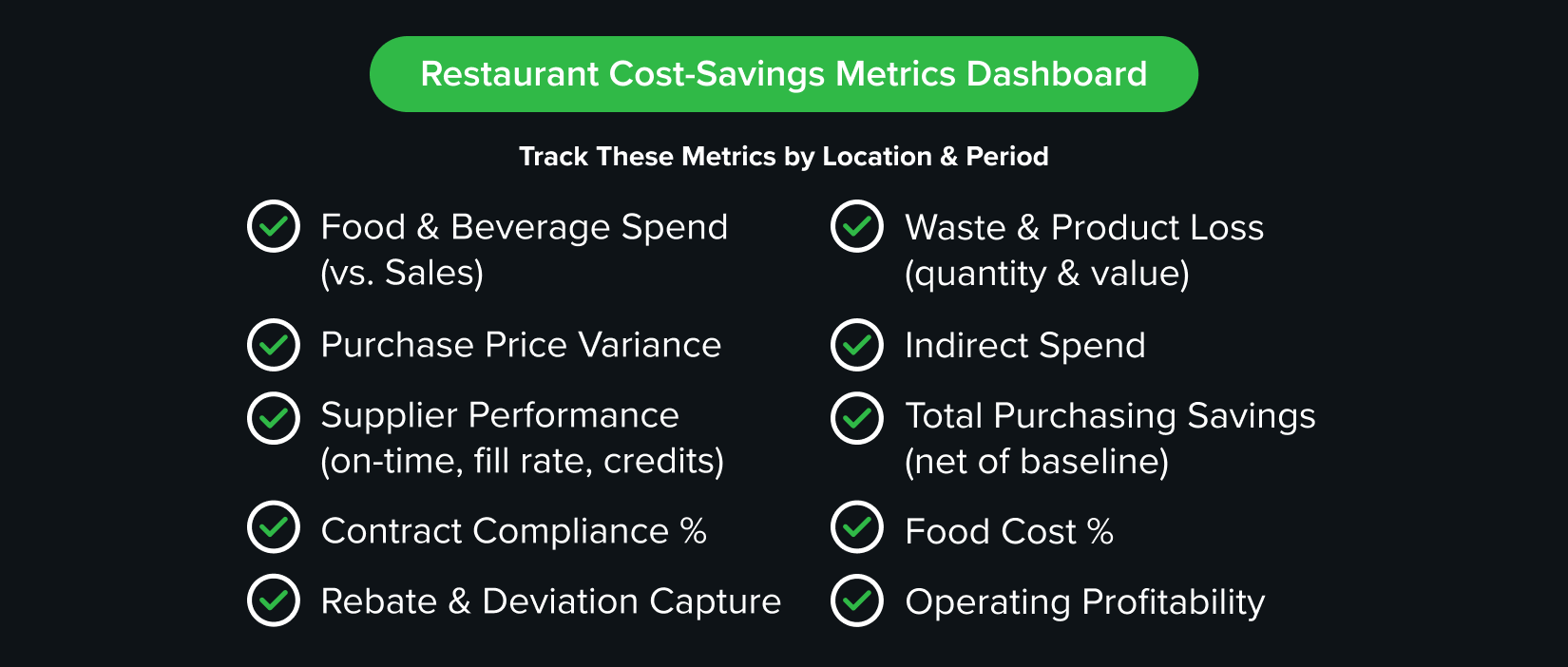
A useful scorecard combines purchasing measures with operating outcomes. Review trends by location and period; a single good month does not establish a lasting improvement.
Food and Beverage Spend
Track food and beverage spending by category and location alongside sales and volume. This helps distinguish price pressure from changes in what guests ordered.
Purchase Price Variance
Compare actual and reference prices for identical items and pack sizes. Record the reason for a variance before deciding who should fix it.
Supplier Performance
Measure delivery reliability, substitutions, credits and response time. A supplier scorecard makes service part of the cost conversation.
Contract Compliance
Calculate the share of eligible purchases that follows approved terms. Review why stores deviate rather than assuming every exception is preventable.
Rebate and Deviation Capture
Compare rebates and deviations received with what eligible purchases should have earned. Check contract terms carefully before recording a missed amount.
Waste and Product Loss
Record the quantity and value of spoiled, damaged or discarded product, with causes when possible. The cause tells you what to change.
Indirect Spend
Group supplies and services that sit outside core food purchasing. Watch for recurring charges, fragmented vendors and purchases without clear ownership.
Total Purchasing Savings
Report realized, net savings against a documented baseline and separate them from estimates. Explain volume, spec or market changes that affect the comparison.
Food Cost Percentage
Food cost divided by food sales shows a broader outcome. Read it alongside waste, portioning, menu mix and purchasing data rather than attributing every move to suppliers.
Operating Profitability
Look at whether improvements carry through to operating profit after implementation costs. A discount that raises labor or waste may not improve the bottom line.
Turn Restaurant Cost-Saving Opportunities Into Results with Consolidated Concepts
At Consolidated Concepts, we know a cost-savings idea has to survive a busy restaurant shift. We look at the practical details behind spend—what was ordered, what arrived, what was billed and where locations had to improvise. That operational view helps teams pursue better purchasing results without treating quality or consistency as an afterthought.
Want to see where your locations have room to improve? Click here to contact Consolidated Concepts to talk through your purchasing and cost goals.
FAQs
What Are the Biggest Opportunities for Restaurant Cost Savings?
Frequent food purchases, distribution charges, waste and overlooked indirect expenses are good places to start. Compare actual costs by location before assuming the biggest line item is the easiest one to change.
How Can Multi-Unit Restaurants Reduce Food Costs?
Standardize key products, review invoice prices, improve ordering and track waste. Protect usable yield and quality so a lower purchase price does not create a higher cost per serving.
How Does Buying Power Help Restaurants Save Money?
Combined demand may support better terms and clearer service commitments. Savings depend on usable volume, supplier coverage and whether locations can follow the agreement.
How Does Purchasing Data Identify Restaurant Cost Savings?
It exposes price differences, missed credits, off-contract buying and high-cost substitutions. Tie each finding to invoices and an owner before counting it as a saving.
How Can Restaurants Reduce Supplier Costs?
Compare total delivered cost and service, negotiate clear terms and follow up on billing errors. Stable fill rates can be as important as a lower case price.
What Are Indirect Costs in a Restaurant?
Indirect costs include the supplies, services and overhead needed to operate beyond the ingredients on the plate. Their definitions can vary by accounting system.
How Can Restaurants Reduce Indirect Spending?
Review recurring vendors and fees, establish approved choices, and make exceptions easy to document. Start with categories that have both material spend and weak visibility.
How Should Restaurants Measure Cost Savings?
Use a consistent baseline and compare realized costs for like-for-like products and periods. Show net results after fees, volume shifts and implementation costs.