The hospitality industry is entering a new era shaped by rising costs, changing consumer behavior, labor instability, and rapid advances in technology. The conversation is no longer just about survival, but on operating smarter, more intentionally, and more efficiently.
These pressures are showing up directly in operator performance. According to the National Restaurant Association, 42% of restaurant operators reported they were not profitable in 2025, reinforcing the need for more intentional approaches to labor, procurement, menu engineering, and technology investment.
In a recent conversation, Lee Plotkin, Founder and President of LP Enterprises, and Jeff Hoogterp, Sr. Director of Client Relations & Channel Sales at Consolidated Concepts, shared their perspectives on the trends shaping hospitality today. Their discussion revealed eight key themes operators should be paying close attention to over the next 6 to 12 months.
1. Customers Are More Intentional Than Ever
Today’s guests are making more deliberate decisions about where they spend their money. Jeff Hoogterp emphasized, “Customers have an appetite for products and experiences that align with their health goals, personal values, and ethical standards,” and many are willing to pay a premium for them.
Whether it’s responsibly raised proteins, sustainably sourced ingredients, or eco-conscious business practices, consumers want to feel good about the choices they make and the brands they support. This shift creates opportunity for operators who can clearly communicate value beyond price.
Broader industry trends reflect the same behavior, with the National Restaurant Association noting more than 4 in 10 consumers say they’re dining out less often than they did a year ago, underscoring how intentional dining behavior has become.
2. Loyalty Goes Beyond Discounts
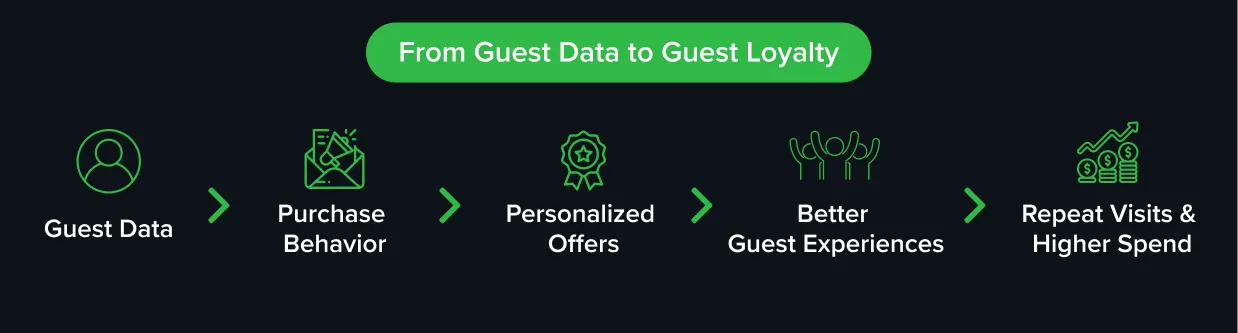
At the same time, dining habits are becoming more occasion-driven rather than routine. Instead of dining out multiple times per week, many guests are being more selective about where they go, when they visit, and what they order. As a result, loyalty programs, bundled offerings, and personalized promotions are becoming increasingly important tools for driving repeat visits and deeper customer engagement.
“People like the feeling of accomplishing something and getting rewarded,” Lee Plotkin shared while talking about loyalty incentives and reward systems.
Successful operators are finding ways to create value without relying entirely on discounts. Strategies include:
- Bundled meals and experiences
- Loyalty rewards and point systems
- Personalized offers
- Limited-time promotions
- Occasion-based marketing
Restaurants that make guests feel recognized, rewarded, and connected to the brand will continue building stronger long-term loyalty.
3. Personalized Marketing Is Becoming Essential
One of the biggest shifts happening in hospitality is the growing ability to use customer data more strategically.
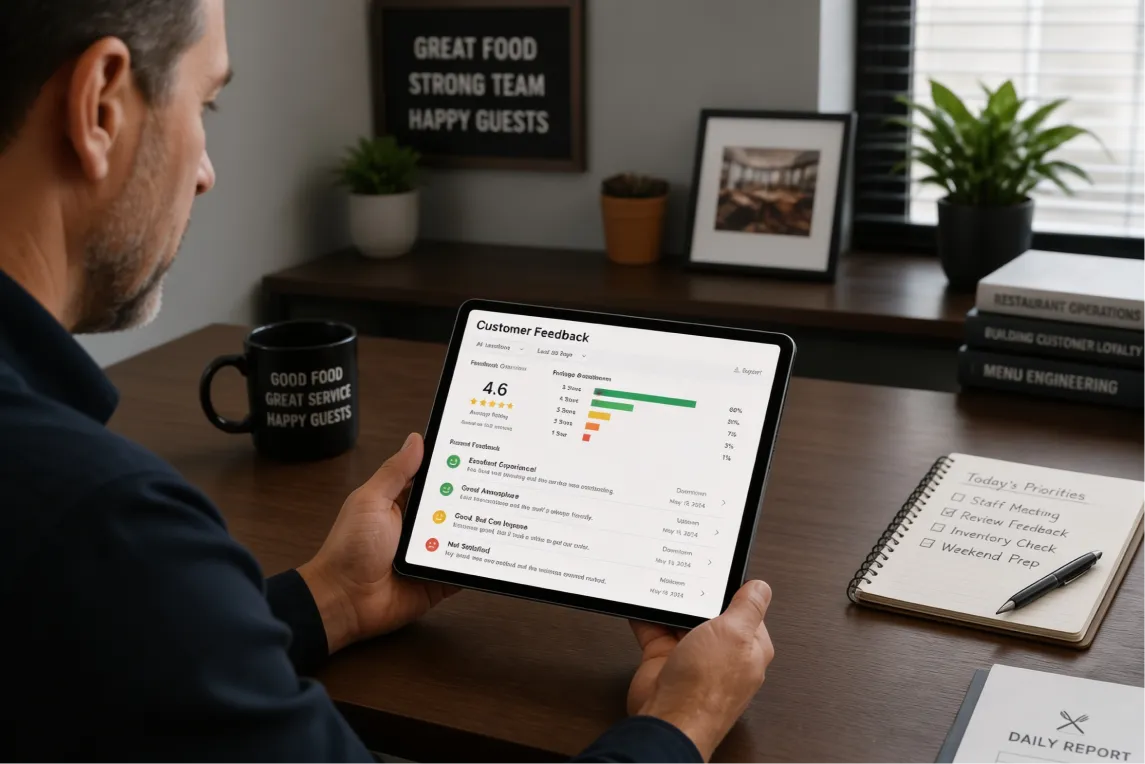
Operators now have access to insights that allow them to move beyond broad, one-size-fits-all campaigns and market with greater precision. Restaurants are using targeted email and SMS campaigns, personalized offers, guest segmentation, and purchase behavior tracking to drive repeat visits and encourage positive customer spend.
Increasingly, these capabilities are being embedded directly into modern POS and guest management platforms, allowing operators to connect transactions, preferences, and marketing in a single system and deliver more relevant, timely messaging.
Technology and AI are also helping operators better understand what influences customer decisions and how to create more relevant guest experiences. In turn, this helps operators deliver messages that resonate more strongly with customers and drive better engagement.
The conversation emphasized that personalization is quickly becoming an expectation rather than a luxury. Operators who can effectively leverage customer data while still maintaining authentic hospitality will have a major advantage moving forward.
4. Restaurants Are Getting Creative to Manage Rising Costs
Quality ingredients remain a priority for both restaurateurs and customers, so rather than compromising on food quality, restaurants are finding more creative ways to manage expenses behind the scenes. Operators are focusing on more effective cost-saving strategies instead of cutting corners on ingredients or the guest experience. “Restaurants don’t want to sacrifice ingredients or quality,” Plotkin explained. “They’re looking at more different ways to reduce costs than they have before.”
That shift is showing up across both menu engineering and back-of-house operations, as operators look for efficiencies that add up over time. “A lot of operators are realizing they can make meaningful cost improvements without sacrificing quality by being more intentional about how they manage inputs,” shared Plotkin. Increasingly, staying ahead of market trends, anticipating rising costs, and maintaining visibility into upcoming supply chain shifts are becoming just as important, allowing operators to make proactive purchasing decisions that help control costs before challenges arise.
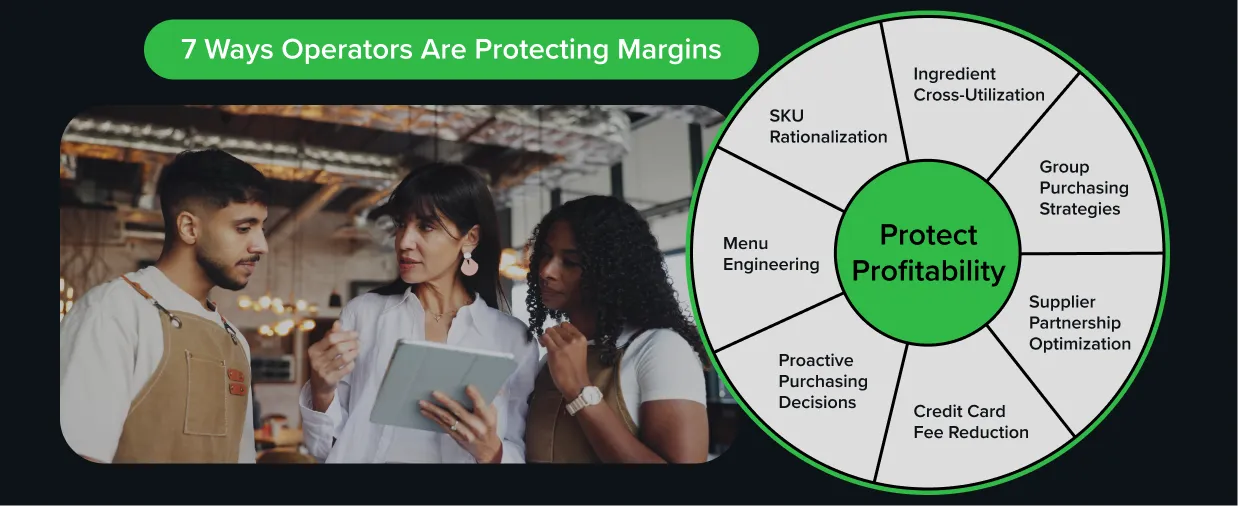
Cost-saving creativity is showing up through:
- Menu engineering
- Re-evaluating long term supply relationships to ensure costs are aligned with growth
- Reducing branded and logoed product SKUs
- Group purchasing strategies
- Ingredient cross-utilization
- Maintaining visibility into market shifts and rising costs to make proactive purchasing decisions
- Credit card fee reduction
Procurement is also evolving from a purchasing function into a strategic business strategy. Operators expect partners to provide insight and ongoing support rather than transactional relationships. Operators want partners who can provide market visibility, forecasting, inventory guidance, and proactive cost-saving recommendations.
Another important strategy, and a growing topic in the industry, is SKU rationalization, which focuses on evaluating whether ingredients can be used across multiple menu items instead of being tied to a single dish. “For example, operators are asking: ‘Can this ingredient go on three plates instead of just one?’” shared Jeff Hoogterp.
Plotkin also emphasized SKU consolidation balanced with diversified channels to manage risk, deliberate financial evaluation and group contracting to spread overhead and lower costs.
Together, these procurement and inventory strategies help reduce waste, simplify operations, strengthen supplier partnerships, and improve margins without compromising food quality or the guest experience. Effective suppliers are acting as business investors who proactively reduce customer costs.
5. Appropriate Staffing Is Critical
Labor remains one of the industry’s biggest challenges. High turnover, ongoing training costs, and inconsistent staffing levels continue creating pressure for operators trying to maintain service standards while protecting profitability.
According to Hoogterp, one of the biggest opportunities today is making sure restaurants have the appropriate staffing levels at the appropriate times.
Overstaffing hurts profitability. Understaffing hurts the guest experience. Operators are increasingly turning to tools like sales forecasting, traffic pattern analysis, smarter scheduling systems, cross-training employees, labor management technology, and AI-driven staffing insights to help predict demand and staffing needs more accurately. The goal is not simply to cut labor costs, but to optimize staffing in a way that improves consistency, efficiency, and the overall guest experience.
6. Data and Operational Intelligence Are Already Reshaping Hospitality
The conversation wasn’t about what’s coming, it was about what’s already in use. As Plotkin and Hoogterp emphasized, visibility into operational data has become a core requirement for running a modern hospitality business. “If you are not using technology to help run your business, you are behind the eight ball,” Hoogterp shared.
Across operators today, data and automation are being used to make faster, more confident decisions in areas like ordering, inventory, recipe costing, waste tracking, pricing, labor planning, and performance management.
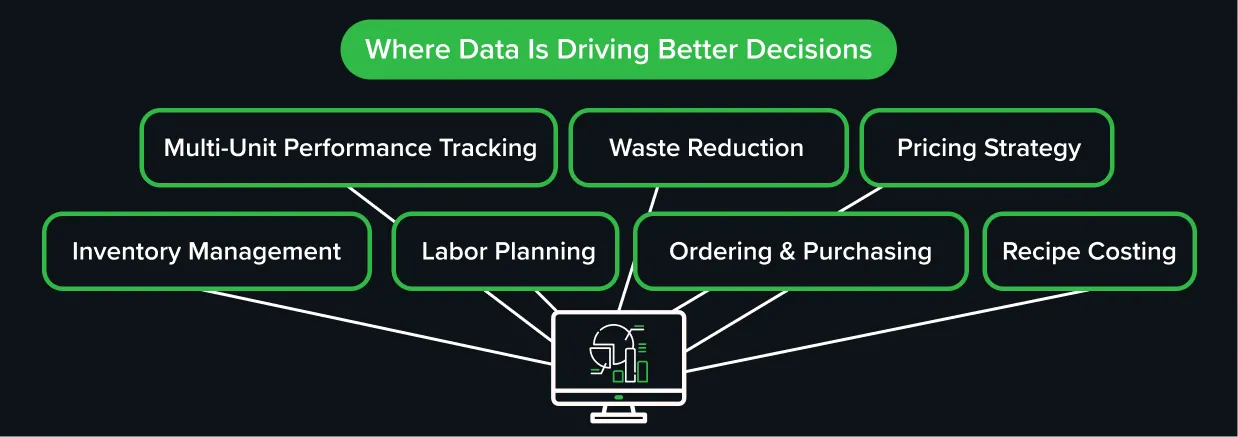
The shift is less about “AI adoption” and more about decision speed and clarity. Systems now surface ordering recommendations based on sales trends, seasonality, historical purchasing, and par levels, reducing manual guesswork and tightening consistency across locations.
Real-time reporting also allows operators to compare performance across units and spot inefficiencies as they emerge, rather than weeks later in end-of-period reporting. The competitive edge is increasingly about how quickly operators can see what’s happening and act on it. Both leaders noted that technology is most powerful when paired with operator judgment. When used well, it removes administrative friction and frees teams to focus on hospitality, guest experience, and high-impact decision-making.
7. Revenue Generation Is Becoming as Important as Cost Reduction
While cost containment remains critical, many operators are also focused on finding new ways to drive revenue by expanding beyond traditional dine-in models. This includes catering, off-premise dining, delivery, loyalty-driven repeat visits, personalized promotions, and event-based experiences.
The discussion emphasized that sustainable profitability will require operators to focus on both sides of the equation: reducing unnecessary costs and increasing guest frequency and spend. The operators positioned for long-term success are the ones creating systems that improve efficiency while strengthening customer relationships at the same time.
8. The Operators Who Adapt Will Win
The hospitality industry has always rewarded resilience, but the next phase of the industry will reward intentionality even more. Success will increasingly come from taking a disciplined approach to continuous improvement rather than relying on a single transformational change. Operators who regularly evaluate procurement, labor, inventory, waste, and sales channels for opportunities to improve efficiency will be better positioned to protect margins and adapt to changing market conditions.
Operators who thrive over the next several years will likely share a few key characteristics, including strong operational discipline and a focus on building strategic, cost-effective and transparent supplier partnerships. They will also be defined by their advanced use of technology, effective labor management, and ability to engage guests in more personalized ways. Just as importantly, successful operators will balance creative cost containment with consistent quality across every aspect of the guest experience.
As Plotkin noted, the businesses that stay focused internally, taking care of customers, managing costs carefully, and building strong teams, will emerge stronger on the other side of this cycle.
The future of hospitality will belong to operators who can balance efficiency with experience, technology, hospitality, and profitability with genuine guest connection. Continued cost pressures, labor challenges, and accelerating technology adoption are expected to further reshape the industry, creating both challenges and opportunities for operators willing to adapt.
One of the most practical places to start is by taking a closer look at the operational levers that directly impact profitability, including procurement strategy, supplier partnerships, inventory management, and purchasing visibility. Operators who regularly evaluate these areas and make data-driven adjustments will be better positioned to control costs, improve performance, and build more resilient businesses over time.
For restaurant owners and hospitality groups navigating this evolving landscape, partners like LP Enterprises and Consolidated Concepts continue to support operators as they adapt to new operational and data-driven realities. Learn more at leeplotkin.com and consolidatedconcepts.net.