Category: Restaurant Technology

Restaurant Growth Strategy: How Operators Can Scale Profitably

Restaurant Growth Strategy: How Operators Can Scale Profitably

The restaurant industry is no stranger to challenges, and this year many operators anticipate facing the same hurdles that have defined recent years. Labor costs, food costs, and recruiting and retaining employees remain top concerns for both full-service and limited-service restaurant operators. Despite these challenges, growth is on the horizon—29% of operators plan to expand and open new locations in 2025.

So, how can multi-unit restaurant operators navigate rising costs, workforce struggles, and supply chain complexities while still driving profitability and expansion? The answer lies in leveraging strategic partnerships and advanced solutions designed to streamline operations and optimize costs. A well-planned restaurant growth strategy can help operators scale efficiently while maintaining financial health.

Rebates & Deviations: Reducing Food Costs at Scale 

Food costs continue to be a top concern for restaurant operators, and as commodity prices fluctuate, managing expenses becomes increasingly difficult. Through Consolidated Concepts, multi-unit operators gain access to powerful cost-saving programs, including rebates and deviations. 

  • Rebates: By leveraging the collective purchasing power of multi-unit operators, Consolidated Concepts negotiates exclusive rebates on essential ingredients and supplies. These rebates put money back into your business, helping to offset rising costs and support your restaurant growth strategy.
  • Deviations: Custom pricing agreements ensure you’re paying the most competitive prices across all your locations. This approach prevents price discrepancies and helps control costs, allowing you to expand without financial strain.

Data & Technology: Powering Smarter Growth

Having real-time access to purchasing data and analytics is crucial for making informed business decisions. Consolidated Concepts provides multi-unit operators with advanced procurement technology that delivers deep insights into spending patterns, cost trends, and supplier performance. 

  • Price verification tools help ensure that you’re being charged correctly for every invoice, eliminating overcharges and improving cost accuracy. 
  • Purchasing analytics provide real-time visibility into food and supply costs, allowing operators to make data-driven decisions that drive savings and operational efficiency. 
  • Forecasting technology helps operators anticipate cost fluctuations, making it easier to budget for future purchases. 

Supply Chain Management: A Growth Strategy Essential

Between ongoing supply chain disruptions and increased demand for quality ingredients, managing procurement has never been more complex. Consolidated Concepts helps multi-unit restaurant operators streamline their supply chains by optimizing vendor relationships, ensuring product availability, and improving overall efficiency. 

  • Strategic sourcing solutions help operators secure reliable, cost-effective ingredients while maintaining quality and consistency—an essential aspect of any restaurant growth strategy.
  • Distribution management services prevent stockouts, delays, and supply chain inefficiencies that could impact operations. 
  • Customized procurement strategies help multi-unit operators source the best products while balancing cost and quality. 

Produce Management: Elevating Freshness in Your Growth Plan

Consumers continue to demand fresh, high-quality ingredients, making produce management a top priority for restaurants. Consolidated Concepts provides operators with expert produce procurement services to help maintain consistency and reduce waste. 

  • Sourcing from a trusted network of suppliers ensures that operators receive the freshest, highest-quality produce year-round. 
  • Quality assurance support helps ensure that every shipment meets your restaurant’s standards. 
  • Price benchmarking tools allow operators to compare pricing across multiple vendors to ensure they’re getting the best deal—a key component of a cost-efficient restaurant growth strategy.

Custom Contracts: Aligning Pricing with Growth Goals

Every restaurant brand has unique needs, and off-the-shelf supplier agreements don’t always align with business goals. That’s why Consolidated Concepts works with multi-unit operators to create customized contracts that align with their purchasing priorities. 

  • Negotiated agreements help operators secure exclusive pricing and terms that align with their long-term growth strategies. 
  • Category management support ensures that operators are optimizing their purchasing in key areas like proteins, beverages, and disposables. 
  • Flexibility in supplier selection allows restaurant brands to work with vendors that best suit their operational needs. 

Indirect Spend Savings: Reducing Costs to Scale Smarter

Food costs aren’t the only expenses putting pressure on restaurant margins—indirect spend categories like equipment, utilities, and maintenance also contribute to rising operational costs. Consolidated Concepts helps operators reduce indirect spend through exclusive programs and partnerships. 

  • Discounted pricing on essential supplies including kitchen equipment, uniforms, linens, and more. 
  • Technology solutions for non-food procurement streamline purchasing for facilities management, cleaning supplies, and other operational needs. 
  • Energy efficiency programs help operators lower utility costs through optimized energy usage and rebate opportunities—a critical factor in sustainable restaurant growth.
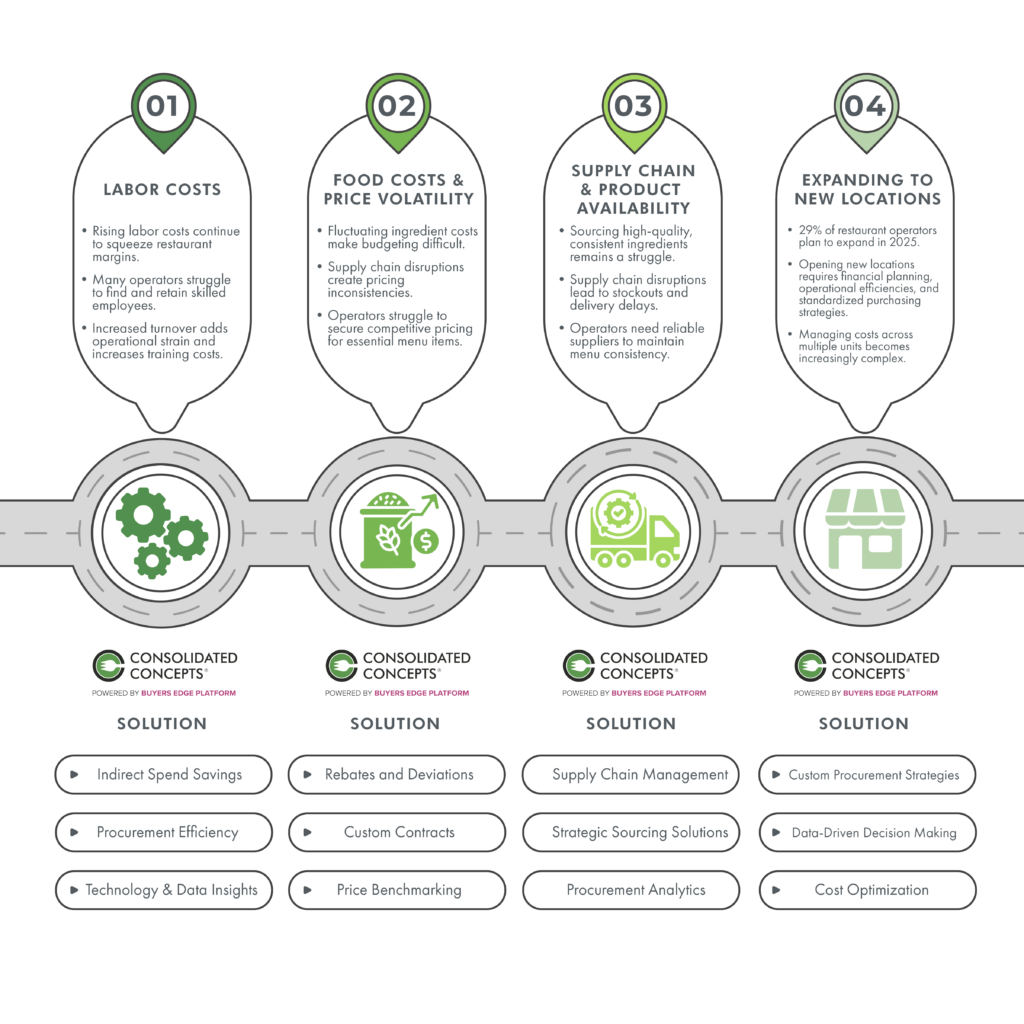
A clean and structured infographic with a restaurant industry theme, featuring icons for each challenge and solution related to labor costs, food costs, supply chain recruitment, and retention

Executing a Winning Restaurant Growth Strategy

With nearly a third of restaurant operators planning to expand in 2025, having a restaurant growth strategy in place is critical for success. Consolidated Concepts provides the tools, data, and supplier partnerships needed to scale efficiently while maintaining financial health. 

By leveraging rebates, data analytics, supply chain management, produce procurement, custom contracts, and indirect spend savings, multi-unit operators can address their biggest challenges while positioning their business for long-term growth.

Want to see how Consolidated Concepts can support your restaurant growth strategy? Fill out the form below and get in touch with our restaurant experts today!


The Smarter Way to Cut Costs and Improve Efficiency Without Hiring More Employees

The Smarter Way to Cut Costs and Improve Efficiency Without Hiring More Employees

Managing costs across multiple restaurants takes more than finding a better price. It means keeping purchasing consistent, maintaining supplier relationships, and giving teams the information they need to make decisions without adding hours of administrative work.

When staffing is tight, those responsibilities become harder to manage. Multi-unit operators face an even greater burden, as maintaining consistency, managing costs, and optimizing operations across multiple locations requires a strategic approach.

Consolidated Concepts offers solutions to help streamline operations, reduce purchasing costs, and improve operational efficiency across your entire portfolio. By strengthening the way your restaurants purchase products and manage suppliers, you can support your existing team while keeping a closer watch on profitability.

3 Ways Consolidated Concepts Can Help Save Time and Money 

Before adding more administrative responsibilities to an already busy team, consider where purchasing support could make the biggest difference. Negotiating agreements, reviewing spending, and finding reliable suppliers all require time and expertise.

Here’s how Consolidated Concepts helps multi-unit restaurant brands manage those responsibilities more efficiently.

1. Cost Reductions Without Time-Consuming Negotiations

Finding competitive pricing across multiple locations takes time, but Consolidated Concepts helps do the work for you. We provide access to pre-negotiated pricing, manufacturer rebates, and supply chain expertise to help reduce costs on food, supplies, and operational expenses.

Our manufacturer rebate and deviation programs⁠ help operators identify savings opportunities within their existing purchases, including eligible products they already use.

For multi-unit restaurant operators, the opportunity goes beyond a single discounted item. Reviewing purchasing across locations can help uncover where restaurants are missing available savings or buying outside established programs.

With greater purchasing power and support, your team can spend less time comparing individual offers and more time putting the right programs to work across your operation.

2. Purchasing Intelligence for Visibility Across Locations

Are fluctuating food costs making it difficult to maintain profitability? When purchasing information is spread across invoices, spreadsheets, and individual locations, it can be difficult to see what needs attention.

Consolidated Concepts provides restaurant purchasing analytics and technology⁠ that help operators understand spending, monitor pricing, and evaluate purchasing activity across their units.

That visibility helps your team answer practical questions:

  • Are locations purchasing the same approved products?
  • Which categories are driving higher spending?
  • Are invoice prices aligned with negotiated agreements?
  • Where could purchasing decisions be reducing the value of your programs?

By reducing guesswork, you gain greater control over spending and a clearer starting point for improving purchasing consistency. Your team can focus its attention on the locations and categories that need it most.

3. Supplier Optimization to Simplify Sourcing

For multi-unit operators, finding and managing reliable supplier relationships can be an overwhelming task. A product needs to meet your pricing expectations, quality standards, and operational requirements across every location that uses it.

That’s where Consolidated Concepts comes in. Our supply chain management services⁠ help operators navigate sourcing and supplier decisions while protecting menu integrity and brand consistency.

The lowest quoted price is only one part of the decision. Pack size, product yield, availability, and delivery requirements can all affect whether an item makes sense for your restaurants.

With support evaluating those details, your team can make more informed sourcing decisions and spend less time managing the search on its own.

How Smarter Purchasing Helps Restaurants Navigate Labor Shortages

When labor is tight, every operational efficiency counts. A manager spending hours tracking down purchasing information has less time available for training, service, and the daily needs of the restaurant.

Consolidated Concepts helps multi-unit operators strengthen purchasing processes so existing teams can work more efficiently. Here’s what that can look like in practice.

Cost Savings That Create Room for Other Priorities

Instead of spending hours researching supplier contracts or searching for rebates, your team can work with Consolidated Concepts to identify purchasing opportunities tailored to your operation.

These savings can create room in the budget for priorities such as employee retention, technology, or menu innovation.

Start with the products and services your locations purchase regularly. Small differences in recurring costs can become meaningful when multiplied across an entire restaurant group. Reviewing those expenses gives your team a focused place to look for savings without requiring a complete operational overhaul.

Purchasing Transparency That Reduces Follow-Up Work

Greater visibility into purchasing data helps teams make informed decisions and address unnecessary spending across locations.

For example, if one restaurant begins purchasing a higher-priced substitute, a purchasing review can prompt the right questions: Was the approved product unavailable? Did the order guide change? Does the location need help finding an appropriate alternative?

Answering those questions helps address the cause of the issue. It also gives managers clearer direction for future orders, reducing repeated conversations and avoidable inconsistencies.

Alongside inventory counts and sales information, purchasing insights can also help teams evaluate ordering patterns and investigate potential over-ordering.

Simplified Supplier Management That Supports Consistency

Maintaining strong supplier relationships takes ongoing attention. Product substitutions, delivery concerns, and changing location needs can create additional work for both restaurant managers and purchasing teams.

Consolidated Concepts helps simplify sourcing and supplier management so operators can develop reliable supply solutions that support menu stability and guest satisfaction.

Internally, a few consistent practices can help your locations get more value from that support:

  • Keep approved product specifications accessible.
  • Establish a clear process for requesting substitutions.
  • Document recurring product or delivery issues.
  • Assign responsibility for escalating supplier concerns.

Together, purchasing support and clear internal processes help reduce confusion and keep locations working toward the same standards.

Transform Restaurant Cost Challenges into Competitive Advantages

Labor pressures and rising costs don’t have to slow your business down. With Consolidated Concepts, multi-unit restaurant operators gain purchasing insights, cost-saving opportunities, and supplier support to navigate these challenges with confidence.

From negotiated pricing and rebates to data-driven purchasing and supplier optimization, we help you run a more efficient operation while maintaining the high standards your customers expect.

A stronger purchasing strategy gives your existing team more support and fewer administrative hurdles, helping them focus on running your restaurants.

Frequently Asked Questions

How can multi-unit restaurants reduce costs without hiring more employees?

Operators can review existing purchases for rebate eligibility, improve use of negotiated pricing, and simplify supplier management. Purchasing technology and outside procurement support can help existing teams manage these tasks with less manual work.

How does purchasing data improve restaurant operational efficiency?

Purchasing data helps operators compare spending across locations, monitor price changes, and identify purchases outside approved programs. This gives teams a clearer view of where to investigate costs and improve consistency.

Can restaurants save money without changing suppliers?

Potentially, yes. Reviewing existing purchases and agreements may reveal eligible rebates or opportunities to improve contract utilization. Available savings depend on the products purchased, program eligibility, and current arrangements.

Does purchasing support replace the need to hire restaurant staff?

Purchasing support can reduce administrative demands on your existing team. Hiring decisions should still reflect the staffing needed to prepare food, serve guests, and operate each restaurant effectively.

Ready to take control of costs and operations? Fill out the form below to contact Consolidated Concepts today to start optimizing your multi-unit restaurant strategy. Stay ahead of labor challenges, improve efficiency, and unlock greater profitability. 

How to Scale Your Restaurant Chain Without Wasting Money

How to Scale Your Restaurant Chain Without Wasting Money

Scaling a restaurant chain is an exciting opportunity—but without the right strategies, it can also lead to wasted money, inefficiencies, and unnecessary costs. Multi-unit restaurant operators must be strategic with purchasing, labor, and operations to maintain profitability while expanding. 

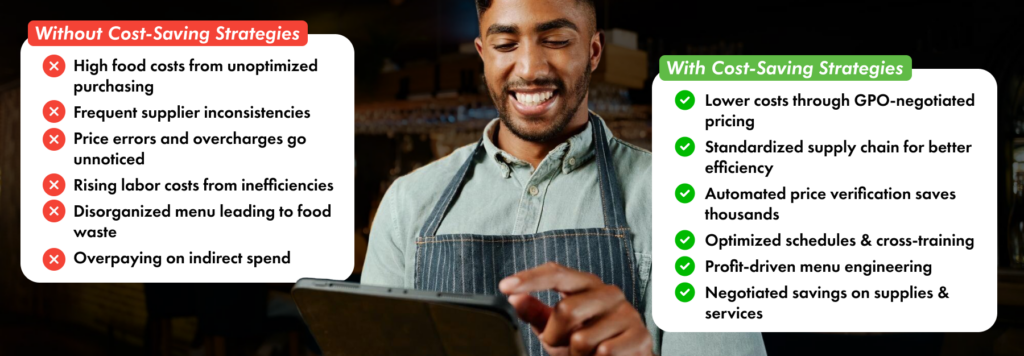
an infographic called Scaling Smart: What's the Cost of Inefficiency?

The good news? With the right cost-saving strategies, you can grow your restaurant brand without letting expenses spiral out of control. 

At Consolidated Concepts, we specialize in helping multi-unit operators optimize purchasing, supply chain management, and operational efficiency to reduce waste and increase profits.

How to Scale Your Restaurant Chain?

Here’s how you can scale your restaurant smartly while keeping costs in check. 

1. Leverage Group Purchasing Power for Better Pricing

As you expand your restaurant chain, your purchasing power grows—but are you using it effectively? The more locations you operate, the greater your ability to negotiate better pricing. However, many restaurant operators leave money on the table by not leveraging their full purchasing volume. 

Instead of sourcing independently, multi-unit operators should: 

  • Consolidate suppliers to secure volume-based discounts. 
  • Negotiate better vendor contracts based on chain-wide buying power. 

Savings Impact: Multi-unit operators can reduce food and supply costs by 10%-35% by leveraging strategic purchasing programs. 

2. Optimize Supply Chain Management to Cut Waste

A growing restaurant chain means more suppliers, more orders, and more opportunities for inefficiencies. Supply chain mismanagement—such as over-ordering, inconsistent inventory, or redundant suppliers—can quickly inflate costs. 

To avoid waste and inefficiency, operators should: 

  • Standardize ingredient selection across all locations to avoid excess inventory. 
  • Use data-driven demand forecasting to ensure accurate ordering. 
  • Streamline vendor relationships to prevent duplication and inconsistencies. 

By tightening supply chain processes, operators can reduce food waste, prevent stockouts, and save thousands annually. 

 3. Automate Price Auditing and Verification

Many multi-unit operators unknowingly overpay due to supplier pricing errors or invoice discrepancies. Without a system in place to verify pricing, you could be losing thousands of dollars per location. 

Instead of manually checking invoices, operators can: 

  • Monitor supplier compliance to catch overcharges and billing mistakes. 
  • Prevent margin erosion by tracking cost fluctuations in real-time. 

With automated price verification, restaurant chains can protect profits and prevent unnecessary overcharges. 

4. Control Labor Costs Without Sacrificing Service

Labor is one of the largest expenses in the restaurant industry, and as you expand, labor costs can skyrocket. However, reducing labor costs doesn’t have to mean cutting staff—it’s about working smarter, not harder. 

Multi-unit operators can save on labor by: 

  • Cross-training employees so staff can cover multiple roles, reducing the need for excess hires. 
  • Using technology to streamline scheduling and eliminate overtime costs. 
  • Investing in automation for time-consuming tasks like ordering, reporting, and invoicing. 

The key is balancing labor efficiency with customer experience—ensuring each location runs smoothly without excess labor costs. 

5. Engineer Your Menu for Profitability

Expanding your restaurant means more locations, more menus, and more opportunities for waste. Without proper menu engineering, operators risk higher food costs and lower margins. 

To optimize menu profitability, multi-unit operators should: 

  • Standardize recipes to keep ingredient costs consistent 
  • Promote high-margin items with strategic menu placement 
  • Minimize perishable inventory by incorporating shelf-stable and frozen options 

A well-engineered menu maximizes revenue per guest and prevents costly food waste. 

6. Reduce Indirect Spend on Non-Food Expenses

Beyond food and labor, indirect spend—such as cleaning supplies, linens, uniforms, and packaging—can quietly drain profits if left unmanaged. 

Multi-unit operators can slash indirect costs by: 

  • Negotiating better contracts on essential supplies. 
  • Consolidating vendors to eliminate redundant spending. 
  • Switching to energy-efficient equipment to lower long-term operational expenses. 

Many operators overlook indirect spend, but small savings across multiple locations add up to major cost reductions. 

7. Standardize Operations to Increase Efficiency

Scaling successfully requires operational consistency across locations. Inconsistent procedures lead to waste, inefficiencies, and unnecessary costs. 

To create operational efficiency, multi-unit operators should: 

  • Develop clear Standard Operating Procedures (SOPs) to streamline processes. 
  • Train managers to implement cost-control strategies across all locations. 
  • Use centralized reporting tools to monitor expenses and identify cost-saving opportunities. 

By standardizing best practices, restaurant chains can scale with efficiency—without financial waste. 

8. Invest in Technology to Scale Smarter

Restaurant technology is no longer optional—it’s a necessity for cost control and scalability. Multi-unit operators can save money and improve efficiency by investing in: 

  • Procurement software for supplier management and cost tracking 
  • Back-office integrations for real-time sales and inventory data 
  • AI-powered demand forecasting to optimize ordering and labor 

By embracing tech-driven solutions, operators can scale without unnecessary overhead costs. 

Scale Your Restaurant Smart with Consolidated Concepts

Growth doesn’t have to come with wasted money. By implementing smarter purchasing strategies, optimizing labor, reducing waste, and leveraging technology, multi-unit restaurant operators can scale profitably. 

At Consolidated Concepts, we help multi-unit operators reduce costs, negotiate better pricing, and optimize operations. Whether you need group purchasing power, supply chain solutions, or cost-saving strategies, we’ve got you covered.