Tag: technology

How to Develop Exciting Menu Items Without Sacrificing Margins

How to Develop An Exciting Menu Without Sacrificing Margins

Menu development isn’t just about adding new dishes. It’s about creating smart, profitable offerings that resonate with your guests and strengthen your brand.

A globally inspired sauce, a plant-based option, or a fresh take on comfort food can give guests a reason to try something new. But before a dish earns a permanent place on your menu, it needs to make sense for your kitchen, your supply chain, and your bottom line.

For multi-unit restaurant operators, that means thinking beyond how an item performs at one location. Ingredients need to be available, preparation needs to be repeatable, and pricing needs to support profitability across your operation.

With a thoughtful restaurant menu development strategy, you can bring new ideas to the table while keeping costs and execution in focus.

Why Profitable Menu Innovation is critical for Multi-Unit Restaurants
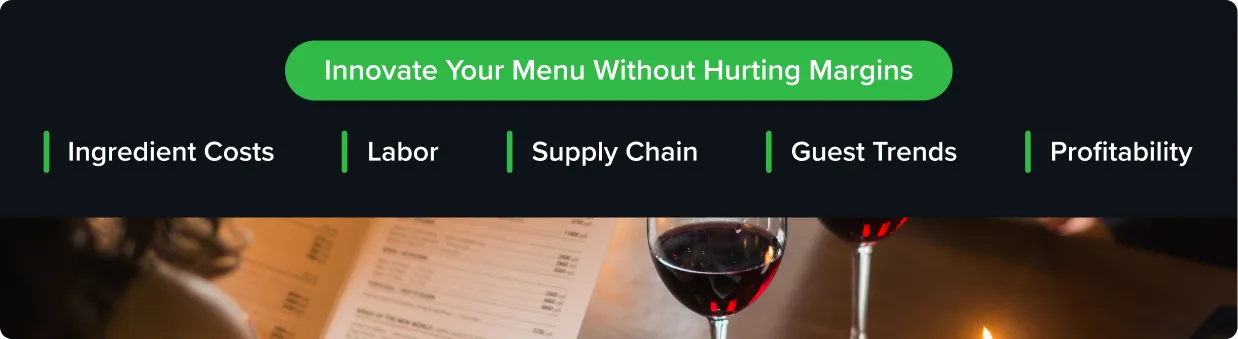
Restaurant menu development strategy focused on balancing ingredient costs, labor, supply chain pressures, guest trends, and profitability

For multi-unit restaurant operators, the challenge is how to evolve your menu profitably.

Several factors can complicate the process:

  • Ingredient costs: Price changes can narrow margins after a recipe has been developed.
  • Labor requirements: Additional prep steps can stretch kitchen capacity during busy shifts.
  • Supply availability: Specialty ingredients may be difficult to source consistently across markets.
  • Brand consistency: Guests expect the same quality and experience at every location.

So how do you create exciting new menu items and protect your margins?

That’s where Consolidated Concepts comes in.

Through purchasing insights, supplier relationships, and technology solutions, we help operators strengthen the procurement decisions behind menu innovation. Our supply chain management support⁠ helps your team evaluate sourcing needs as you turn menu ideas into offerings that can work across your restaurant group.

Menu Development That Makes Business Sense

A successful menu item needs both guest appeal and a workable operating model. Starting with customer demand, recipe economics, and ingredient usage gives your team a stronger foundation for development.

Understand What Your Guests Really Want

Trends can inspire new dishes, but your own guests should help guide the decision.

Review point-of-sale data, guest feedback, and input from restaurant teams to understand which flavors, formats, and price points already resonate. Look for opportunities to build on those preferences, whether through plant-based alternatives, global flavors, or twists on classic favorites.

Before introducing a new item, consider:

  • Which existing dishes consistently sell well?
  • What modifications or additions do guests request?
  • Is there a gap in your menu that fits your concept?
  • Would the new item attract additional purchases or mainly replace another sale?

A limited-time offer can help you test an idea before committing to a broader rollout. Track sales alongside preparation time, waste, and feedback to understand whether the dish deserves a permanent spot.

Engineer Menus for Profitability

New menu items shouldn’t come at the expense of your margins. Menu engineering helps you evaluate dishes based on both popularity and their contribution toward covering operating expenses and profit.

Start with a standardized recipe that includes every ingredient, portion size, garnish, and accompaniment. Account for usable yield, since trimming and cooking losses can change the true cost per serving.

Then evaluate both food cost percentage and contribution dollars. For a basic food-cost comparison, contribution dollars equal the menu price minus the portion’s ingredient cost. That amount still needs to cover labor and other operating expenses.

For example, a $20 entrée with $7 in ingredients contributes $13 before those other expenses. A $16 entrée with $5 in ingredients contributes $11. The second dish has a lower food cost percentage, but the first contributes more dollars per sale.

Preparation demands and sales volume also matter. An item that looks profitable on paper may need another look if it slows the line or generates substantial waste.

Streamline Ingredient Usage Across the Menu

An exciting menu doesn’t require a separate inventory of ingredients for every dish.

Cross-utilizing ingredients can help you introduce variety while limiting purchasing complexity. A roasted vegetable blend might work in a grain bowl, a side dish, and a seasonal entrée. An existing protein could support a new sandwich with a different sauce and presentation.

Before adding a specialty ingredient, ask how quickly each location will use it and whether it has another purpose on the menu. This is especially important for perishable products with large minimum order quantities.

The goal is to give guests something fresh while keeping storage, prep, and waste manageable.

Technology That Simplifies Menu Development

Reliable cost information helps your team make better decisions before and after a menu launch. Connecting recipe reviews with purchasing and inventory data makes it easier to see when an item’s economics begin to change.

Recipe Costing That Reflects Current Ingredient Prices

A recipe cost calculated at launch can become outdated as ingredient prices change.

Recipe costing tools can help teams update dish costs using current ingredient information. Their accuracy depends on maintaining purchase prices, pack conversions, yields, and portion sizes.

Consolidated Concepts’ purchasing analytics and technology solutions⁠ provide visibility into spending, pricing, and purchasing consistency. Those insights can inform recipe cost reviews and help your team investigate increases.

With clearer information, operators can evaluate whether to adjust sourcing, revise a recipe, or reconsider pricing while protecting the dish’s quality and appeal.

Inventory and Ordering Optimization

Managing inventory across multiple locations can drain resources, especially when new menu items introduce additional products.

Use inventory counts, sales patterns, and purchasing information together to guide orders. Establish initial stock levels for a launch, then adjust based on actual demand at each location.

A few consistent practices can help:

  • Add approved ingredients and pack sizes to location order guides.
  • Set ordering levels that reflect shelf life and expected sales.
  • Track waste during the test period.
  • Review substitutions that could affect recipe cost or quality.

These steps help prevent a promising menu idea from creating unnecessary inventory or inconsistent execution.

Operational Support That Drives Growth

A dish that succeeds in a test kitchen still needs to work during a busy service. Supplier planning and a measured rollout help close the gap between a strong concept and a successful menu addition.

Stronger Supplier Partnerships

Expanding your menu shouldn’t mean losing control of purchasing costs. Consolidated Concepts helps operators evaluate sourcing opportunities and supplier agreements that support their quality, pricing, and distribution needs.

When considering a new ingredient, look beyond the quoted case price. Compare usable yield, pack size, minimum orders, shelf life, and availability across your locations.

Confirm that suppliers can support anticipated volume before launching broadly. Establishing approved alternatives can also help teams respond to availability issues without making rushed substitutions that change the guest experience.

Tailored Solutions, Scalable Success

Every restaurant concept is different. Your menu development strategy should reflect your brand, kitchen capabilities, and growth goals.

Before expanding a new item across your portfolio, test it in locations that represent different sales volumes and operating conditions. Give teams clear recipes, portioning instructions, and preparation guidance.

Evaluate the results together:

  • Guest response: Are customers ordering the item and responding positively?
  • Financial performance: Does it deliver the expected contribution after accounting for actual ingredient usage?
  • Kitchen execution: Can teams prepare it consistently without disrupting service?
  • Supply reliability: Can each market access the approved ingredients?
  • Waste: Are locations using the products before quality declines?

With those answers, your team can refine the dish and its purchasing plan before committing to a larger rollout.

Let’s Bring Your Menu Ideas to Life Profitably

When done right, menu innovation fuels customer excitement and business growth. The strongest ideas balance what guests want with what your kitchens and supply chain can deliver consistently.

Consolidated Concepts supports that balance through purchasing insights, sourcing expertise, and supplier solutions that help multi-unit operators make informed decisions.

Whether you’re refreshing a few favorites or planning a broader menu launch, a stronger purchasing strategy can help turn fresh ideas into sustainable additions to your business.

Ready to innovate smarter? Fill out the form below or contact Consolidated Concepts can support your menu goals through smarter purchasing and supply chain management.

Frequently Asked Questions

What is restaurant menu development?

Restaurant menu development is the process of creating, testing, costing, and refining food and beverage offerings. It considers guest preferences, brand identity, ingredient availability, kitchen execution, and profitability.

How can restaurants introduce new menu items without sacrificing margins?

Start with accurate recipe costs, reuse existing ingredients where appropriate, and test items before a full rollout. Monitor sales, preparation time, waste, and purchasing costs to determine whether each addition meets your financial goals.

What is the difference between menu development and menu engineering?

Menu development focuses on creating and executing menu offerings. Menu engineering evaluates item popularity and financial contribution to guide decisions about pricing, placement, promotion, and revisions.

How does ingredient cross-utilization improve menu profitability?

Using an ingredient across several dishes can help restaurants use inventory more efficiently and reduce the number of unique products they manage. Savings depend on ordering appropriately, controlling portions, and using products before they spoil.

How often should multi-unit restaurants review menu costs?

Review costs regularly and whenever significant ingredient price changes, recipe adjustments, or supplier substitutions occur. New menu items also need close monitoring during their initial rollout to compare expected costs with actual performance.


 

The Smarter Way to Cut Costs and Improve Efficiency Without Hiring More Employees

The Smarter Way to Cut Costs and Improve Efficiency Without Hiring More Employees

Managing costs across multiple restaurants takes more than finding a better price. It means keeping purchasing consistent, maintaining supplier relationships, and giving teams the information they need to make decisions without adding hours of administrative work.

When staffing is tight, those responsibilities become harder to manage. Multi-unit operators face an even greater burden, as maintaining consistency, managing costs, and optimizing operations across multiple locations requires a strategic approach.

Consolidated Concepts offers solutions to help streamline operations, reduce purchasing costs, and improve operational efficiency across your entire portfolio. By strengthening the way your restaurants purchase products and manage suppliers, you can support your existing team while keeping a closer watch on profitability.

3 Ways Consolidated Concepts Can Help Save Time and Money 

Before adding more administrative responsibilities to an already busy team, consider where purchasing support could make the biggest difference. Negotiating agreements, reviewing spending, and finding reliable suppliers all require time and expertise.

Here’s how Consolidated Concepts helps multi-unit restaurant brands manage those responsibilities more efficiently.

1. Cost Reductions Without Time-Consuming Negotiations

Finding competitive pricing across multiple locations takes time, but Consolidated Concepts helps do the work for you. We provide access to pre-negotiated pricing, manufacturer rebates, and supply chain expertise to help reduce costs on food, supplies, and operational expenses.

Our manufacturer rebate and deviation programs⁠ help operators identify savings opportunities within their existing purchases, including eligible products they already use.

For multi-unit restaurant operators, the opportunity goes beyond a single discounted item. Reviewing purchasing across locations can help uncover where restaurants are missing available savings or buying outside established programs.

With greater purchasing power and support, your team can spend less time comparing individual offers and more time putting the right programs to work across your operation.

2. Purchasing Intelligence for Visibility Across Locations

Are fluctuating food costs making it difficult to maintain profitability? When purchasing information is spread across invoices, spreadsheets, and individual locations, it can be difficult to see what needs attention.

Consolidated Concepts provides restaurant purchasing analytics and technology⁠ that help operators understand spending, monitor pricing, and evaluate purchasing activity across their units.

That visibility helps your team answer practical questions:

  • Are locations purchasing the same approved products?
  • Which categories are driving higher spending?
  • Are invoice prices aligned with negotiated agreements?
  • Where could purchasing decisions be reducing the value of your programs?

By reducing guesswork, you gain greater control over spending and a clearer starting point for improving purchasing consistency. Your team can focus its attention on the locations and categories that need it most.

3. Supplier Optimization to Simplify Sourcing

For multi-unit operators, finding and managing reliable supplier relationships can be an overwhelming task. A product needs to meet your pricing expectations, quality standards, and operational requirements across every location that uses it.

That’s where Consolidated Concepts comes in. Our supply chain management services⁠ help operators navigate sourcing and supplier decisions while protecting menu integrity and brand consistency.

The lowest quoted price is only one part of the decision. Pack size, product yield, availability, and delivery requirements can all affect whether an item makes sense for your restaurants.

With support evaluating those details, your team can make more informed sourcing decisions and spend less time managing the search on its own.

How Smarter Purchasing Helps Restaurants Navigate Labor Shortages

When labor is tight, every operational efficiency counts. A manager spending hours tracking down purchasing information has less time available for training, service, and the daily needs of the restaurant.

Consolidated Concepts helps multi-unit operators strengthen purchasing processes so existing teams can work more efficiently. Here’s what that can look like in practice.

Cost Savings That Create Room for Other Priorities

Instead of spending hours researching supplier contracts or searching for rebates, your team can work with Consolidated Concepts to identify purchasing opportunities tailored to your operation.

These savings can create room in the budget for priorities such as employee retention, technology, or menu innovation.

Start with the products and services your locations purchase regularly. Small differences in recurring costs can become meaningful when multiplied across an entire restaurant group. Reviewing those expenses gives your team a focused place to look for savings without requiring a complete operational overhaul.

Purchasing Transparency That Reduces Follow-Up Work

Greater visibility into purchasing data helps teams make informed decisions and address unnecessary spending across locations.

For example, if one restaurant begins purchasing a higher-priced substitute, a purchasing review can prompt the right questions: Was the approved product unavailable? Did the order guide change? Does the location need help finding an appropriate alternative?

Answering those questions helps address the cause of the issue. It also gives managers clearer direction for future orders, reducing repeated conversations and avoidable inconsistencies.

Alongside inventory counts and sales information, purchasing insights can also help teams evaluate ordering patterns and investigate potential over-ordering.

Simplified Supplier Management That Supports Consistency

Maintaining strong supplier relationships takes ongoing attention. Product substitutions, delivery concerns, and changing location needs can create additional work for both restaurant managers and purchasing teams.

Consolidated Concepts helps simplify sourcing and supplier management so operators can develop reliable supply solutions that support menu stability and guest satisfaction.

Internally, a few consistent practices can help your locations get more value from that support:

  • Keep approved product specifications accessible.
  • Establish a clear process for requesting substitutions.
  • Document recurring product or delivery issues.
  • Assign responsibility for escalating supplier concerns.

Together, purchasing support and clear internal processes help reduce confusion and keep locations working toward the same standards.

Transform Restaurant Cost Challenges into Competitive Advantages

Labor pressures and rising costs don’t have to slow your business down. With Consolidated Concepts, multi-unit restaurant operators gain purchasing insights, cost-saving opportunities, and supplier support to navigate these challenges with confidence.

From negotiated pricing and rebates to data-driven purchasing and supplier optimization, we help you run a more efficient operation while maintaining the high standards your customers expect.

A stronger purchasing strategy gives your existing team more support and fewer administrative hurdles, helping them focus on running your restaurants.

Frequently Asked Questions

How can multi-unit restaurants reduce costs without hiring more employees?

Operators can review existing purchases for rebate eligibility, improve use of negotiated pricing, and simplify supplier management. Purchasing technology and outside procurement support can help existing teams manage these tasks with less manual work.

How does purchasing data improve restaurant operational efficiency?

Purchasing data helps operators compare spending across locations, monitor price changes, and identify purchases outside approved programs. This gives teams a clearer view of where to investigate costs and improve consistency.

Can restaurants save money without changing suppliers?

Potentially, yes. Reviewing existing purchases and agreements may reveal eligible rebates or opportunities to improve contract utilization. Available savings depend on the products purchased, program eligibility, and current arrangements.

Does purchasing support replace the need to hire restaurant staff?

Purchasing support can reduce administrative demands on your existing team. Hiring decisions should still reflect the staffing needed to prepare food, serve guests, and operate each restaurant effectively.

Ready to take control of costs and operations? Fill out the form below to contact Consolidated Concepts today to start optimizing your multi-unit restaurant strategy. Stay ahead of labor challenges, improve efficiency, and unlock greater profitability. 

Tailoring Success

Tailoring Success: The Power of Custom Contracts for Multi-Unit Foodservice Operators

In the highly competitive landscape of the restaurant industry, success hinges not only on exceptional food and service but also on effective contract management.

Multi-unit restaurant operators face unique challenges in managing numerous contracts with suppliers, vendors, landlords, and other stakeholders across their expanding network.

It is within this context that the power of custom contracts emerges as a vital tool for driving operational efficiency, mitigating risks, and maximizing profitability.

By adopting a strategic approach to contract management and leveraging technology, operators can unlock substantial advantages and gain a competitive edge in an industry where every detail counts.

Tailoring Success

The Power of Custom Contracts for Multi-Unit Operators

As a multi-unit operator, custom contracts in conjunction with being a Consolidated Concepts member offers several advantages.

Here are some of the benefits of custom contracts:

Tailored Pricing

Tailored Pricing and Cost Savings

Custom contracts allow multi-unit operators to negotiate pricing and terms specific to their unique needs and purchasing volumes.

By leveraging the expertise and purchasing power of Consolidated Concepts, operators can secure competitive pricing and maximize cost savings across their restaurant locations.

Vendor Selection

Vendor Selection and Management

Custom contracts enable multi-unit operators to choose preferred vendors that align with their specific requirements and quality standards.

Consolidated Concepts assists in vetting vendors and negotiating contracts that meet the desired specifications of the operators.

This ensures consistent product quality and streamlines vendor management across all locations.

Flexibility and Customization

Flexibility and Customization

Custom contracts provide multi-unit operators with the flexibility to tailor contract terms. This includes delivery schedules, payment terms, product specifications, and service-level agreements.

This customization allows operators to align contracts with their operational needs, ensuring efficient and seamless supply chain management.

Streamlined Procurement

Streamline Procurement Processes

Consolidated Concepts and custom contracts simplify the procurement process for multi-unit operators.

Operators can access a wide range of pre-vetted vendors and products through a centralized platform.

This streamlines purchasing, eliminates the need for individual negotiations, and reduces administrative burdens associated with managing multiple contracts.

Consistency and Standardization

Improved Consistency and Standardization

Custom contracts help achieve consistency and standardization across all restaurant locations.

By establishing uniform terms and conditions, operators can ensure that products, pricing, and service levels are consistent across their entire portfolio.

This enhances brand consistency and customer experience.

Support and Negotiation

Expert Support and Negotiation

Consolidated Concepts provides expert support in contract negotiation, leveraging their industry knowledge and supplier relationships.

Our team can guide multi-unit operators through the negotiation process. This helps secure favorable terms and resolves any contract-related issues that may arise.

Data Analytics

Data Analytics and Reporting

Custom contracts, coupled with our technology, offers multi-unit operators access to data analytics and reporting capabilities.

Operators can gain insights into purchasing patterns, product performance, and cost-saving opportunities.

This data-driven approach facilitates informed decision-making and allows for ongoing optimization of procurement strategies.

Tailor Success with Consolidated Concepts

As we mentioned above, custom contracts for multi-unit operators like you offer tailored pricing, vendor selection, flexibility, streamlined procurement processes, improved consistency, expert support, and data-driven insights.

These advantages contribute to cost savings, operational efficiency, vendor management, and overall success in the foodservice industry.

Become a member of Consolidated Concepts today.

Foodservice Savings

7 Common Areas You Can Find Foodservice Savings

Foodservice savings refer to cost reductions or financial benefits achieved within the foodservice industry. This term encompasses various strategies, practices, and initiatives implemented by businesses in the foodservice sector to minimize expenses while maintaining or improving the quality of their products and services.

The goal of foodservice savings is to increase profitability and efficiency by identifying opportunities to save money in areas such as procurement, operations, and waste reduction. They offer flexibility and adaptability, empowering businesses to allocate resources strategically, respond to market changes, and explore new ventures.

Here are some common areas where foodservice savings can be realized:

Common Areas You Can Find Foodservice Savings

1. Procurement:

Negotiate better prices with suppliers, establishing contracts, bulk purchasing, and sourcing ingredients from local or sustainable suppliers can result in cost savings.

2. Menu Engineering:

Analyze the profitability and popularity of menu items to optimize pricing, portion sizes, and ingredient usage. This ensures that high-cost items are balanced by more profitable options and reduces waste.

3. Inventory Management:

Implement efficient inventory control systems, accurately forecasting demand, reducing overstocking and food spoilage, and minimizing storage costs.

4. Operational Efficiency:

Streamline kitchen operations, optimizing staff scheduling, minimizing energy consumption, and utilizing technology or automation to improve productivity and reduce labor costs.

5. Waste Reduction:

Implement waste management strategies such as composting, recycling, and food donation programs to minimize food waste, which directly reduces costs associated with purchasing and disposal.

6. Training and Education:

Provide staff with proper training on food handling, portion control, and efficient practices that can minimize food waste and ensure the optimal use of ingredients.

7. Equipment and Technology:

Invest in energy-efficient equipment, using automated systems for inventory tracking and ordering, and leveraging technology to streamline processes, reducing manual labor and costs.


By focusing on these areas and implementing effective cost-saving measures, foodservice operators can enhance their financial performance, increase profitability, and remain competitive in the industry.

Foodservice Savings Strategies and Solutions

At Consolidated Concepts, we’re experts in helping multi-unit restaurant operators achieve foodservice savings through various strategies and solutions, such as:

Group Purchasing:

Consolidated Concepts leverages the collective purchasing power of multi-unit restaurants to negotiate better prices with suppliers. By joining their group purchasing program, restaurant operators can access cost savings on a wide range of food and beverage products, kitchen supplies, equipment, and services.

Menu Analysis and Optimization:

Consolidated Concepts offers menu engineering services, where they analyze the profitability and popularity of menu items. By identifying high-cost, low-margin items and suggesting alternatives or portion adjustments, they help optimize menus for increased profitability and reduced food costs.

Supplier Management:

The company assists restaurant operators in managing their supplier relationships. They conduct supplier audits, negotiate contracts, and provide ongoing support to ensure operators receive the best pricing and service from their suppliers.

Data Analytics and Reporting:

Consolidated Concepts provides advanced data analytics and reporting systems to help restaurant operators gain insights into their purchasing patterns, cost trends, and areas of potential savings. This information enables operators to make data-driven decisions and identify opportunities for cost reduction.

Training and Education:

The company offers training programs and educational resources to restaurant operators and their staff. These programs focus on best practices for food purchasing, inventory management, portion control, waste reduction, and other areas related to foodservice savings.

Technology Solutions:

Consolidated Concepts provides access to technology platforms and tools designed to streamline restaurant operations and enhance efficiency. These solutions include inventory management systems, automated ordering platforms, and cost control software, which can help operators optimize their processes and reduce expenses.

Leveraging foodservice savings is of paramount importance as they contribute to the financial stability, competitiveness, and growth potential of your foodservice businesses. They enable businesses to optimize costs, improve profitability, adapt to market changes, and reinvest in their operations.

By embracing foodservice savings, businesses can operate more efficiently, provide value to customers, and align with sustainability and social responsibility principles.

When a restaurant operator joins Consolidated Concepts, they benefit from years of industry expertise, purchasing power, and foodservice saving strategies to improve financial performance and increase profitability.

supply chain management

6 Ways Supply Chain Management Technology Can Help Your Restaurant Brand

You’ve spent the last year adding a tech stack of solutions to your operation in hopes of getting a better look into the health of your brand.

The most important piece of technology you should be investing in is supply chain management technology. It’s impossible to navigate the chaos that is the supply chain and technology can be a huge asset to your brand success.

Supply chain management technology can bring a wide range of benefits to restaurants, helping them to streamline their operations, reduce costs, and improve the overall customer experience.

How Supply Chain Management Technology Can Help Your Restaurant:


Improved Efficiency

By automating various supply chain processes, such as ordering, invoicing, and payment, restaurants can save time and reduce the risk of errors. This can help to free up staff to focus on other tasks, such as customer service and food preparation.


Better Inventory Management

Supply chain management technology can help restaurants to keep track of their inventory in real-time, allowing them to know exactly what they have on hand at any given moment. This can help them to avoid running out of key ingredients, which can be frustrating for customers and lead to lost sales.


Enhanced Forecasting

By analyzing data on past sales and customer demand, supply chain management technology can help restaurants to better forecast future demand and adjust their ordering accordingly. This can help them to avoid overstocking, which can be costly, and ensure that they have enough product on hand to meet customer demand.


Better Supplier Relationships

Supply chain management technology can help restaurants to establish better relationships with their suppliers by streamlining communication and making it easier to place orders and track deliveries. This can help to ensure that restaurants receive the products they need in a timely and cost-effective manner.


Reduced Costs

By automating various supply chain processes and improving inventory management, restaurants can reduce their overall costs. This can help them to boost their bottom line and remain competitive in an increasingly challenging market.


Enhanced Customer Experience

By ensuring that they have the products they need on hand and reducing the risk of errors and delays, supply chain management technology can help restaurants to improve the overall customer experience. This can help to drive repeat business and positive word-of-mouth, which can be crucial for success in the restaurant industry.

Overall, it is clear that supply chain management technology can bring a wide range of benefits to restaurants. By streamlining operations, improving inventory management, and reducing costs, restaurants can improve their efficiency, boost their bottom line, and enhance the customer experience. As such, it is worth considering the adoption of supply chain management technology for any restaurant looking to stay competitive and succeed in today’s market.


How Consolidated Concepts Can Help

At Consolidated Concepts, we have supply chain technology to support your purchasing team with strong contract management and actionable information to help optimize procurement and increase your margins. Not yet a member? No problem! Sign up today for free!

cost reduction

5 Steps In 5 Months to 5 % Savings

Pre-pandemic, restaurants were doing well! Products were available, prices are stable, and employers had the power. Then an unexpected punch to the gut happened when the supply chain took a major hit due to shortages and price increases.

What if we said there were things you can do today in order to keep costs low and improve your margins? That means that in a world where everything was all about marketing, sales, butts-in-seats, new locations…. is now all about cost reduction, streamlining efficiency and driving margin.

The biggest and brightest minds in the industry are shifting their focus from top-line revenue to margins and profitability.

Here are 5 steps that you can begin taking today to reduce your prime and operating expenses by 5% in the next 5 months putting you on the right path to profitability:

Integrate Technology

technology

Are you calling your distributors every day to check on stock levels of your most pressing inventory? Many operators are finding out about substitutions only after the products have already been delivered to their restaurants. This does not work when you have been using the same ingredients since the day you opened your restaurant. By leveraging technology such as InsideTrack, you gain visibility into product sourcing and substitutions so you can prepare for menu changes ahead of time – instead of last minute.

What about carrying out core responsibilities in your restaurant such as auditing and price verification? That takes time and resources that not everyone has these days. Your in-house system of taking multiple spreadsheets and comparing them against each line item is no longer a very efficient way to audit. That manual process is too long and can lead to overlooked overcharges – which cost you money at the end of the day. By embracing technology in both your front and back of house, you can streamline operational tasks and reduce spend all at the same time.

Think About Outsourcing

outsourcing

Today, restaurant operators are having to do more with less and are being forced to outsource certain functions of their business such as Marketing, Legal, HR, Payroll, or Accounting.  So, why not outsource supply chain management and purchasing? This does not mean your current supply chain team is replaced. Instead, by partnering with supply chain experts you expand your resource pool and supplement your current staff. Most operators would love to add to their supply chain staff but the added cost to do so is too much, leaving them scrambling to manage the supply chain chaos on their own.

When you work with a supply chain management partner like Consolidated Concepts, Sundell and Associates, or even Restaurant Partners Procurement, you don’t have to pay for training, salary, insurance, and time off.  This is a popular option for many emerging and national chains, Private Equity firms, and even Publicly Traded restaurants.

Produce Management

produce management

Most operators don’t have the bandwidth, volume, or category expertise to efficiently manage their produce programs in-house. By leveraging a third party produce management company, you can reduce your produce spend by 5-10%.  On average, produce spend is about 15% of total food cost, so a 5-10% reduction in produce cost can lead to 100-200 basis points off your total food cost. Produce prices fluctuate throughout the course of a year due to things like seasonality and different growing regions. Yes, it’s true that you can occasionally buy better than the market but locking in contracted prices will protect you from volatility and you’ll ultimately be better off. Produce management companies such as Fresh Concepts or Produce Alliance will not only help you maintain, but improve your pricing, quality, food safety and traceability.

Operational Efficiency

operational efficiency

There are many changes you can make, both big and small, within your operation that can help you cut costs without making it so obvious to your customers. Take trash liners for example. If they are too big for your trash cans, you are wasting money on buying bigger bags without maximizing the full value out of each liner. By buying liners that are the correct fit, you can save on costs and extract the full value of each trash bag. What about your TV’s? Are all your TV’s running at the same time – even the ones where no customers are being seated? What a waste of power and electricity. Turn unused TV’s off and save on your electrical bill. Don’t forget about your kitchen burners. If you aren’t making food right away, they don’t have to be turned on as soon as your staff is clocking in. All that is doing is heating your restaurant up, forcing the AC to kick on – using unnecessary energy.

Making changes to your utility usage such as turning of lighting and electronics in unused sections of your restaurant, buying the correct size trash bags, using energy saving light bulbs are all small changes you can make cut costs.

GPO

gpo

GPO’s sometimes have a bad rap. They can cost an operator money and sometimes require you to switch products and change distributors. But not all GPO’s are the same. GPOs are widely used in the Healthcare and Hospitality space and the adoption rate for restaurants has dramatically increase over the past few years. Finding the right GPO partner for your restaurant brand can reduce costs and broadliner purchases by 50-150 basis points or more, depending on how contracted you are. Work with a GPO partner that is distributor and manufacturer neutral – one that will not require you to switch products or vendors and will honor your contracts. Work with a GPO partner that you can call on when you are looking for new product suggestions or reporting and analytics on existing purchases.

If you implement any of these suggestions, you will reduce cost and improve your margins.  It’s just a matter of how much. At Consolidated Concepts, we can help you tackle each of these steps, reach your business goals, reduce your costs, and streamline your operations. Become a member today for FREE and start making smarter business decisions.

Artificial Intelligence

Artificial Intelligence – the Future of Foodservice and Supply Chain

Back-of-House restaurant operations have never been just easy. Especially now, post-pandemic, when many operators are struggling with staffing and labor shortages, supply chain shortages, inflation…the list goes on.

As a restaurant operator, you want to make sure you’re leveraging technology to help save you both time and money. At Consolidated Concepts, we can help you do this by using a little something called Artificial Intelligence.

Artificial Intelligence

AI

The future of Foodservice and Supply Chain lies in the hands of Artificial Intelligence.

What is Artificial Intelligence you ask? It is the simulation of human intelligence in machines that are programmed to think like humans and mimic their actions.

It may seem like you’re completely unfamiliar with AI, but rest assured, you see it every day—even when you don’t know it.

Did you know that every time your Google Maps reroutes you as you’re driving to your destination, it uses AI? It monitors your phone as you drive to make better decisions for you based on where you are and where you’re going.

Or have you noticed that every time you type a letter on your touch screen keyboard, the area in which you’re clicking in expands a bit and the letters become bigger? That’s because your phone knows what you’re about to type based on the sensitive area your fingers are clicking in! That’s AI too.

As humans, we are always looking for ways to solve problems in a more efficient and timely manner. Whether it’s transporting from one place to another or beating your partner in a game of chess.

With Artificial Intelligence in the foodservice industry, you can make better business decisions. In short, a lot of it is classical optimization. This means, by looking at either past or present data, you can determine what the best possible solution is to the problem you’re facing right now.

Back of House Technology

Back of House

The truth is, you’re most likely already using AI in the front-of-house tablets on tables for order taking and payment of checks. You’re probably even using it for reservations, restaurant seating and digital QR codes for menus.

If you’re doing marketing or serving any Instagram ADS, that’s also AI. If you have an online ordering engine or displaying product recommendations, or maybe your HR department is screening candidate resumes. What about your finance department forecasting? That’s all Artificial Intelligence!

The problem is, technology has been slower to be adopted in the back-of-house.

In the front-of-house, AI helps you control variables such as menu costs, table numbers, hours of operation, etc. It’s a lot easier to control.

Although you should be taking control of your back-of-house, too! That starts by utilizing the purchasing data your operation generates. Unfortunately, the amount of data your restaurant produces is so complex and time-consuming for the human mind to manage, this is where AI and technology come into play.

In the back-of-house, your variables are constantly changing. Pricing, inventory levels, quality. It’s hard to manage and keep track of every single situation, whereas in the front-of-house, your variables are limited—making it a lot easier to handle. Plus, almost everything is in your control.

The current challenges within the supply chain makes it extremely difficult for operators like you to manage a successful restaurant. You’re facing roadblocks left and right, and almost every day has become unpredictable.

Now, imagine if there was a way to identify new savings opportunities, optimize pricing, handle product substitutions, and do much more with little to no effort. Because there’s only so much we as humans can do, Artificial Intelligence is the future of our industry.

You as an operator need to focus on what you are good at and the real reason you opened a restaurant in the first place to create great food and memorable experiences for your customers.

Leave the time-consuming, laborious part to technology…

How Can AI Help Me?

Artificial Intelligence can solve all your problems. How do you adapt to the supply chain? AI. How do you deal with product shortages? AI. How do you deal with things like price fluctuations and inventory levels? AI.

For instance, artificial intelligence can identify thousands of substitutions for items you’re already buying within a matter of minutes. Humans don’t work as fast as technology.

How many analysts would you have to hire to identify over 1,000 similar items in two minutes? A lot. That’s why it’s important to embrace technology and AI.

But that’s only one of many things Artificial Intelligence is capable of.

Forget about your spreadsheets and long nights spent in the office. Our technology analyzes, normalizes, and cleans your data for you.

An AI engine (if you ask it to do so), can help you find similar or the same products at a lower price. It can also uncover what products are in stock or out of stock.

AI analyzes high volumes of data, provides visibility into purchasing, and helps you improve your partnerships. When you have a better understanding of your operation, you save money, time, and labor. AI provides consistency, stabilizes your pricing, and alleviates the supply chain strain.

How Can I Get Started?

If you’re ready to embrace technology and implement AI into your operations, you first need to work with a data partner that leverages AI, such as Consolidated Concepts.

Our cutting-edge technology was designed to identify areas where emerging, growing, and established restaurants may unlock additional opportunities to save money and increase profitability.

Start leveraging AI to streamline operations and put money back into your bottom line, by becoming a member today!


Efficient Restaurant

How to Run an Efficient Restaurant During a Labor Shortage

To run a restaurant operation during the current labor shortage is one thing. Running an efficient one is another. With the continuation of the pandemic and no relief in sight, especially before the holidays, restaurant operators are seeking alternatives to what was once known to them as their traditional, every-day way of running their operation.

There’s no doubt that times are changing, and everyone is doing their part to keep up. These changes are fairly easy to make and will not only help you run a more efficient business, but will also put money back in your pocket.

Let’s take a look at three different ways Consolidated Concepts experts say you can run an efficient restaurant during the current labor shortage:

Technology Can Streamline Processes

Technology has played a massive role in restaurant operators lives, especially since the beginning of the pandemic. From QR code menus and mobile ordering to inventory management, there’s nothing technology can’t do to help streamline your operation.

One way we encourage restaurant operators to implement technology is by partnering with industry experts such as InsideTrack. With the help of their spend management technology, you’ll have access to the most effective data cleaning in the foodservice industry. Data accuracy, consistency, and reliability are guaranteed. Operators like you gain better insights and spend intelligence into your operation.

By embracing spend management technology, you make better business decisions and identify new opportunities for savings and revenue. Data on your purchases is organized into easy-to-read dashboards you can access at any time. InsideTrack members can streamline operations by utilizing spend management, contract management, cost savings, GPO services, and much more—all within one powerful technology software.

Another way experts at Consolidated Concepts encourage the use of technology is by taking advantage of food cost management. Food cost management technology is a great resource that helps operators and chefs manage and control their food cost, inventory, and much more.

Food cost management technology puts time back into your day and helps you figure out any pain points that may be affecting the success of your operation.

Instead of hand-counting each item, you simply upload a screenshot of your invoices and Orderly takes care of the rest. You speed up your inventory process when you implement technology into your operation.

Now you can calculate the cost of a recipe online, too! With solutions such as Orderly, you’re able to build all of your recipes directly into the system. Each time an invoice is uploaded, the technology breaks down each ingredient and updates your prices in real-time.

Technology is key to running an efficient restaurant operation during these times. There’s an infinite number of things technology can do to ensure you’re streamlining operations, putting time back into your day and money into your bottom line.

Using Versatile, Easy-To-Prepare Ingredients

Did you know you could save time and money by incorporating versatile ingredients that are delicious and easy to prep? With products like Idahoan Real Potatoes, your customers will have that homemade taste and authentic feel they’re craving.

With the cold weather here, you can even add quick, savory soups onto your menus with items like Campbell’s Soup. Maybe even a soup base that’s less expensive and more consistent than scratch for you to work your final touches on such as LeGoût Cream Soup Base.

Have you considered pre-made sauces that are free of artificial colors/flavors and preservatives? Save time on prep and create dishes your guests will love with Knorr® Professional sauces. From gravies to sauces, your back of house will be thanking you for putting time back into their busy schedules.

But that’s not all. Who has time to hand-squeeze lemon and lime? Nobody, especially now with the labor shortage. That’s why The ReaLemon and ReaLime juices are great labor-saving ingredients that eliminate the inconvenience of slicing and squeezing. These juices are also a great option for salads, dips, main meals, and even beverages.

When you use versatile ingredients, you save money and put time back into your day while also satisfying your customers’ needs. Work smarter, not harder.

Partnering with Supply Chain Management Experts

Another way to ensure you run an efficient restaurant operation during a labor shortage is by partnering with supply chain management experts like Consolidated Concepts. With the current state of the supply chain, taking control of what comes into your operation seems nearly impossible.

You’ll have access to a fully customizable service that brings instant savings on thousands of items you may already be buying. Our experts help reduce costs, improve quality, and identify areas you may be able to achieve savings and negotiations in. This includes supply chain management, master distributions agreements, managed produce, and contracts.

Our supply chain management ensures maximum profitability and productivity while giving you access to items at the best competitive prices.

Join Consolidated Concepts Today!

If you’re looking to run an efficient restaurant operation during the current labor shortage, becoming a Consolidated Concepts member is a great place to start. As mentioned above, our experts will help reduce costs, improve quality, and identify instant savings!

Get started today!

Supply Chain Success

3 Ways to Ensure Supply Chain Success

The Supply Chain is facing a major crisis that is affecting operators all over the country. The numerous challenges this has led to over the course of these past 20 months is unimaginable. This is why supply chain success is crucial. From equipment delays and rotten food to sky-rocketing prices and product shortages, it seems there will be no relief anytime soon.

Fortunately, we have ways you can help alleviate the situation and ensure your operation is running at its full potential during these unprecedented times. Satisfy your customers, please your staff, and put money back into your bottom line.

Here are three ways to ensure you’re on the road to supply chain success:

Embrace Supply Chain Technology

Technology is evolving each and every day. Operators like you can easily boost your profit margins and put time back into your day. No more outdated unreliable information and lack of transparency. With technology, you can track, audit, and optimize your purchasing process to make sure you’re not over-spending.

Technology helps strategically source products so that your restaurant operation is putting the best ingredients on customer tables at the best imaginable prices. This means driving value to your customer experience and your brand.

Leveraging supply chain technology means you’re able to identify supply chain weaknesses within your operation and improve your purchasing process.

Technology gives you visibility into competitive distribution agreements, strategic commodity planning, inventory management, and much more.

Leverage Buying Power for Cost Reduction

When your options are limited, you have a much lesser chance of opportunities for savings on purchases. Leveraging buying power is the key for cost reduction. With access to contracts and pricing you wouldn’t find anywhere else, operators like you can gain discounts and rebates across hundreds of categories within the foodservice industry.

Did you know? Your operation could be saving on products and services you use every day. You can use your purchasing data to your advantage and maximize profits. With over 165,000 line items from over 350+ industry leading manufacturers, you’ll find the most competitive pricing for your operation. No more unprofitable contracts you can’t get out of.

We’re here to make sure you’re getting the most out of your money.

Join a Managed Produce Program Today!

Lastly, when your restaurant operation joins a managed produce program, they’re guaranteed the highest quality products at the most affordable prices. No more rotten foods and product shortages. We partner with the best local produce distributors to ensure you’re satisfying your guests and putting money back into your pocket. Our expertly-managed produce programs focus on improving the quality, safety and traceability of your food programs.

The supply chain is experiencing challenges that impact your operation every day. By partnering with Consolidated Concepts supply chain experts, you can ensure you’re making profitable more informed business decisions.

With a managed produce program, you gain access to the best quality, consistency, and food safety standards that’ll wow your customers.

All Things Supply Chain

You don’t have to navigate the supply chain alone. We want to help you succeed in the restaurant world.

Decrease cost, increase quality and ensure you’re on the road to supply chain success by becoming a Consolidated Concepts member today!

Are you a restaurant operator looking for updates on commodity insights, supply chain news and resources? Visit the Buyers Edge Platform Supply Chain Support Center today!

Contract Management

Streamline Contract Management with the Help of Technology

When you own more than one restaurant location, you’re bound to wear more than one hat. Think of all the contracts that go along with managing each of those locations. From Master Distribution Agreements and Manufacturer Contracts – the art of negotiating and managing these documents is truly one in its own.

It’s 2021 and its time to welcome a new player to your team – technology.

This team player is great at multitasking. They don’t complain, they don’t require a weekly paycheck, and they don’t need hand holding or constant reminders about what they’re supposed to be doing. Their results are instant, actionable and profitable.

No More Doing it the Hard Way

By using technology for things like contract approval workflows, edits, audits and signatures, implementation becomes easier and less time consuming. Businesses who adopt contract management technology are able to streamline the contract lifecycle into an automated workflow minimizing errors and maximizing profits.

Having to manually manage each contract step by step leaves room for errors or inaccuracies. Using technology ensures contracts are routed to the correct person and increases visibility and accountability. Contract management technology allows stakeholders more insight into the performance of a contract so they can make quicker more accurate business decisions.  

Secure Your Contracts in One Centralized Location

No more filing cabinets organized alphabetically. This isn’t the library, and you don’t have the time to go searching A through Z. Having your contracts securely centralized in one location helps you stay in control of contract chaos and allows for a more efficient contract management process.

The goal is to stay in control of each of your locations bottom line. Technology allows you to store all you contracts safely in one place and minimizes risk that goes along with contract management.

Contract Management Technology Solutions

At Consolidated Concepts, we can help multi-unit restaurants like yours save money on your contracts such as your MDA – your most important contract. We have former Presidents from distribution houses on our staff who lend their expertise to analyze your contracts, find areas where there may be new places for savings and help renegotiate your contract with your distributors. We do everything we can to make your contracts work in your favor.

It’s time to optimize your savings and limit the amount of increases in costs and changes in structure which ultimately result in more profitability for your business. You can even put our experts to the test by sending over your current contracts and having them analyzed.

Ready to streamline the contract management process and go from manual to automated? Contact us today!

https://www.youtube.com/watch?v=hkQvlZ4SHGc